
Roman Ruins — History & Facts
What if beauty was never meant to be finished? In the delicate balance between decay and splendor, Roman Ruins invites us to ponder the transient nature of art and life, where color whispers the stories of its past. Begin by focusing on the vibrant blues and greens that envelop the crumbling structures, drawing your eye to the lush foliage intertwining with ancient stone. Notice how the light dances across the scene, illuminating the weathered textures that speak of time's passage. The artist employs a soft palette, allowing warm earth tones to harmonize with cooler shades, creating a sense of serenity amid the ruins.
This composition, steeped in elegance, elicits both nostalgia and reverence. Hidden within the interplay of light and color lies a duality: beauty is both celebrated and mourned. The juxtaposition of vibrant life against the remnants of history provokes contemplation about what remains and what is lost. Each brushstroke conveys a longing for permanence, while the ruins themselves serve as a testament to the inevitable cycle of creation and decay, reminding us that beauty often emerges from imperfection. In 1773, Hubert Robert painted Roman Ruins during a period of profound change in Europe, when the 18th-century fascination with the classical world flourished alongside the rise of Romanticism.
Living in France, Robert navigated the tension between traditional artistic values and emerging styles, reflective of a society grappling with revolutions—in art, politics, and philosophy. This work encapsulates both the nostalgia for the grandeur of the past and a burgeoning appreciation for the sublime in nature, marking a pivotal moment in art history.
More Artworks by Hubert Robert
Browse all →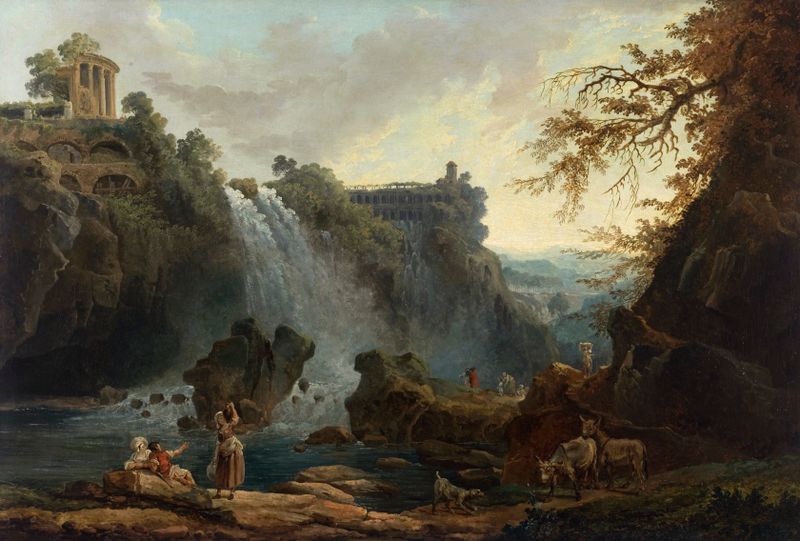
Les Cascatelles de Tivoli
Hubert Robert
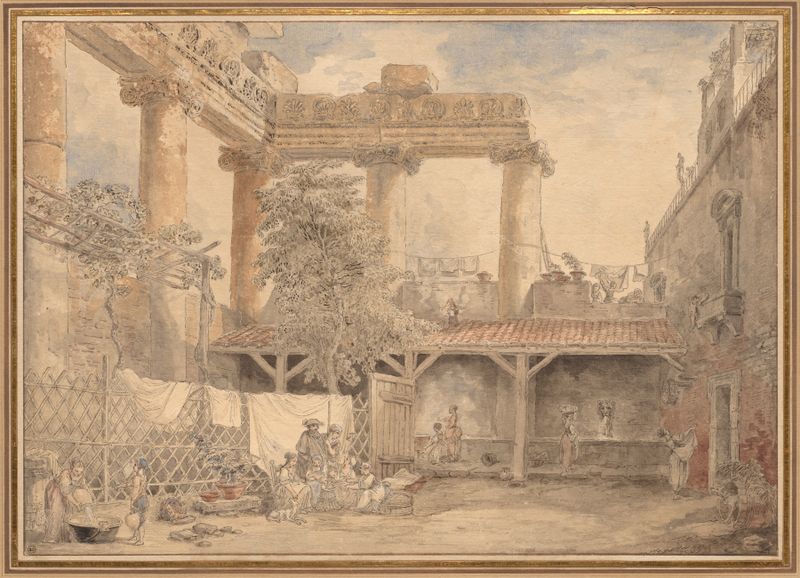
Roman Ruins, Villa Pamfili
Hubert Robert

The Rustic Bridge, Château de Méréville, France
Hubert Robert

The Portico of a Country Mansion
Hubert Robert

Architectural Capriccio
Hubert Robert

The Obelisk
Hubert Robert
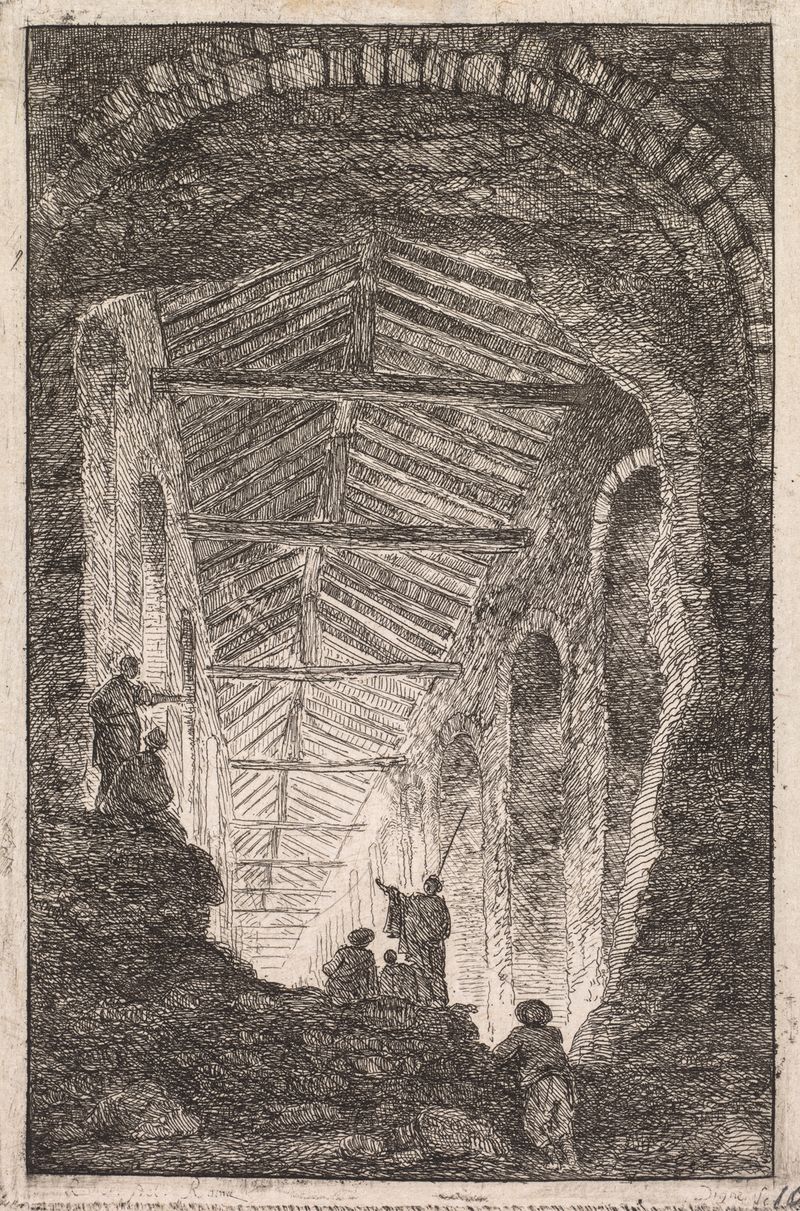
The Antique Gallery
Hubert Robert

L’incendie de l’Opéra, vu des jardins du Palais-Royal, le 8 juin 1781
Hubert Robert
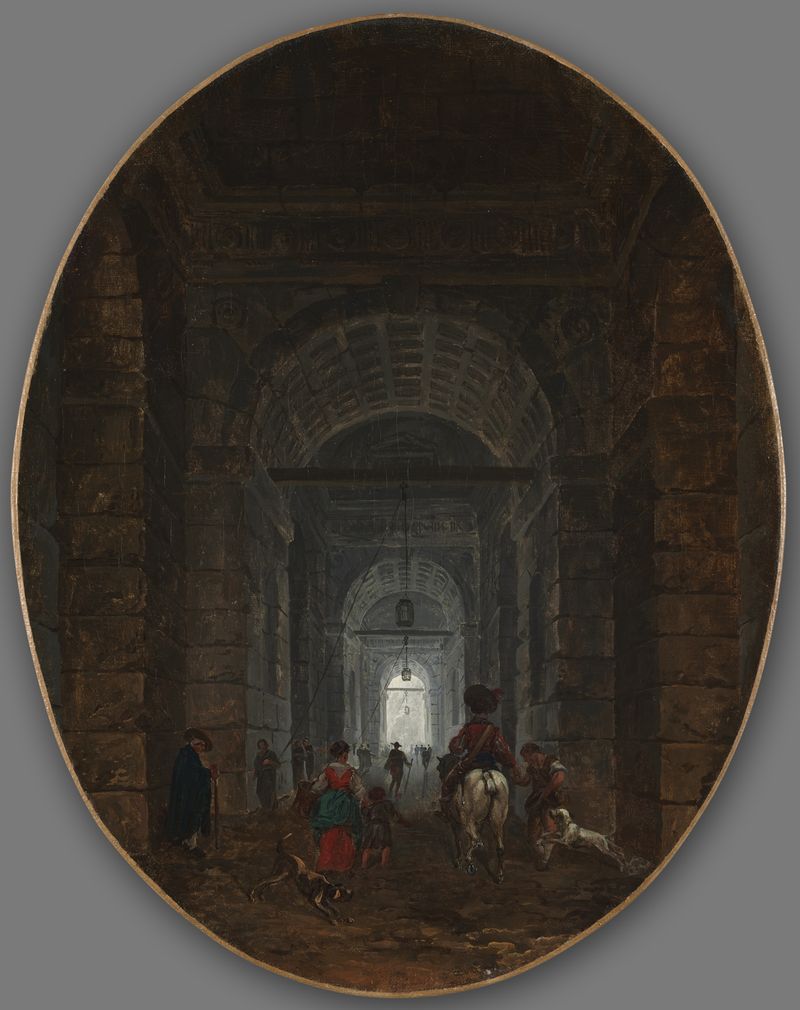
The Grotto of Posillipo
Hubert Robert

Architectural Capriccio with ruins of the Temple of Saturn and the Colosseum in the background
Hubert Robert





