Rose Garden — History & Facts
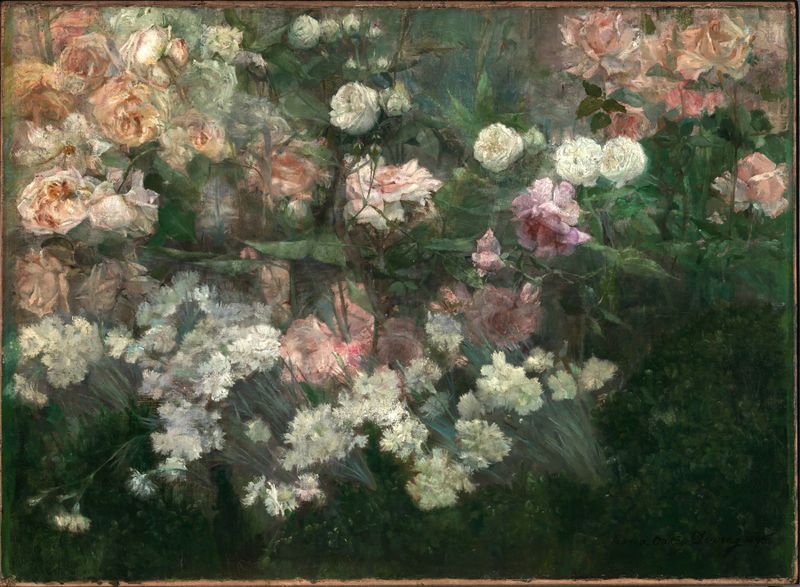
A soft breeze stirs the petals, their vibrant colors dancing in the golden light of dawn. In the heart of a lush garden, women in flowing gowns bend gracefully over the blooms, their fingers tenderly brushing against velvety roses. Sunlight filters through the delicate leaves, casting playful shadows that entwine with their quiet laughter, a moment suspended in beauty and serenity. Look to the left at the rich tapestry of flowers, where radiant pinks and whites blend with a painterly touch.
Notice how the light falls upon the petals, illuminating the intricate textures that almost invite you to reach out and touch them. The warmth of the scene is mirrored in the gentle contours of the women’s figures, whose subtle gestures suggest a shared reverence for the blossoms. The soft palette of greens and pastels enhances the feeling of tranquility, drawing the viewer deeper into this intimate slice of nature. Upon closer inspection, the juxtaposition of the women's attire against the vivid roses invites a contemplation of femininity and natural beauty.
The way their postures embody both grace and a hint of nostalgia evokes a sense of longing, as if time itself has slowed to appreciate this fleeting moment. The roses, a symbol of love and transient beauty, echo the ephemeral nature of life, adding layers of meaning to the serene scene. In 1901, while living in the artistic circle of Boston, Dewing painted Rose Garden during a time when the American art scene was evolving into its own identity, transitioning away from European influences. This period marked the rise of the American Impressionist movement, and Dewing, known for her depictions of women and floral themes, sought to capture the essence of beauty and harmony that resonated deeply with contemporary audiences.