Garden in May — History & Facts
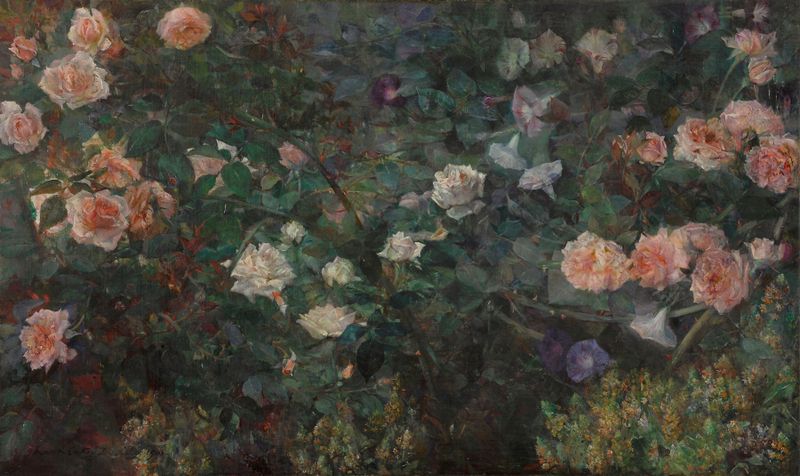
Sunlight spills through the scattered branches, dappling a sea of blossoms. Women in flowing dresses wander amid the vibrant hues, their laughter a soft melody in the fragrant air. In this moment, nature and humanity intertwine, each bloom echoing the whispers of a world on the brink of change. Focus on the central cluster of flowers, a riot of pinks and whites that draws your gaze.
Notice how the delicate brushwork captures the very essence of petals, each stroke a testament to the artist’s devotion to realism. The gentle play of light across the canvas reveals not just the scene, but also the vibrant emotions wrapped within the lush greenery, as if the garden itself breathes with life and anticipation. Hidden beneath this idyllic facade lies a tension—a subtle nod to the revolutionary spirit of the era. The women, seemingly lost in the beauty around them, are also symbolically poised at the threshold of modernity, representing a shift towards greater freedoms.
The juxtaposition of the serene garden against the undercurrents of societal change captures a fleeting moment in time, hinting at the broader awakening occurring in both nature and culture. Created in 1895, this piece emerged during a pivotal period in Dewing's life, when she was solidifying her place within the American art scene. The 1890s were marked by a growing interest in Impressionism, and the artist was influenced by the natural world surrounding her in New England. As the whispers of societal revolution began to fill the air, her work not only celebrated beauty but also encapsulated the spirit of transformation that resonated throughout the nation.