
Rue Lepic à Montmartre — History & Facts
In the brushstrokes of a forgotten era, violence lingers beneath the surface of everyday life, waiting for its moment to resurface. Look to the lower left where the cobblestones glisten under a muted, gray sky, each stone a witness to the comings and goings of the city. Notice the figures, small and seemingly inconsequential, filling the street, their postures blurred with urgency as they navigate the chaos of a bustling Montmartre. The soft palette of earthy browns and cool blues evokes a sense of melancholy, while bold strokes define the buildings, casting sharp shadows that hint at hidden tensions lurking just outside the frame. Within this urban landscape, contrasts unfold.
The vibrancy of the people teeters on the edge of despair, as the tight composition creates a claustrophobic intimacy that echoes the tensions of a society in flux. Hidden messages reside in the unspoken glances exchanged between the figures, suggesting stories of loss and struggle, perhaps reflecting the tumultuous times that characterized the 19th century. The visual rhythm of the painting captures the pulse of a city grappling with its identity amidst rapid change. At this time, Pierre-Marcel Roy was immersed in the vibrant artistic community of Paris, creating his work in the late 1800s.
The world around him was rife with political upheaval and social transformation, and artists were increasingly drawn to themes of modernity and its discontents. As the Impressionist movement gained momentum, pushing boundaries in the world of art, he sought to capture the very essence of urban life, embedding the specter of violence in the heart of his vibrant portrayal.
More Artworks by Pierre-Marcel Roy
Browse all →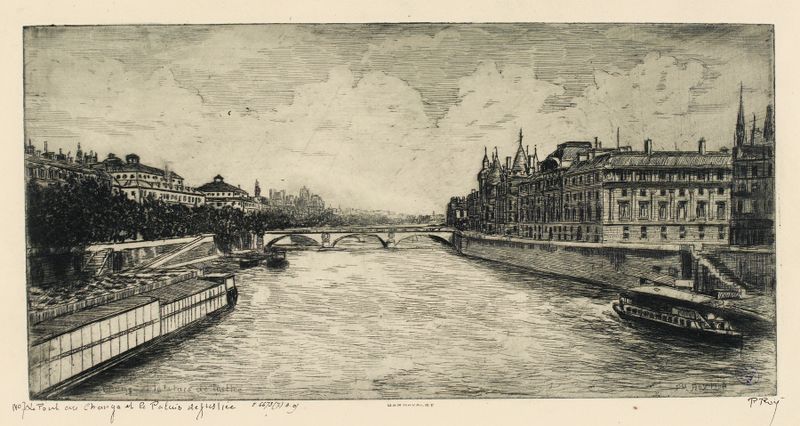
Le Pont au Change et le Palais de Justice
Pierre-Marcel Roy

Pavillon de l’Asie Russe
Pierre-Marcel Roy

La Sainte Chapelle
Pierre-Marcel Roy
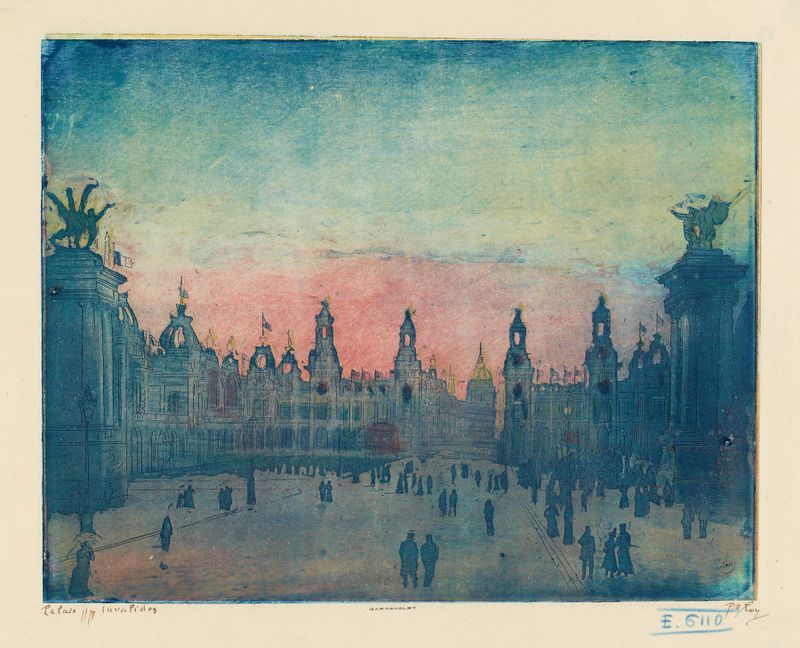
Palais des Invalides
Pierre-Marcel Roy

Eglise de Ste Eustache
Pierre-Marcel Roy

Pont Sully – Abside de Notre-Dame
Pierre-Marcel Roy

Place Maubert
Pierre-Marcel Roy

Palais d’Italie, de Norvège, d’Allemagne, d’Espagne et Roumanie
Pierre-Marcel Roy
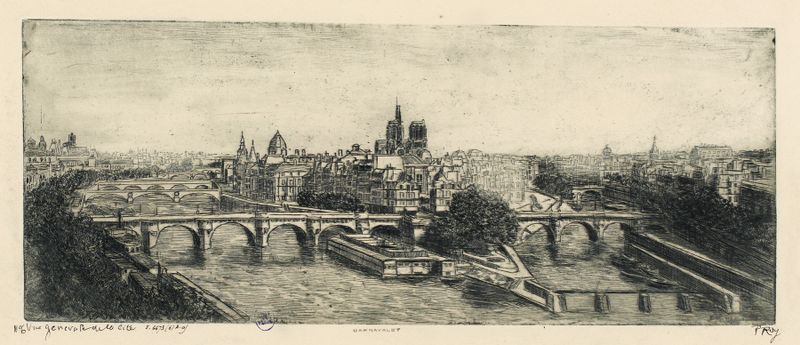
Vue générale de la Cité
Pierre-Marcel Roy

Palais de l’Electricité
Pierre-Marcel Roy





