
Rue Saint Julien le Pauvre, Paris 5e — History & Facts
In the delicate brushstrokes of Lundy’s work, fragility takes on a tangible form, inviting us to contemplate the ephemerality of existence. Look closely at the vibrant hues that dominate the canvas, where sunlit yellows mingle with muted blues and greens. The composition draws your eye towards the charming architecture of Rue Saint Julien le Pauvre, with its intimate streets creating a sense of nostalgic tranquility. Notice how the light dances across the surfaces, casting soft shadows that breathe life into the scene, making the viewer feel as if they are walking alongside the figures depicted. Amidst this picturesque setting lies an emotional tension — the juxtaposition of urban life against the backdrop of a fleeting moment.
The figures, engaged in their mundane activities, seem to transcend time, reminding us of the fragility of human connection in a world that often feels indifferent. Each detail, from the billowing curtains in the windows to the cobblestones worn by countless footsteps, encapsulates the intricate balance between permanence and impermanence. In 1949, Lundy painted this piece while living in Paris, a city rich with artistic revolution. The post-war era was a transformative time in the art world, marked by a desire to explore new forms of expression and a yearning for beauty amid the chaos.
This painting reflects both his personal journey and the broader cultural shifts occurring in the aftermath of conflict, capturing a fleeting moment in a city that has always been a canvas for dreams.
More Artworks by Victor Alfred Lundy
Browse all →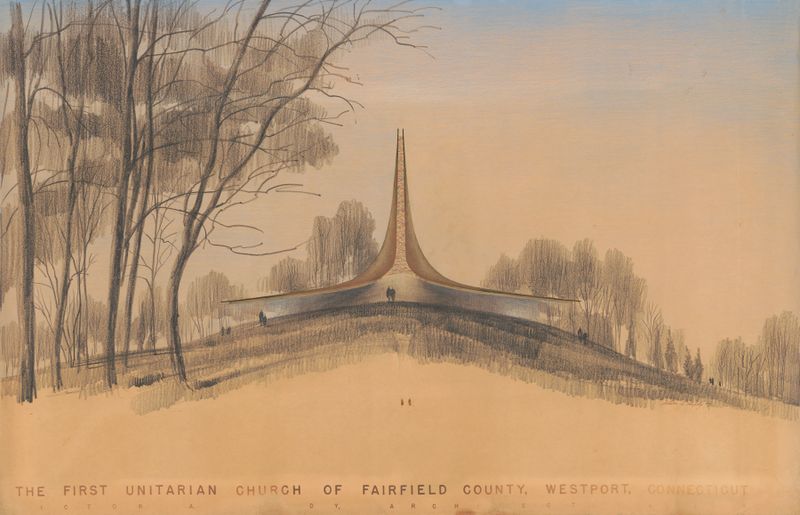
First Unitarian Church, Westport, Connecticut, Exterior
Victor Alfred Lundy

Residence for Mr. and Mrs. Ben Heller, East Hampton, Long Island, New York, Beach site
Victor Alfred Lundy
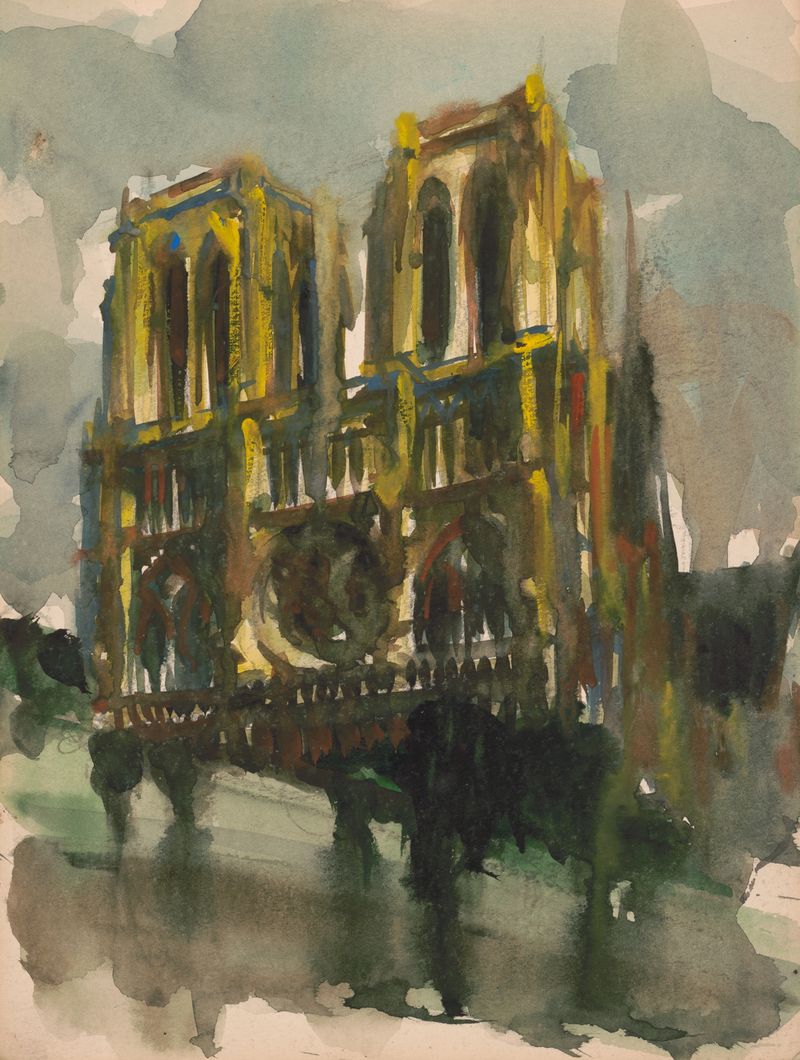
Notre Dame, Paris
Victor Alfred Lundy

Church on plaza, Mexico
Victor Alfred Lundy
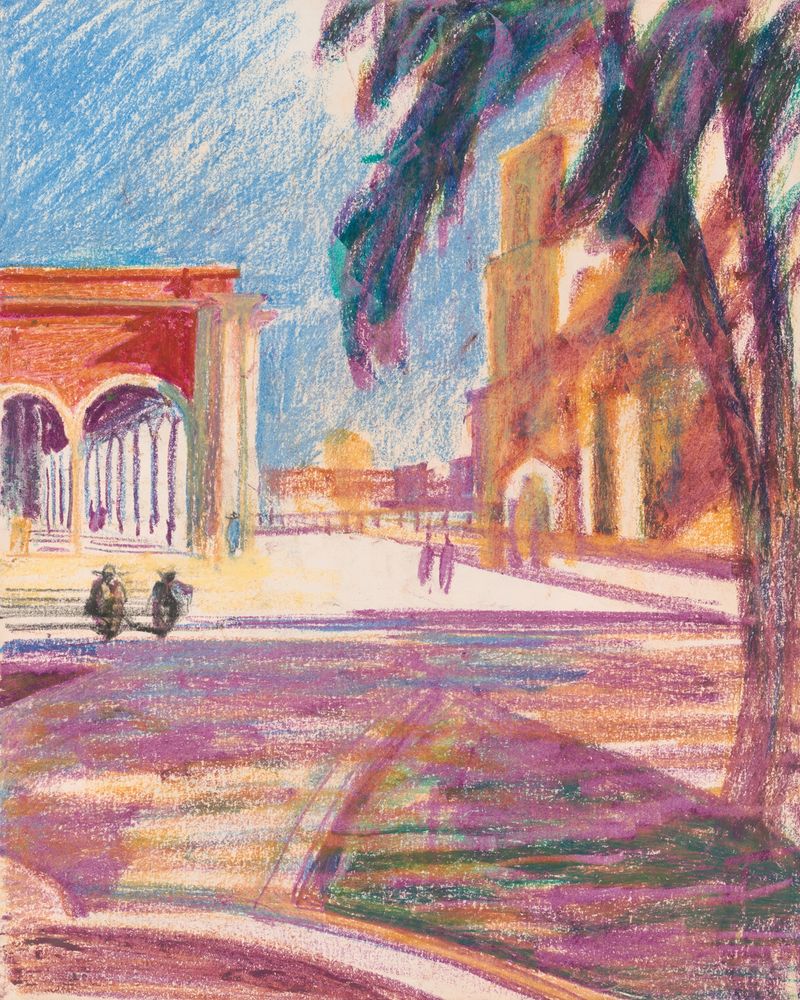
Plaza, Nochistlá́n, Mexico
Victor Alfred Lundy

Temple of Luxor
Victor Alfred Lundy

Trevi Fountain, Rome, Italy
Victor Alfred Lundy
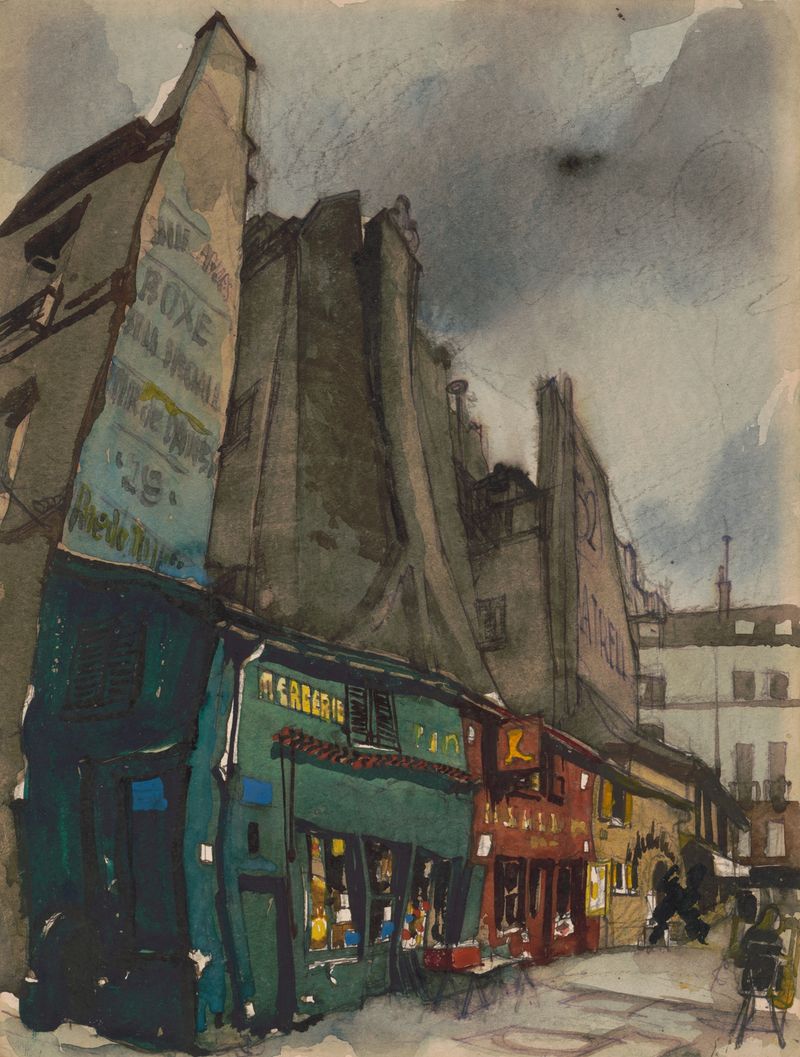
Place St. André des Arts, Paris between Rue Suger & Rue St. André des Arts
Victor Alfred Lundy
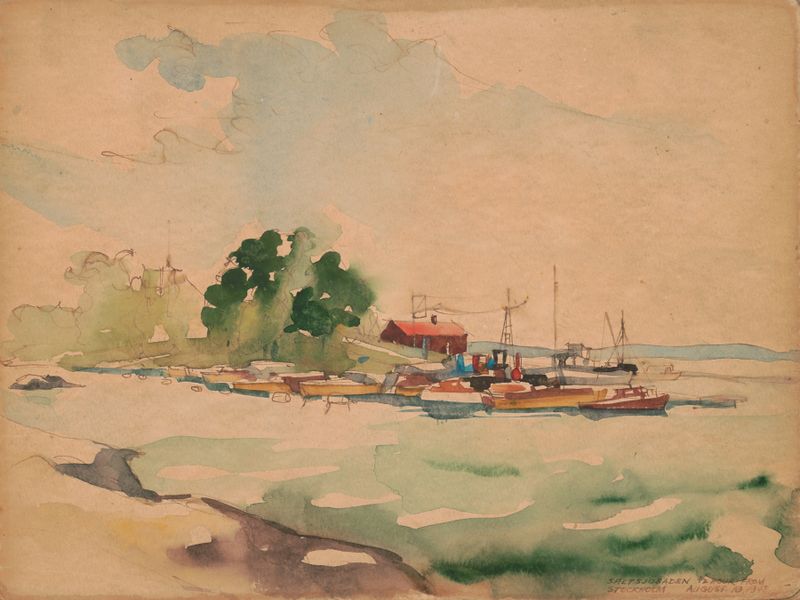
Saltsjöbaden, Half hour from Stockholm
Victor Alfred Lundy
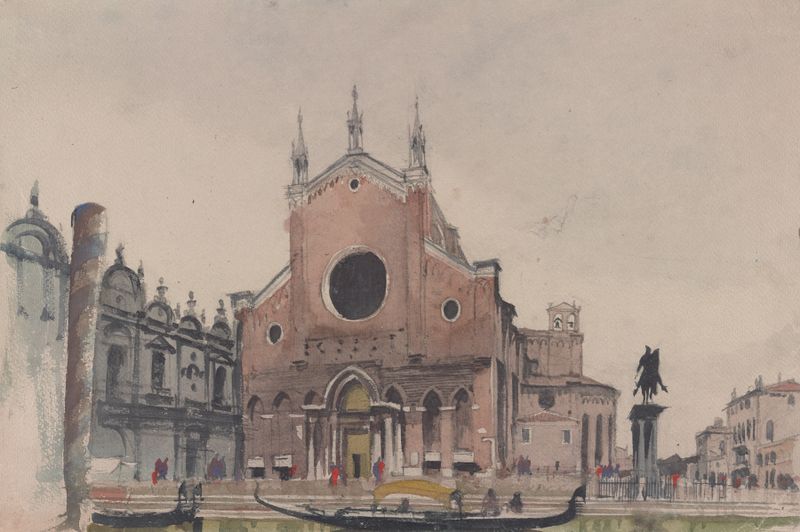
Santi Giovanni e Paolo, statue of Bartolomeo Colleoni (Verrochio), Scuola di San Marco, Venezia
Victor Alfred Lundy
More Architecture Art
Browse all →
The statue of Liberty
Frédéric Auguste Bartholdi

View of Houses in Delft, Known as ‘The Little Street’
Johannes Vermeer

View of Houses in Delft, Known as ‘The Little Street’
Johannes Vermeer

The Cathedral in Rouen. The portal, Grey Weather
Claude Monet

The yellow house
Vincent van Gogh

The Church in Auvers-sur-Oise, View from the Chevet
Vincent van Gogh