
Temple of Luxor — History & Facts
In moments of loss, we often seek the echoes of what once was—this painting resides in that delicate space. Look closely at the warm hues enveloping the ancient columns—deep ochres and muted golds that whisper of sun-drenched days long gone. Notice how the light spills through the archways, casting shadows that dance like fleeting memories across the stone floor. The composition guides the eye upward, where the architectural details cradle the sky, creating a dialogue between the earthly and the divine.
Each brushstroke reflects a meticulous technique, balancing realism with abstraction, as if to capture not just a temple, but the very essence of what it represents. In this artwork lies a poignant contrast between grandeur and desolation. The once-majestic pillars, though imposing and timeless, suggest a haunting quietude, evoking the passage of time and the inevitability of change. The interplay of light and shadow serves to evoke emotions of nostalgia and reverence; while beauty prevails, there is an underlying sense of loss that imbues the scene with depth.
The viewer is drawn into a contemplation of not only the physical structure depicted but also the memories and histories that it holds. During the late 1940s, Victor Alfred Lundy painted this piece in the aftermath of World War II, a time when many artists were grappling with themes of destruction and rebirth. As he explored the remnants of ancient cultures, he was likely reflecting on the fragility of human achievement amidst the chaos of modern life. This was a period marked by significant shifts in the art world, as abstraction surged, yet Lundy embraced a dialogue with history, infusing his work with both reverence and a sense of mourning for what has been lost.
More Artworks by Victor Alfred Lundy
Browse all →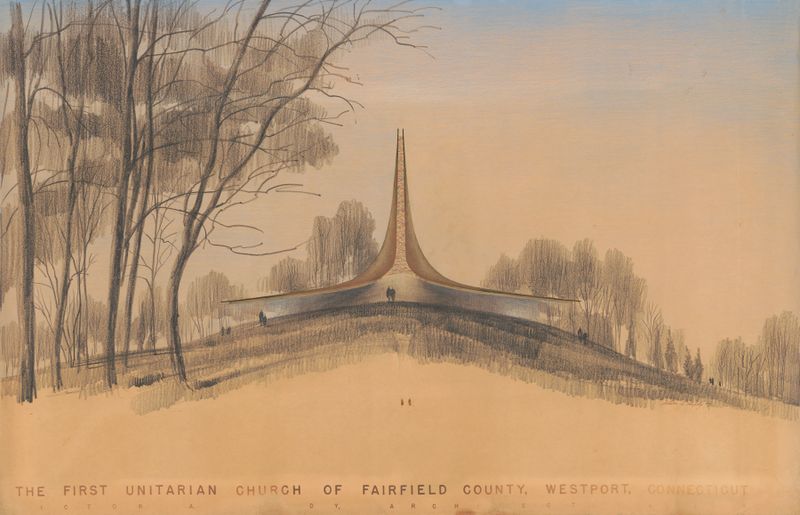
First Unitarian Church, Westport, Connecticut, Exterior
Victor Alfred Lundy

Residence for Mr. and Mrs. Ben Heller, East Hampton, Long Island, New York, Beach site
Victor Alfred Lundy
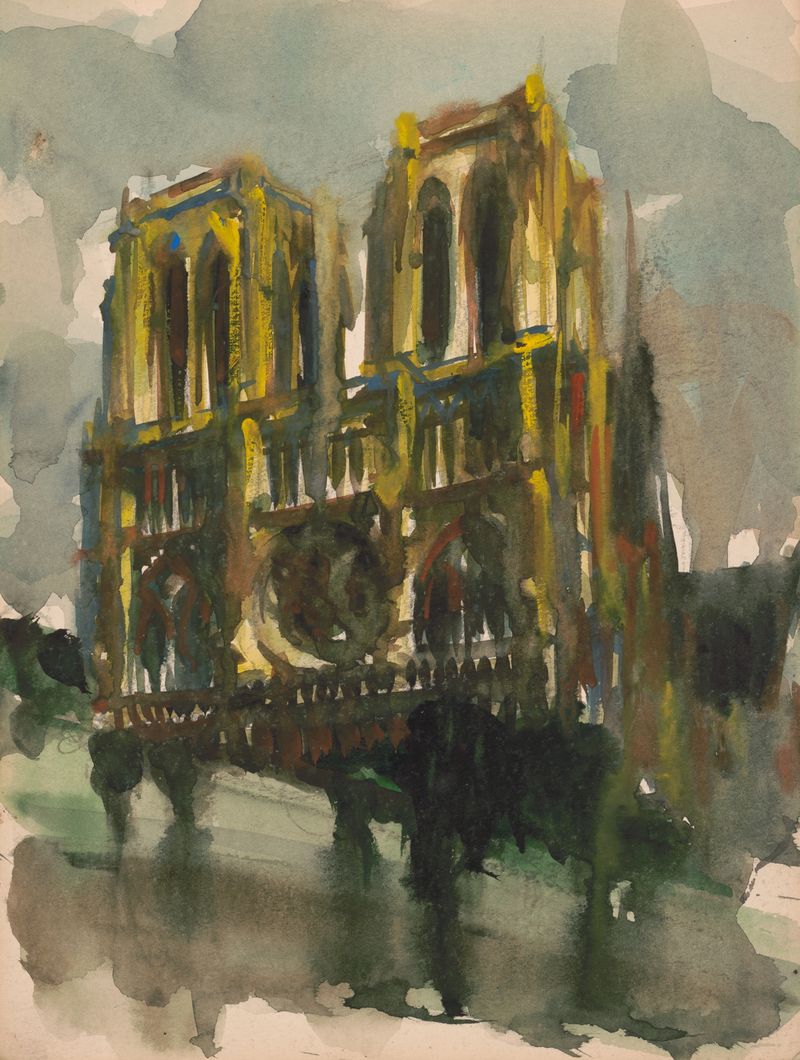
Notre Dame, Paris
Victor Alfred Lundy

Church on plaza, Mexico
Victor Alfred Lundy

Rue Saint Julien le Pauvre, Paris 5e
Victor Alfred Lundy
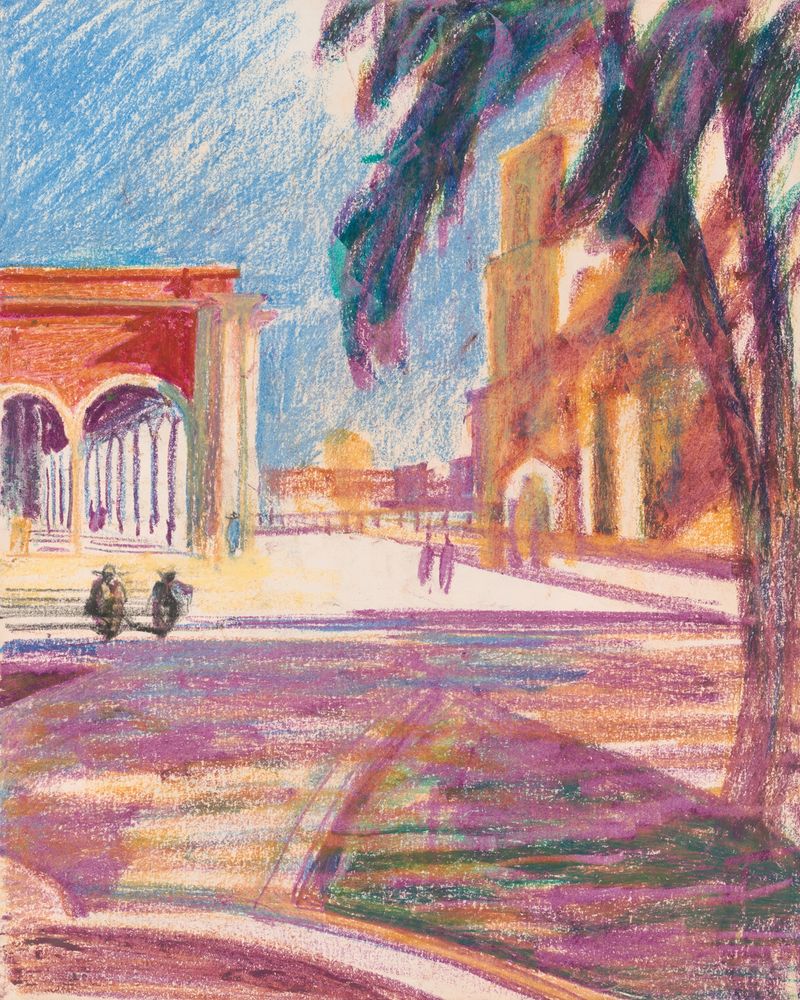
Plaza, Nochistlá́n, Mexico
Victor Alfred Lundy

Trevi Fountain, Rome, Italy
Victor Alfred Lundy
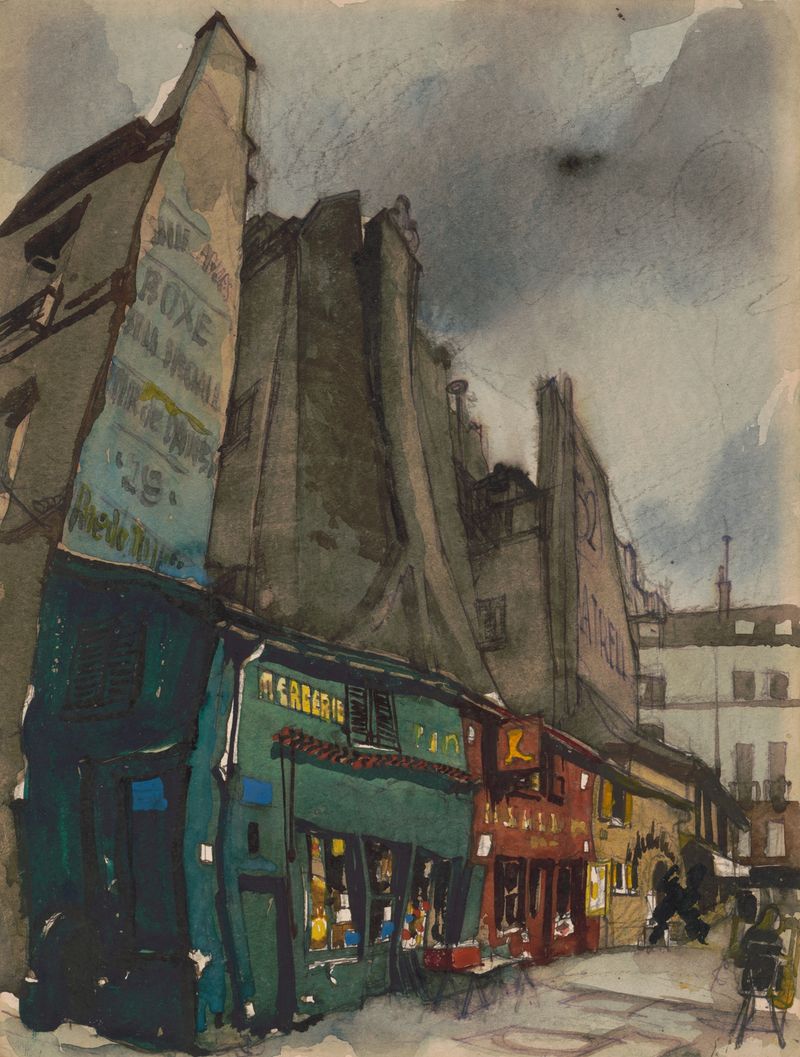
Place St. André des Arts, Paris between Rue Suger & Rue St. André des Arts
Victor Alfred Lundy
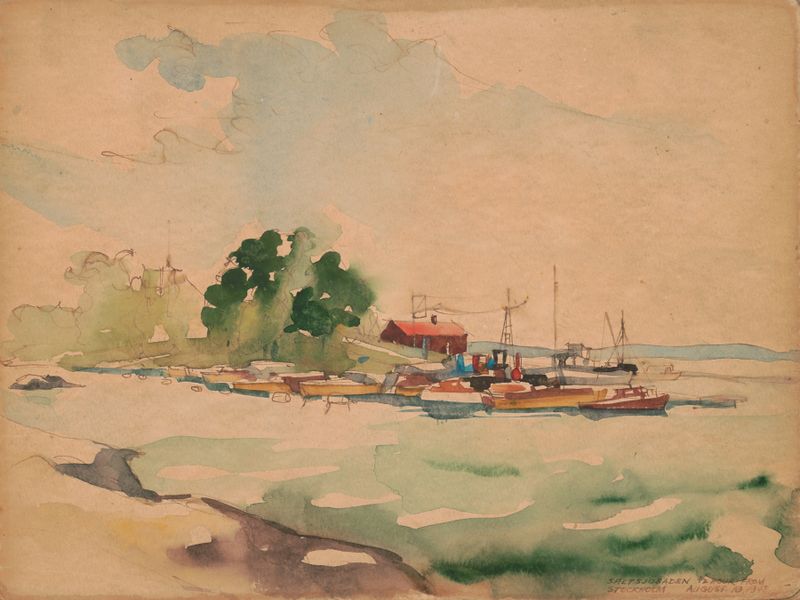
Saltsjöbaden, Half hour from Stockholm
Victor Alfred Lundy
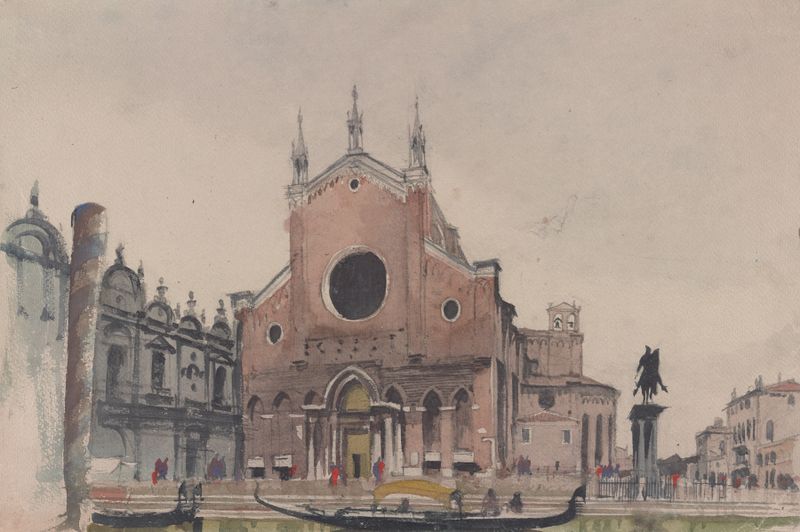
Santi Giovanni e Paolo, statue of Bartolomeo Colleoni (Verrochio), Scuola di San Marco, Venezia
Victor Alfred Lundy
More Architecture Art
Browse all →
The statue of Liberty
Frédéric Auguste Bartholdi

View of Houses in Delft, Known as ‘The Little Street’
Johannes Vermeer

View of Houses in Delft, Known as ‘The Little Street’
Johannes Vermeer

The Cathedral in Rouen. The portal, Grey Weather
Claude Monet

The yellow house
Vincent van Gogh

The Church in Auvers-sur-Oise, View from the Chevet
Vincent van Gogh