
Ruine De St. Jean-Le-Bas (Aisne) — History & Facts
When did color learn to lie? In a world where hues can manipulate perception, the balance between reality and illusion becomes a delicate dance of the senses. Look to the left at the crumbling stone walls, their muted grays and browns a testament to time's relentless passage. The soft interplay of light and shadow breathes life into the ruins, casting a poignant atmosphere that envelops the viewer. Notice how the warm greens of the creeping foliage contrast with the cold, stark remnants of architecture, creating an emotional tension that speaks of nature's reclamation of man’s creations. Beneath the surface, the painting reveals deeper themes of decay and renewal.
The juxtaposition of vibrant life against the backdrop of human fragility suggests a commentary on the inevitable cycle of existence. The artist captures not just the physical ruins but also the echoes of history, inviting contemplation on how beauty and desolation coexist in harmony. Each brushstroke begs the viewer to reflect on their own place within this cycle, blurring the lines between past and present. In 1860, the artist was immersed in the evolving landscape of French art, a time when Romanticism was giving way to Realism.
Working in a society grappling with change, he sought to portray the beauty found in decay, influenced by his surroundings and the burgeoning appreciation for the impermanence of life. This piece stands as a testament to his engagement with these shifting artistic currents, illustrating a moment when the weight of history intertwined with the vibrancy of the present.
More Artworks by Victor Petit
Browse all →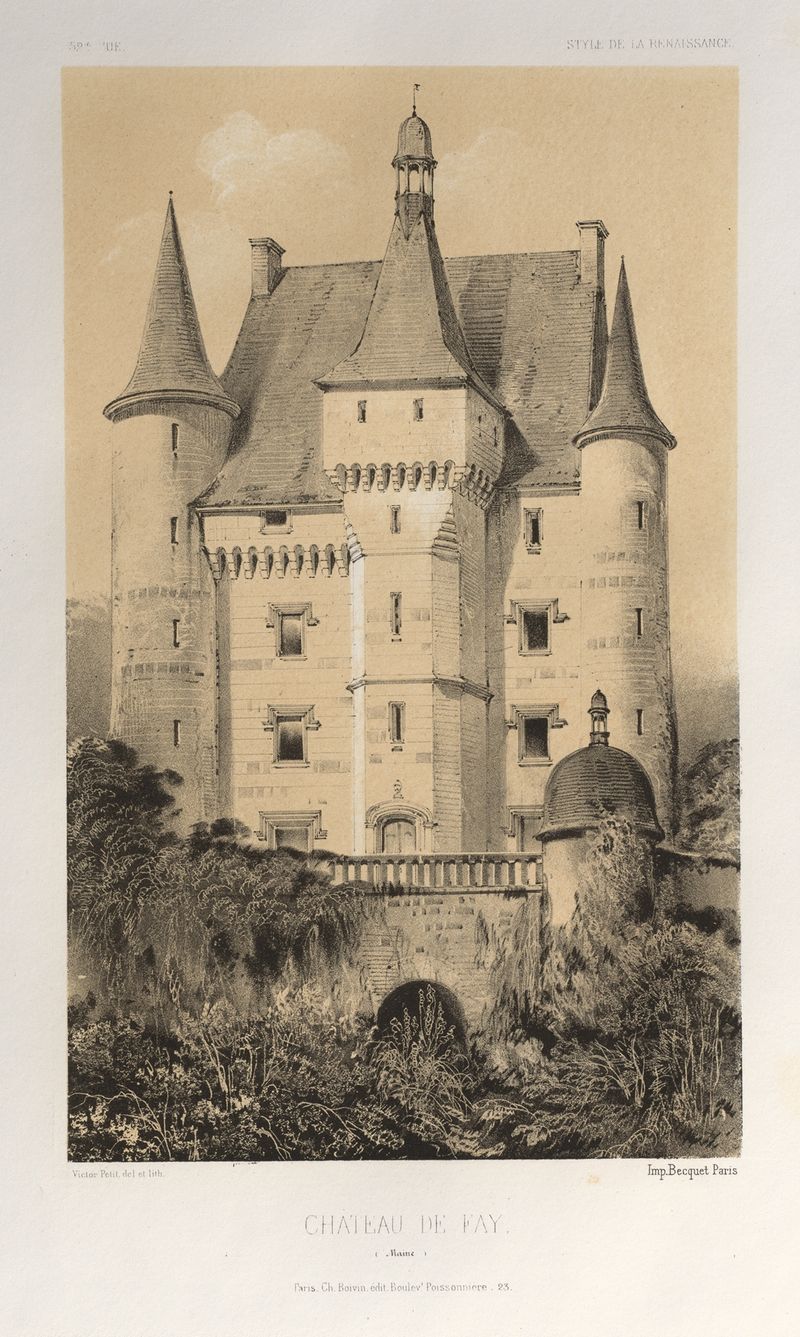
Château De Fay (Maine)
Victor Petit
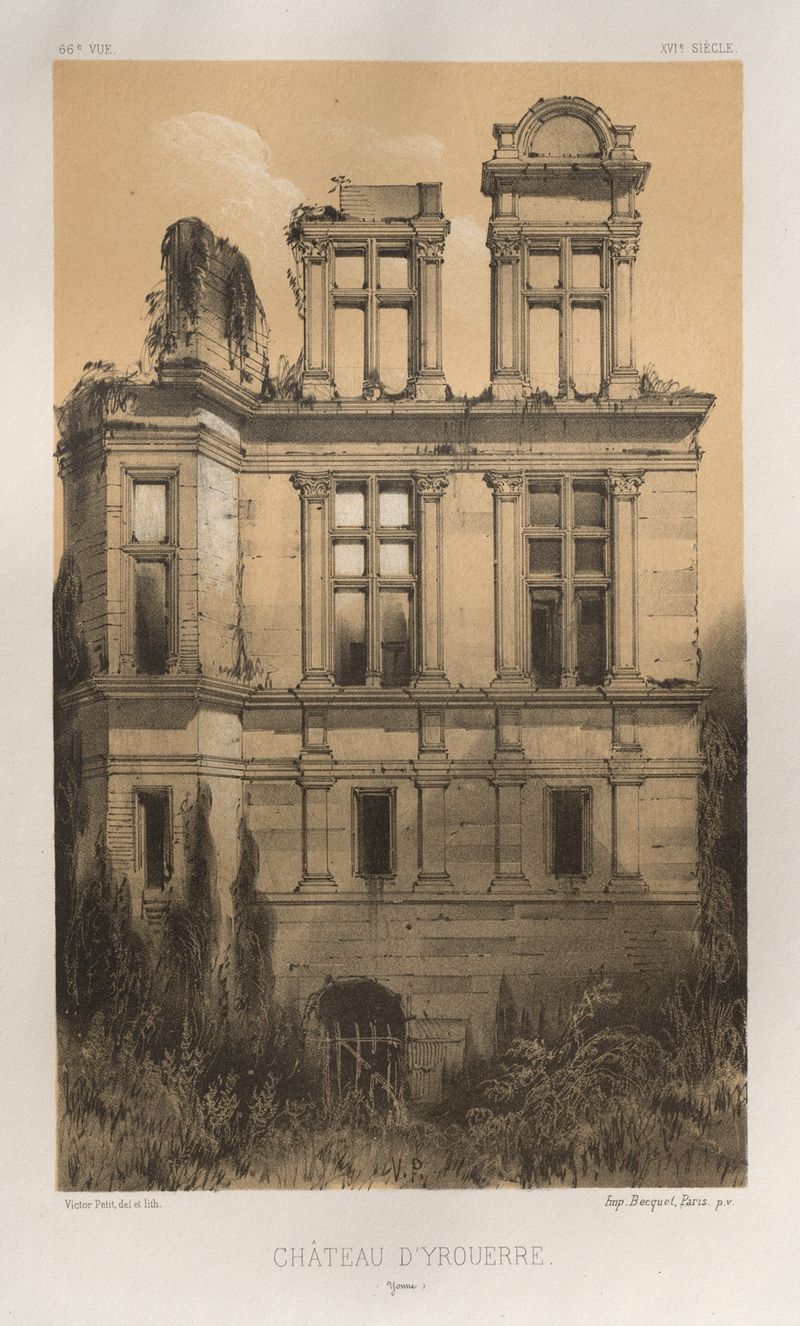
Château D’Yrouerre (Yonne)
Victor Petit
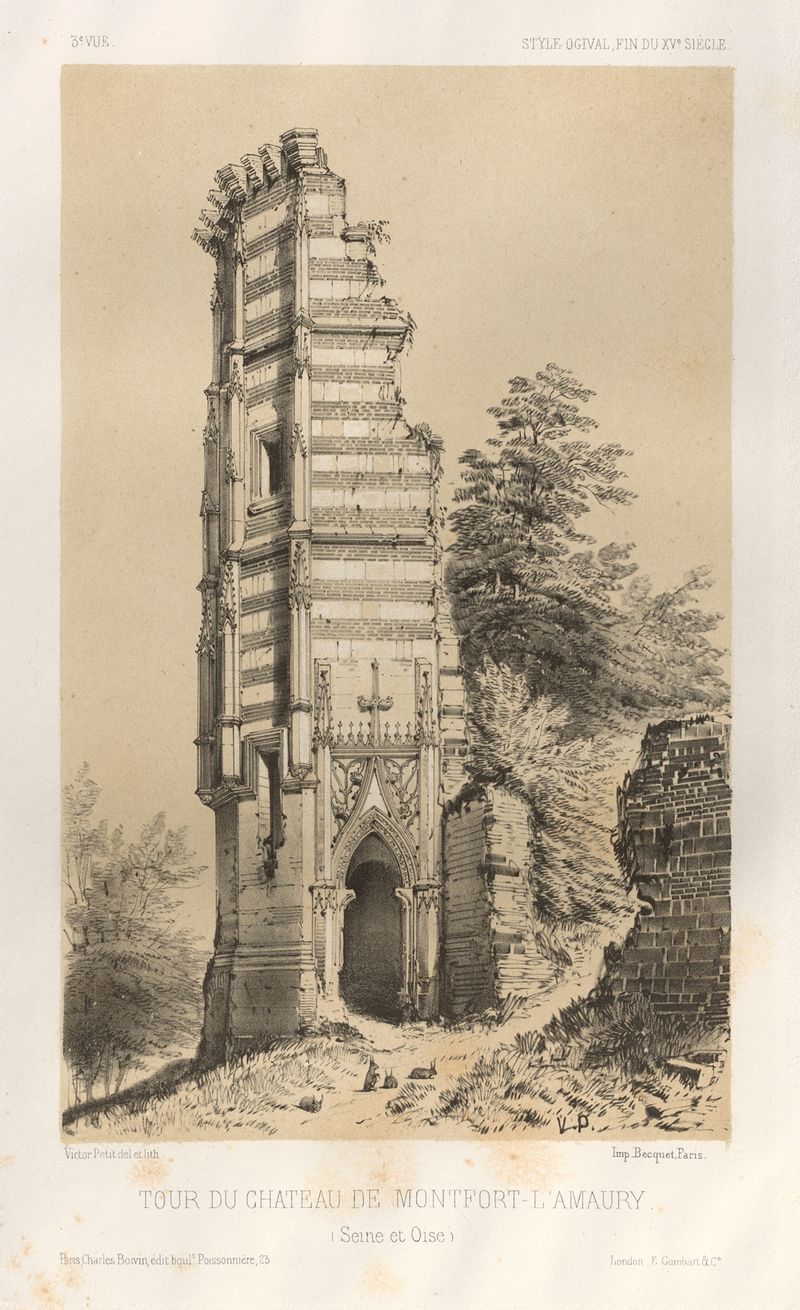
Tour du chateau de Montfort-l’Amaury (Seine-et-Oise)
Victor Petit

Tour Du Port De Marseille (Bouches Du Rhône)
Victor Petit
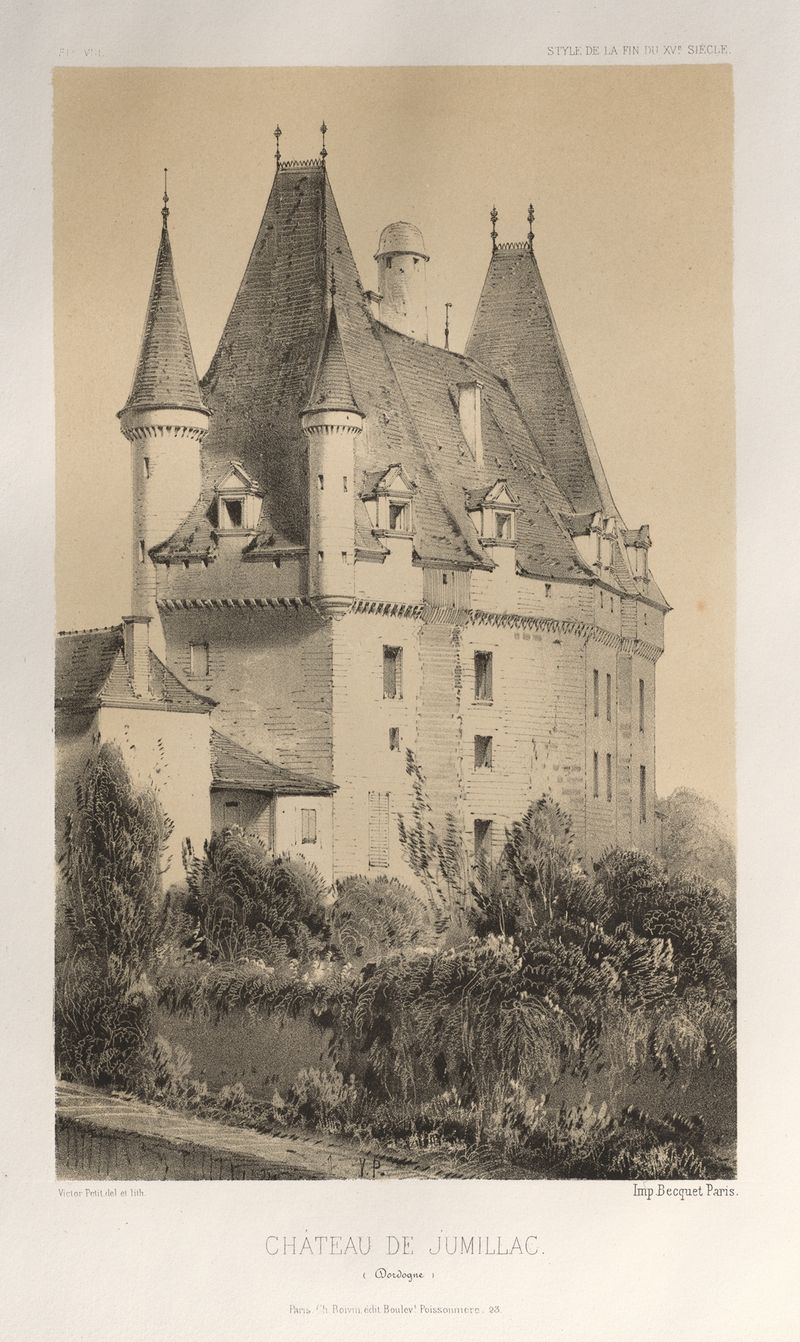
Château De Jumillac (Dordogne)
Victor Petit

Château de Tévray (Eure)
Victor Petit

Galerie Du Château De Jouancy (Saone et Loire)
Victor Petit

Château De Mello (Oise)
Victor Petit
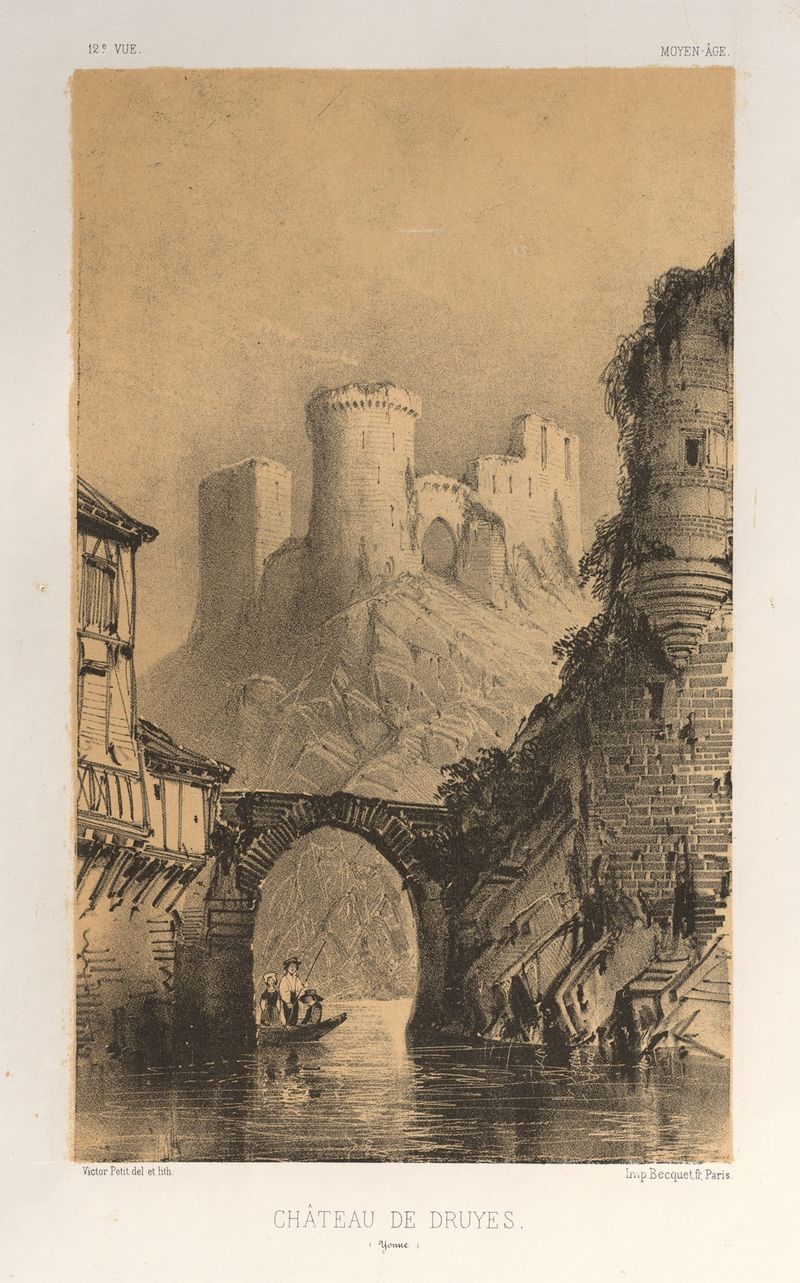
Chateau De Druyes (Yonne)
Victor Petit

Le ChasteLet-Neuf (Corrèze)
Victor Petit
More Architecture Art
Browse all →
The statue of Liberty
Frédéric Auguste Bartholdi

View of Houses in Delft, Known as ‘The Little Street’
Johannes Vermeer

View of Houses in Delft, Known as ‘The Little Street’
Johannes Vermeer

The Cathedral in Rouen. The portal, Grey Weather
Claude Monet

The yellow house
Vincent van Gogh

The Church in Auvers-sur-Oise, View from the Chevet
Vincent van Gogh