
Ruined Farm — History & Facts
Where does light end, and longing begin? In the interplay of shadow and illumination, desire finds its voice, whispering from the ruins of time. Focus on the remnants of a once-thriving farm, now infused with melancholic beauty. The foreground captures crumbling walls and broken arches, suggesting decay, yet the soft light that bathes the scene tenderly elevates the desolation. Look to the left where a solitary tree emerges, its gnarled branches reaching toward an expansive sky, hinting at resilience amidst ruin.
The warm hues of ochre and beige contrast sharply with the cooling blues and greens, creating a dialogue between warmth and isolation. Delve into the emotional undertones of this work, where nature’s reclaiming of space resonates with both loss and nostalgia. The juxtaposition of the dilapidated structures and the lush, encroaching foliage evokes a profound yearning for the past, a desire that lingers like the fading light. Each fragment of stone speaks of stories untold, while the sprawling landscape suggests hope for renewal, revealing the tension between destruction and rebirth. Hubert Robert painted Ruined Farm around 1770-1775 during a period marked by shifting artistic movements in Europe.
Living in Paris, he was influenced by the rise of neoclassicism while also embracing the romantic notions of nature's power. At this time, Robert was exploring themes of nostalgia and beauty in decay, reflecting the societal complexities he witnessed in an era poised on the brink of change.
More Artworks by Hubert Robert
Browse all →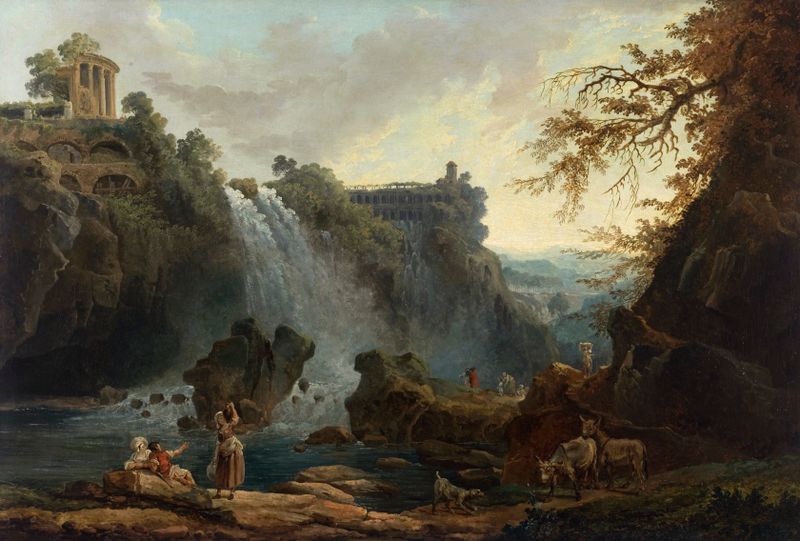
Les Cascatelles de Tivoli
Hubert Robert
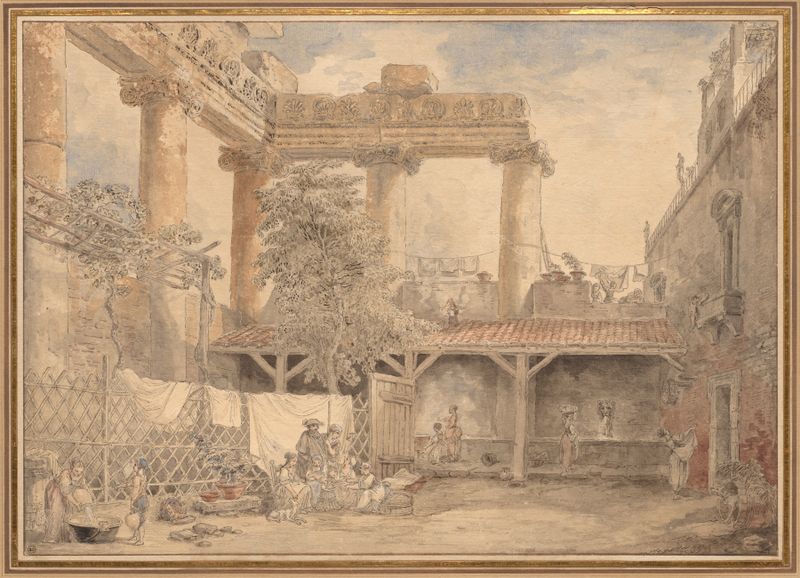
Roman Ruins, Villa Pamfili
Hubert Robert

The Rustic Bridge, Château de Méréville, France
Hubert Robert

The Portico of a Country Mansion
Hubert Robert

Architectural Capriccio
Hubert Robert

The Obelisk
Hubert Robert
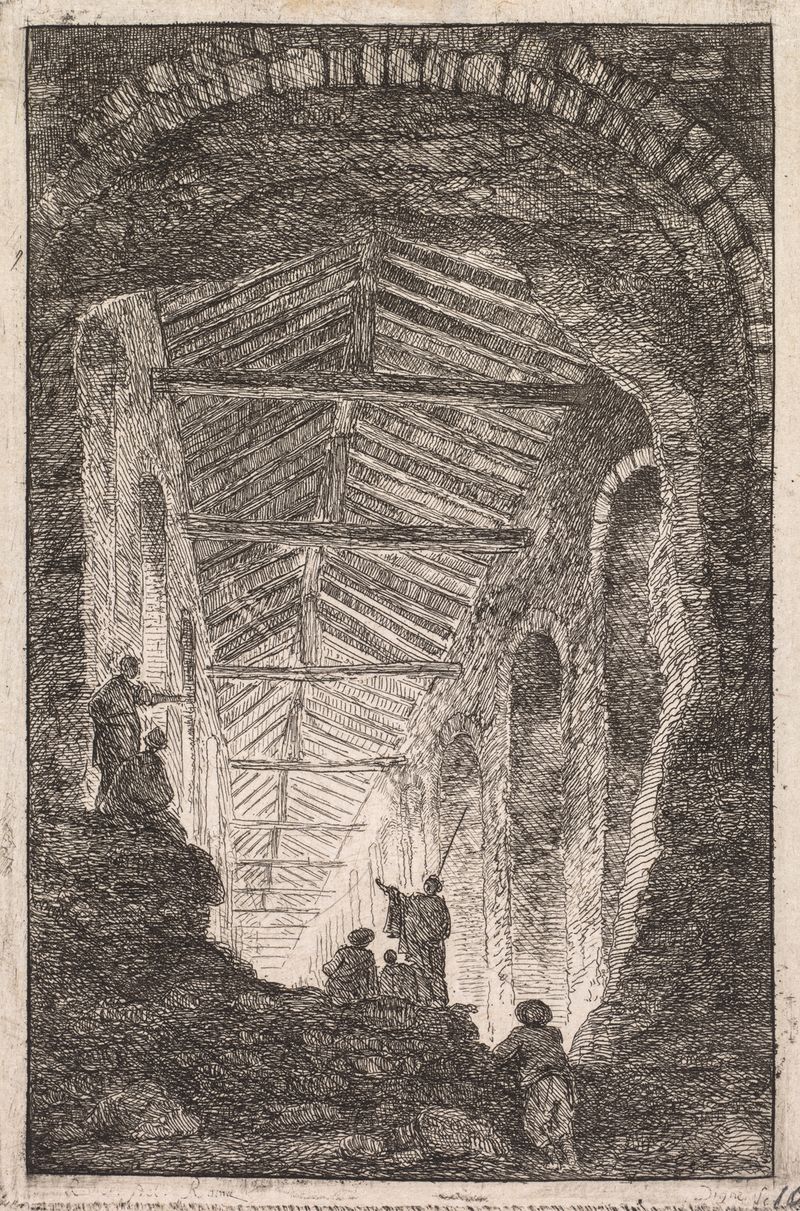
The Antique Gallery
Hubert Robert

L’incendie de l’Opéra, vu des jardins du Palais-Royal, le 8 juin 1781
Hubert Robert
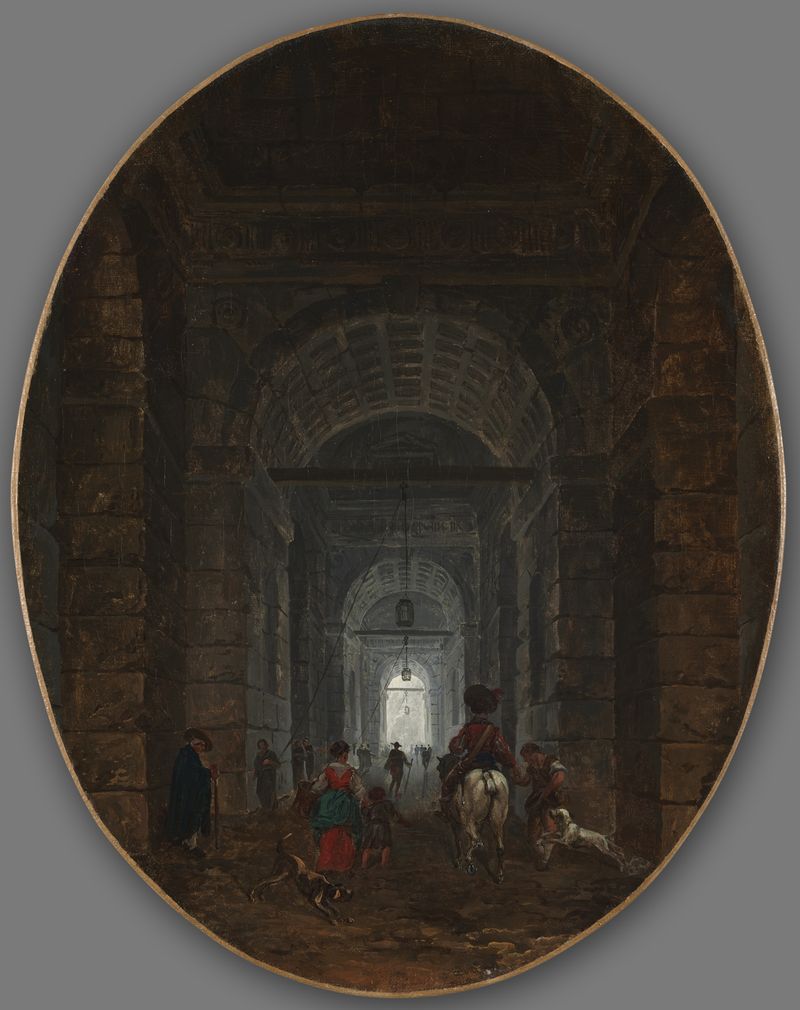
The Grotto of Posillipo
Hubert Robert

Architectural Capriccio with ruins of the Temple of Saturn and the Colosseum in the background
Hubert Robert





