
Ruined Fort on a River — History & Facts
Can paint confess what words never could? In the stillness of Ruined Fort on a River, faith and decay intermingle, whispering stories of a forgotten past. Look to the left, where the remnants of the ancient fort rise like memories against the horizon. The starkness of its crumbling walls contrasts sharply with the gentle flow of the river, inviting your gaze to wander. Notice how the sunlight bathes the scene in a soft, golden hue, illuminating patches of overgrown grass that cling to the ruins.
The composition balances decay and serenity, framed by trees whose branches seem to cradle the fort, as if nature itself is both a witness and a gentle guardian of the site’s history. Within this serene landscape lies a tension between the fleeting and the eternal. The river, symbolizing the passage of time, flows steadily, juxtaposing the fort's stillness, a relic of human ambition now surrendered to nature. This contrast evokes reflections on resilience and the inevitable decline of our constructs.
Each detail—the textures of the stones, the shimmering ripples of water—speaks to a deeper narrative of faith in preservation, even as the structures we build crumble away. Samuel Davis painted this piece during a period where Romanticism was flourishing, likely in the late 18th century. It was a time when artists sought to capture the sublime beauty of nature and the ruins of humanity, mirroring a cultural shift towards introspection and a fascination with the past. Davis, immersed in this artistic movement, used his brush to convey a sense of nostalgia and reverence for lost grandeur, echoing the sentiments of a world grappling with its own transient existence.
More Artworks by Samuel Davis
Browse all →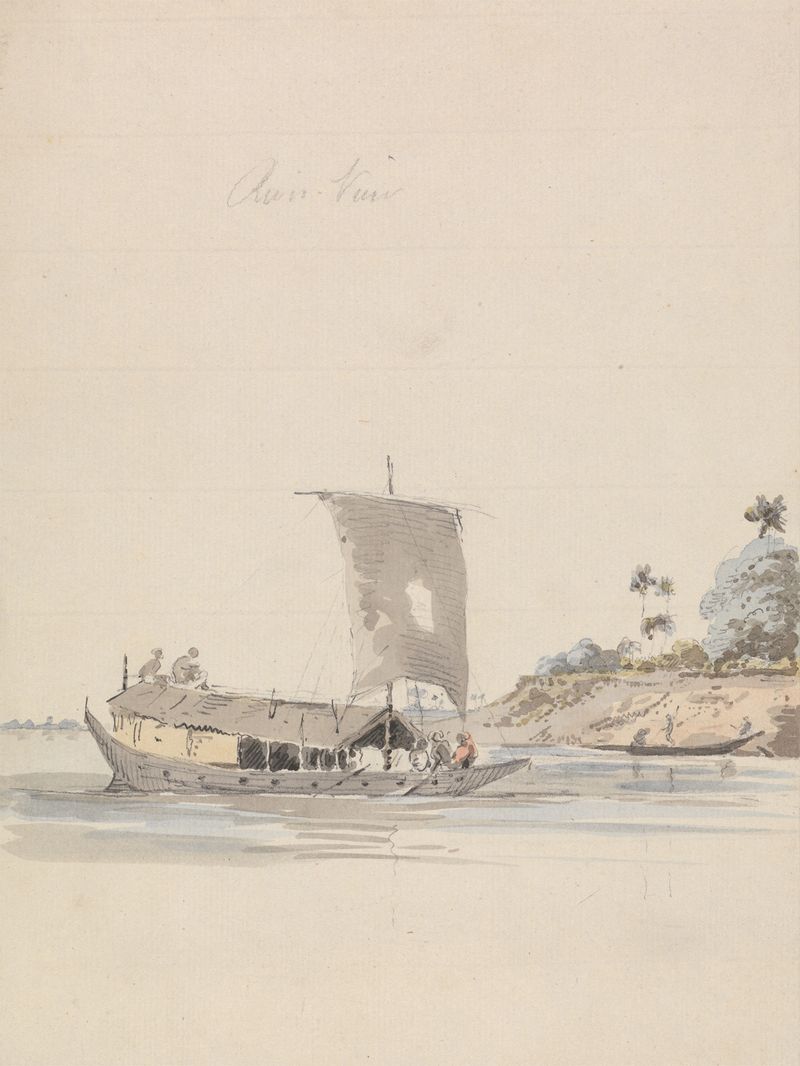
River View with a Junk (near Rajmahal)
Samuel Davis
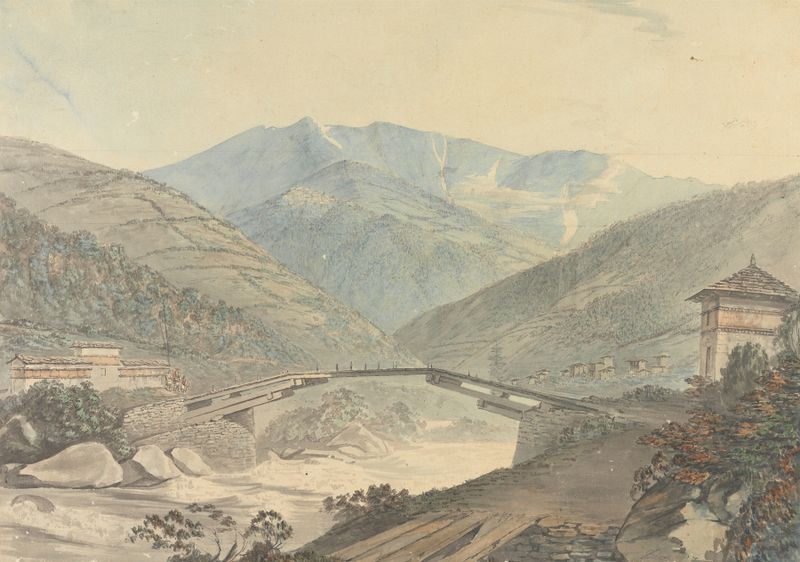
View near Tassisudon [Tashicho Dzong] in Bhutan
Samuel Davis
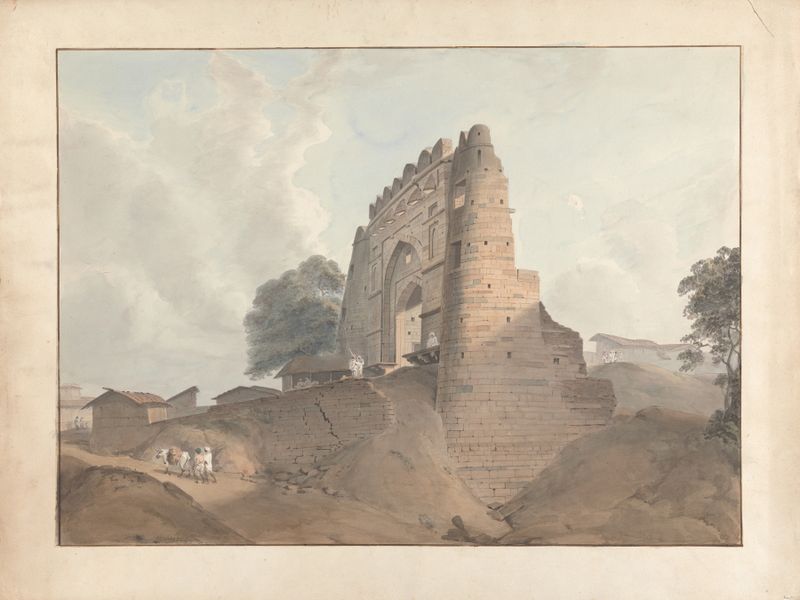
Gate of the Old Fort at Old Benares
Samuel Davis
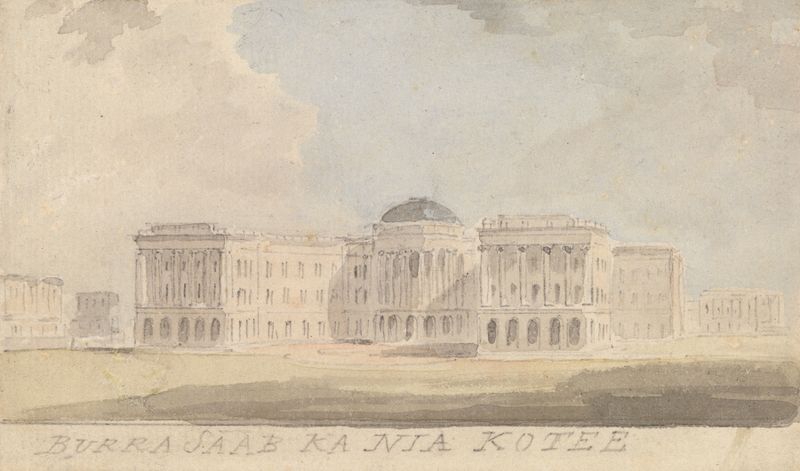
New Government House at Calcutta
Samuel Davis
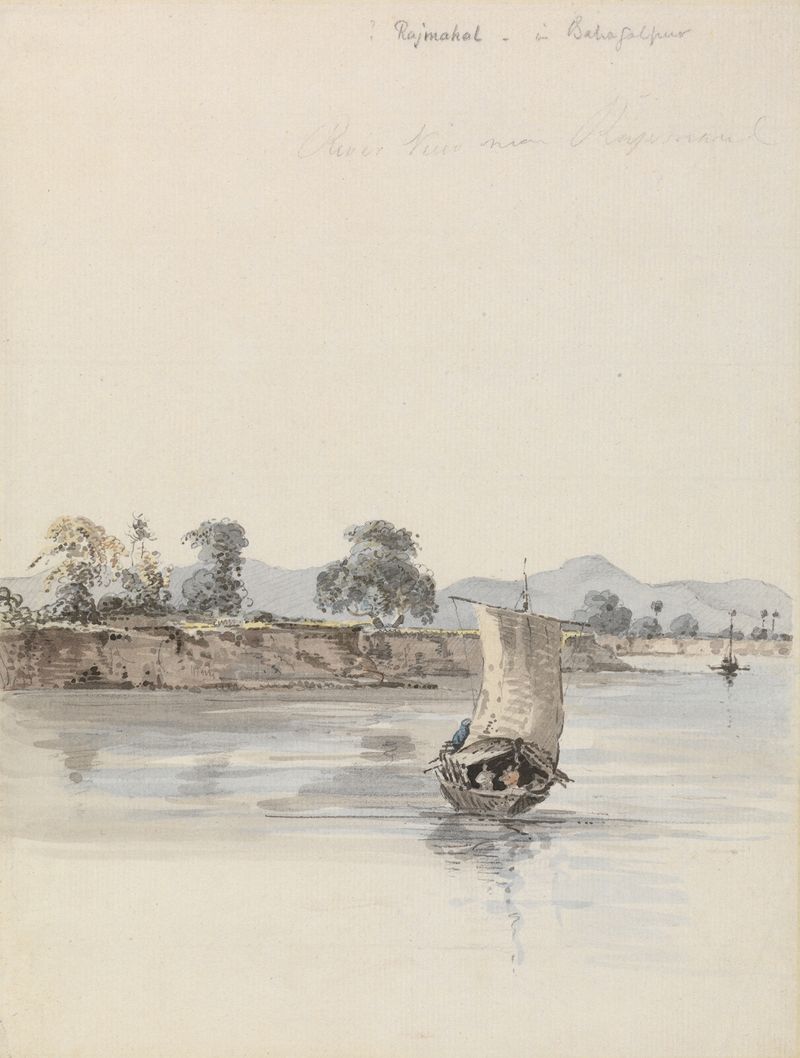
River View near Rajmahal
Samuel Davis
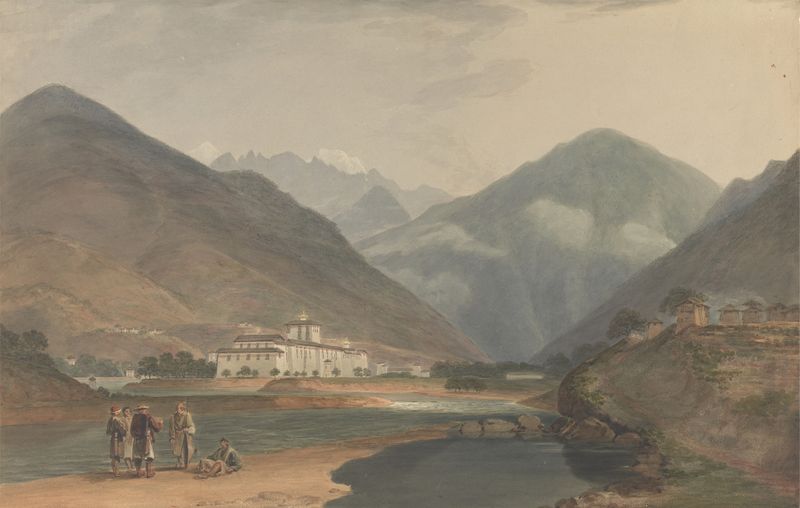
The Former Winter Capital of Bhutan at Punakha Dzong
Samuel Davis
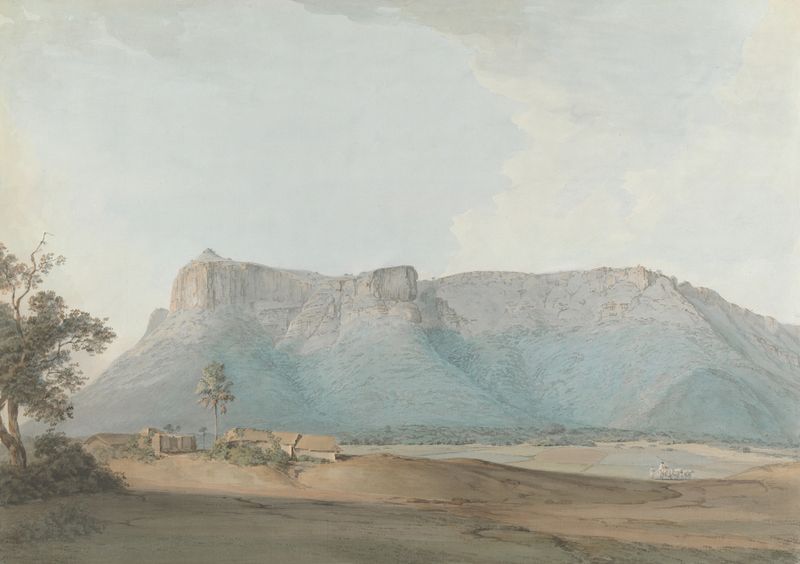
Rhotas from Akberpore
Samuel Davis
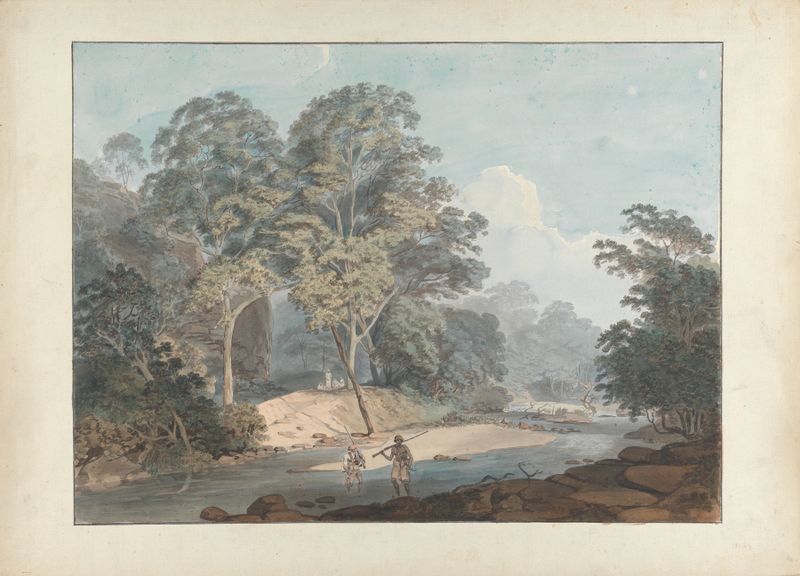
Rocky River Scene with Sepoys
Samuel Davis
West Country Town by a River
Samuel Davis
The Annual Resort of Hindoos to Mundar Hill near Bhagulpore [Bhagalpur]
Samuel Davis





