
Ruines De L’Église De St. Aubert (Haute-Marne) — History & Facts
Did the painter know this moment would outlive them? The stillness of decay, preserved within the frame, poses questions of existence and permanence. Focus on the center of the canvas, where the skeletal remains of the church rise solemnly against a washed-out sky. The muted colors of grays and browns draw the eye, bringing the textured stone to life in both its beauty and its decline. Notice how light plays delicately across the surface, illuminating details of crumbling masonry, while shadows deepen the sense of abandonment and nostalgia. This work encapsulates a profound tension between the past's grandeur and the present's fragility.
The juxtaposition of the sturdy architecture against the encroaching wilderness hints at nature’s quiet reclamation, evoking thoughts on the passage of time and human endeavor. Every chipped stone whispers stories of faith and community, while the overgrown vines suggest a world moving on, reflecting the delicate balance between legacy and oblivion. Created in 1860 during a period of enlightenment in art, the artist painted this scene in France, a nation grappling with change and modernization. As the Romantic movement waned and Realism emerged, Victor Petit found inspiration in the contrasts of nature and history.
His choice to depict ruins speaks to an era that valued authenticity, capturing a moment that resonates through centuries, inviting viewers to ponder the relationship between mankind and the remnants they leave behind.
More Artworks by Victor Petit
Browse all →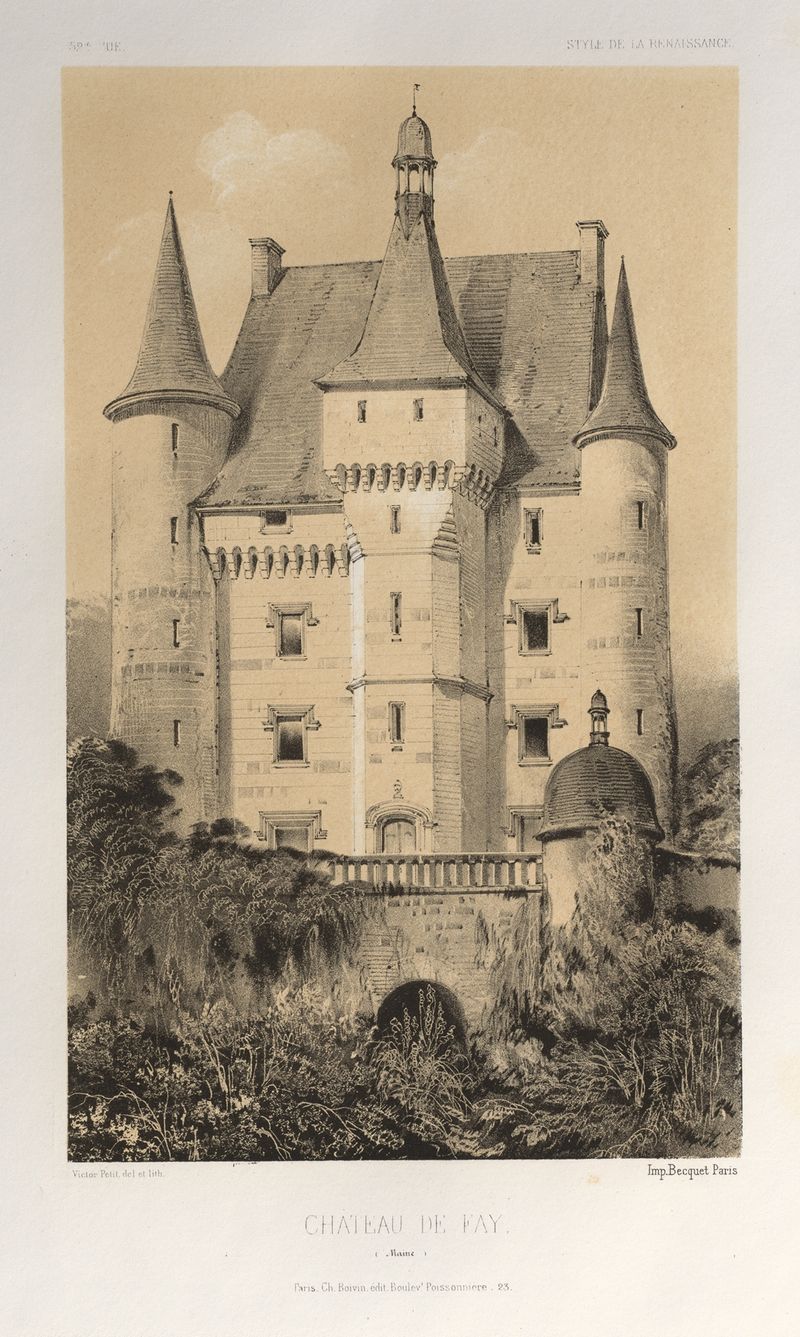
Château De Fay (Maine)
Victor Petit
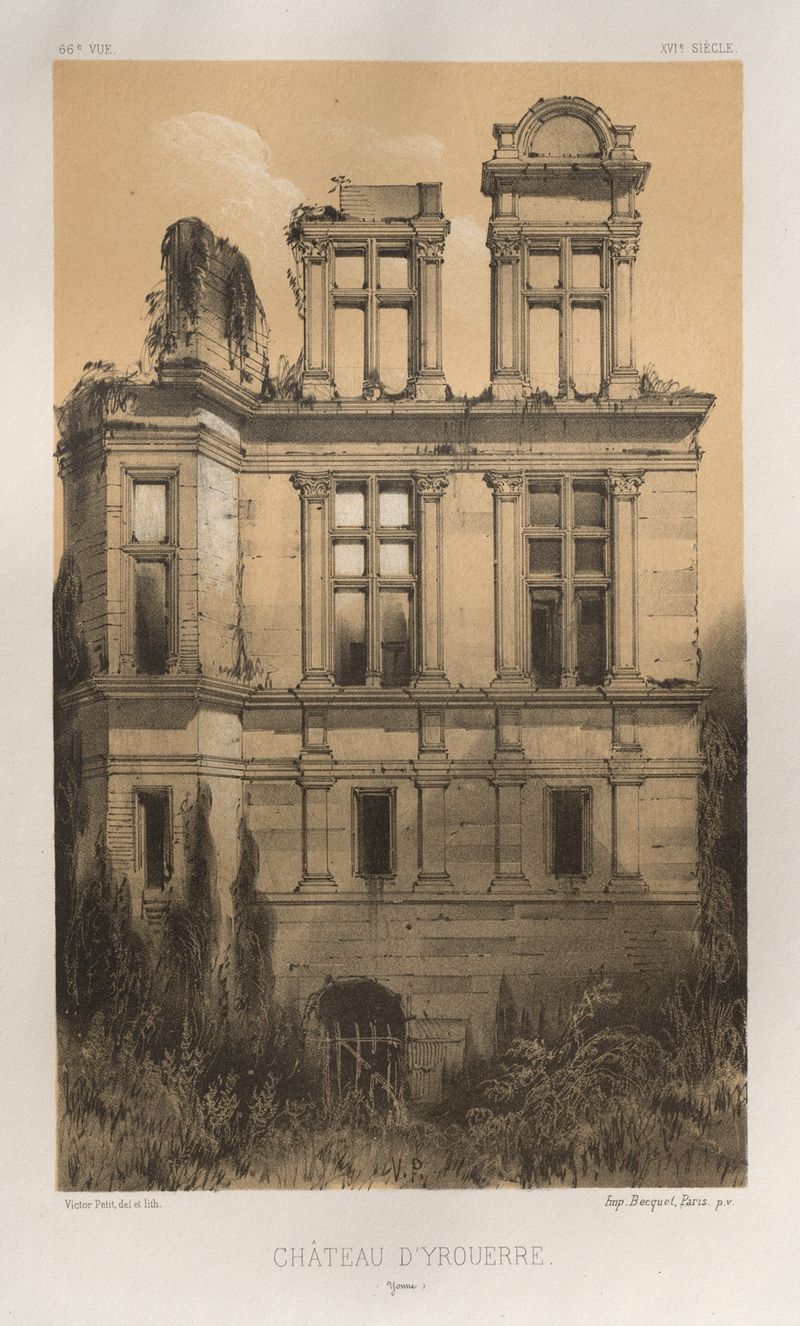
Château D’Yrouerre (Yonne)
Victor Petit
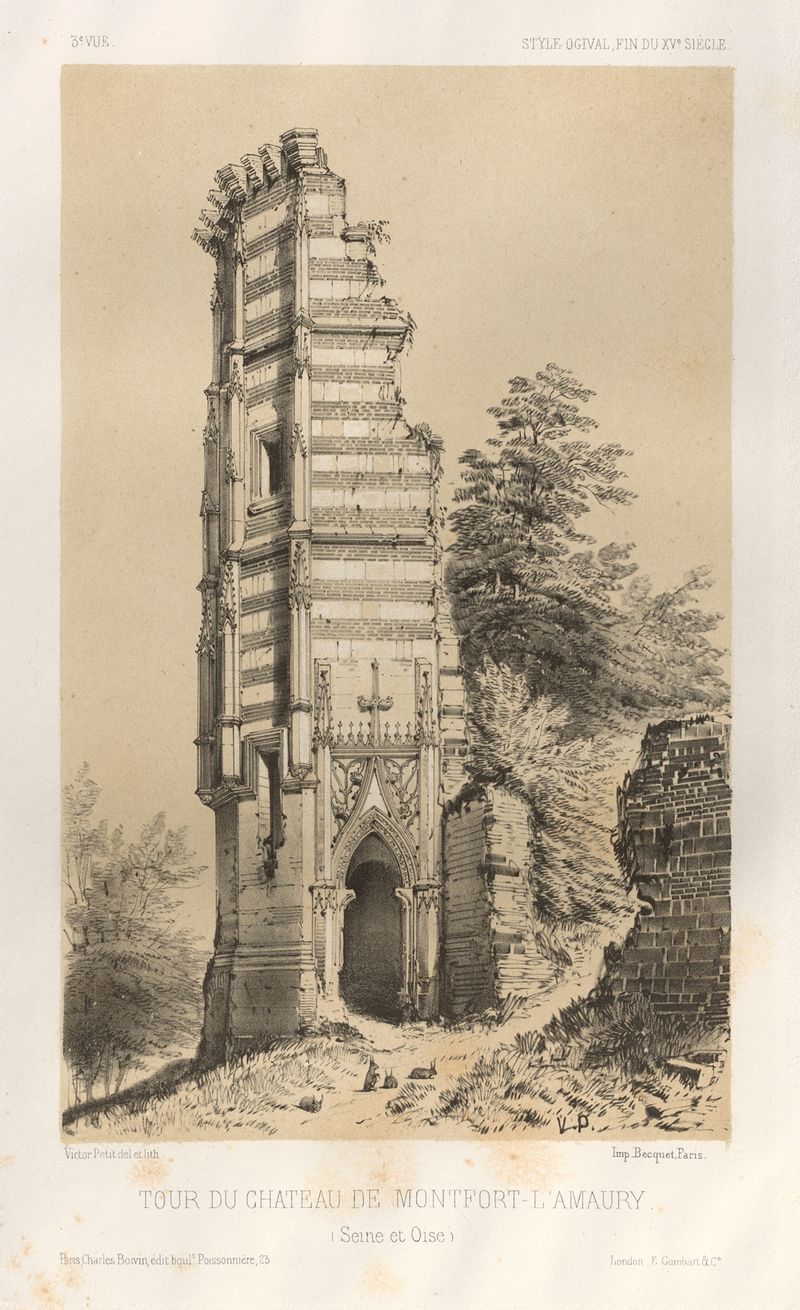
Tour du chateau de Montfort-l’Amaury (Seine-et-Oise)
Victor Petit

Tour Du Port De Marseille (Bouches Du Rhône)
Victor Petit
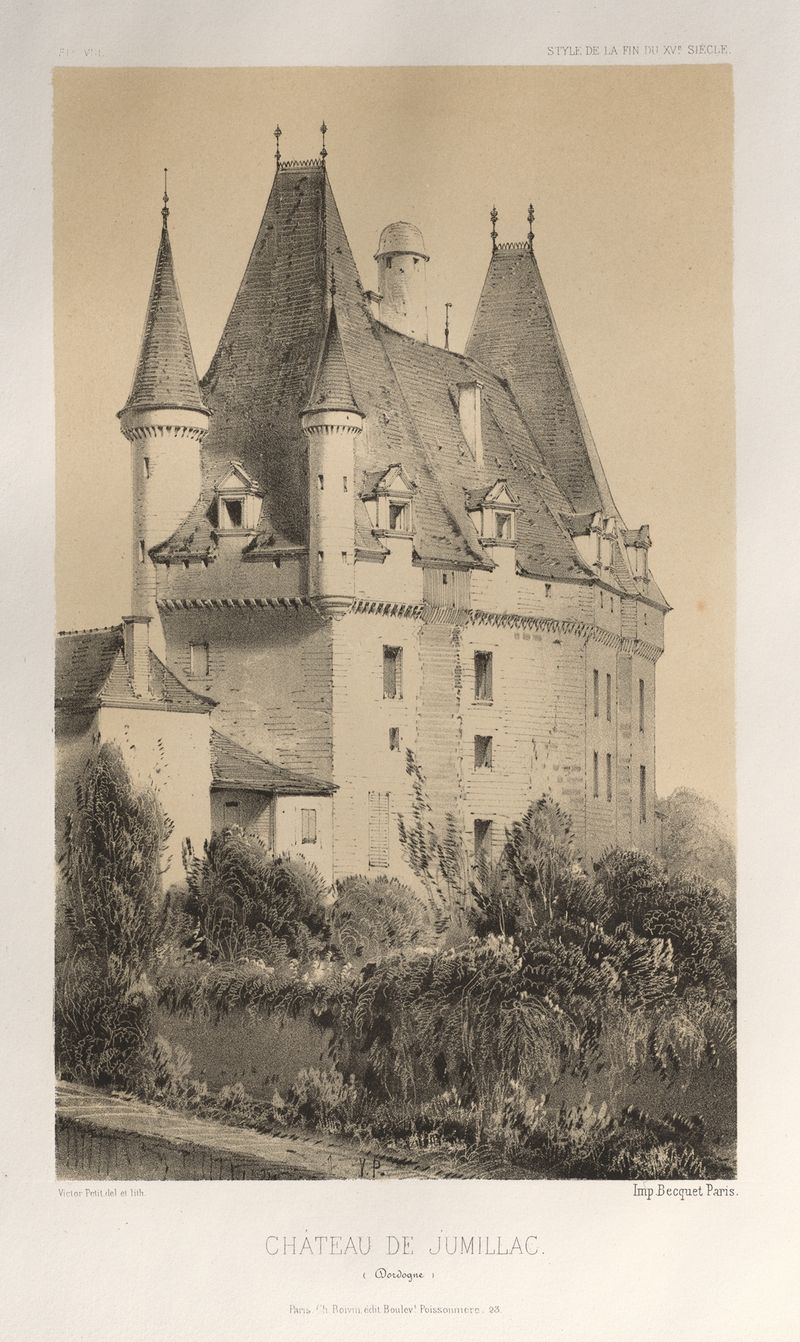
Château De Jumillac (Dordogne)
Victor Petit

Château de Tévray (Eure)
Victor Petit

Galerie Du Château De Jouancy (Saone et Loire)
Victor Petit

Château De Mello (Oise)
Victor Petit
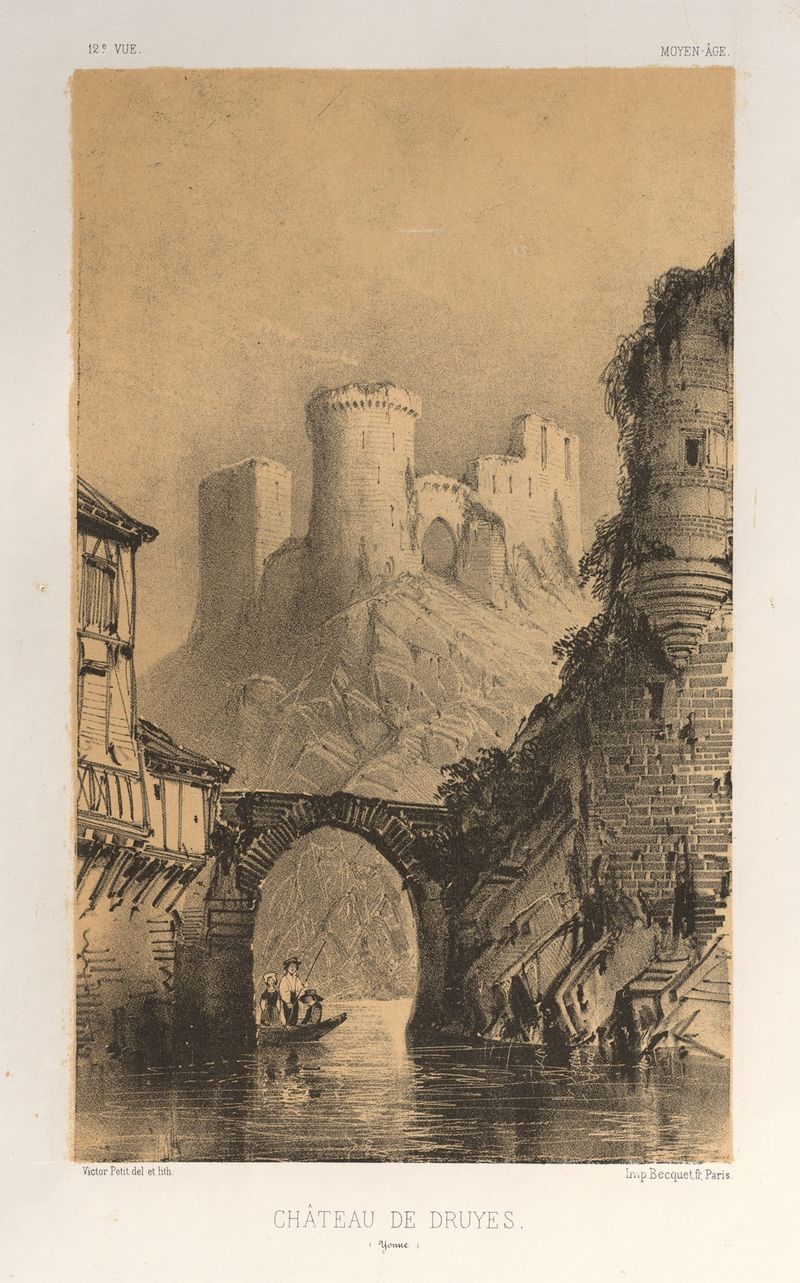
Chateau De Druyes (Yonne)
Victor Petit

Le ChasteLet-Neuf (Corrèze)
Victor Petit
More Architecture Art
Browse all →
The statue of Liberty
Frédéric Auguste Bartholdi

View of Houses in Delft, Known as ‘The Little Street’
Johannes Vermeer

View of Houses in Delft, Known as ‘The Little Street’
Johannes Vermeer

The Cathedral in Rouen. The portal, Grey Weather
Claude Monet

The yellow house
Vincent van Gogh

The Church in Auvers-sur-Oise, View from the Chevet
Vincent van Gogh