
Ruines Romaines — History & Facts
In a world filled with noise, the quiet beauty of ruins invites contemplation of what once was. Look to the left at the intricate archway, a remnant of grandeur framed by lush greenery. Notice how the artist employs soft earth tones to evoke a sense of nostalgia, allowing the viewer’s gaze to wander along the crumbling structures bathed in dappled light. The delicate brushwork and subtle interplay of shadow and light breathe life into the remnants, transforming stone into memory. Within this scene lies a poignant contrast between the vibrancy of nature and the stillness of decay.
The flourishing trees intertwine with the ruins, suggesting an eternal cycle where life triumphs over the passage of time. The open sky overhead, vast and blue, stands in stark opposition to the structure’s confinement, evoking a tension between freedom and the constraints of history. Each detail, from the scattered stones to the gentle rustle of leaves, speaks to a larger narrative of loss and resilience. In 1776, the artist found inspiration amidst the classical ruins of Rome, a city echoing with the remnants of its storied past.
As the neoclassical movement flourished, Robert sought to capture the relationship between human creation and the ravages of time, reflecting a broader fascination with antiquity that permeated the European art scene. His works resonated deeply with the ideals of his era, imbuing them with both beauty and a sense of inevitable decay.
More Artworks by Hubert Robert
Browse all →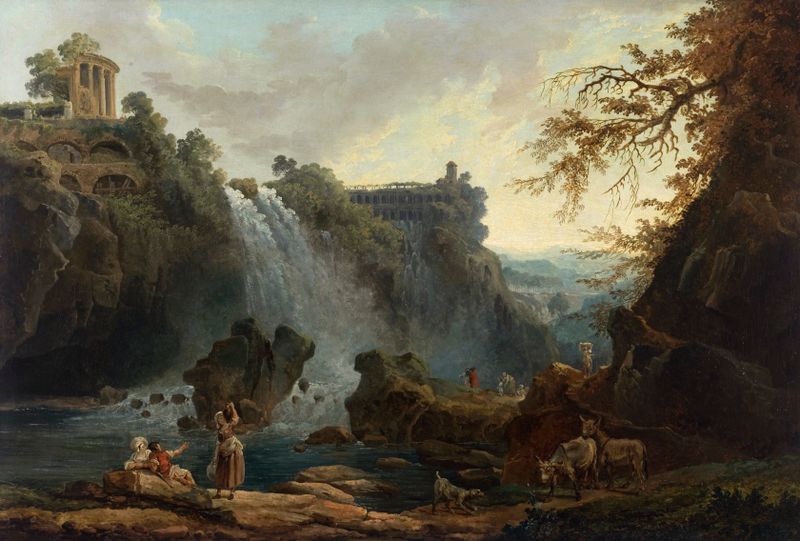
Les Cascatelles de Tivoli
Hubert Robert
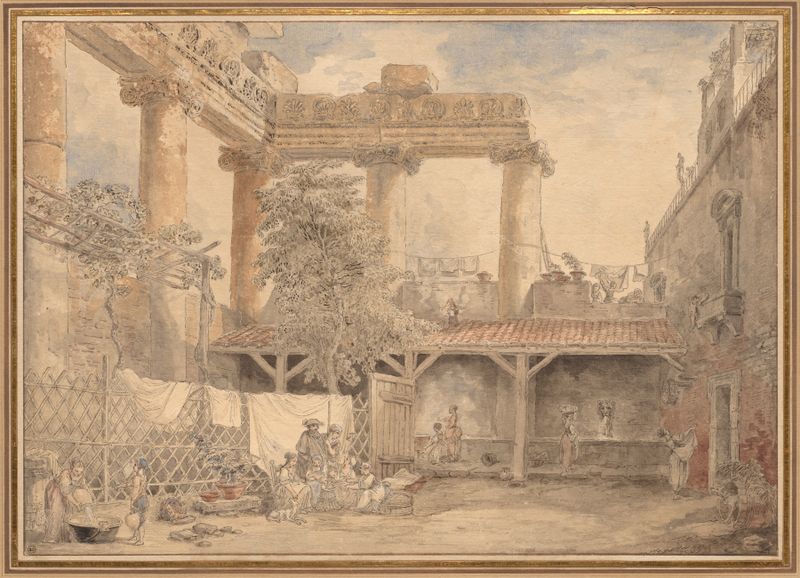
Roman Ruins, Villa Pamfili
Hubert Robert

The Rustic Bridge, Château de Méréville, France
Hubert Robert

The Portico of a Country Mansion
Hubert Robert

Architectural Capriccio
Hubert Robert

The Obelisk
Hubert Robert
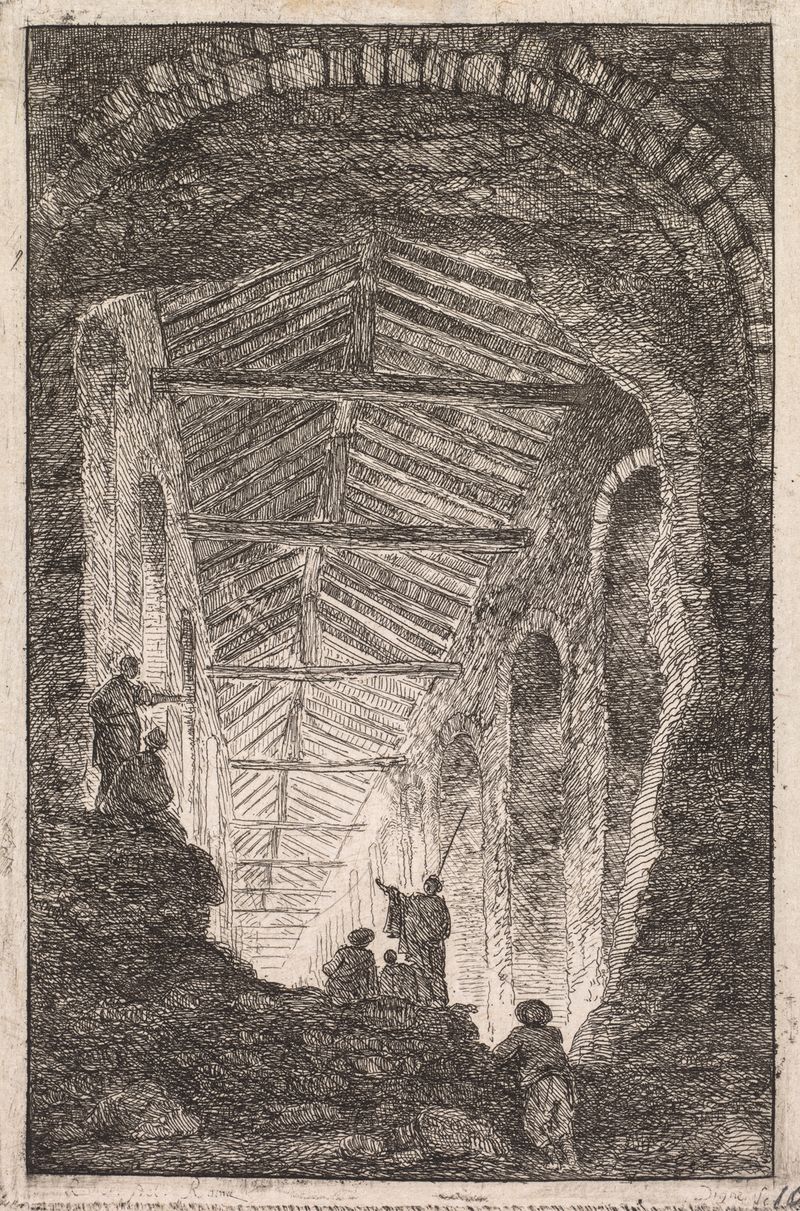
The Antique Gallery
Hubert Robert

L’incendie de l’Opéra, vu des jardins du Palais-Royal, le 8 juin 1781
Hubert Robert
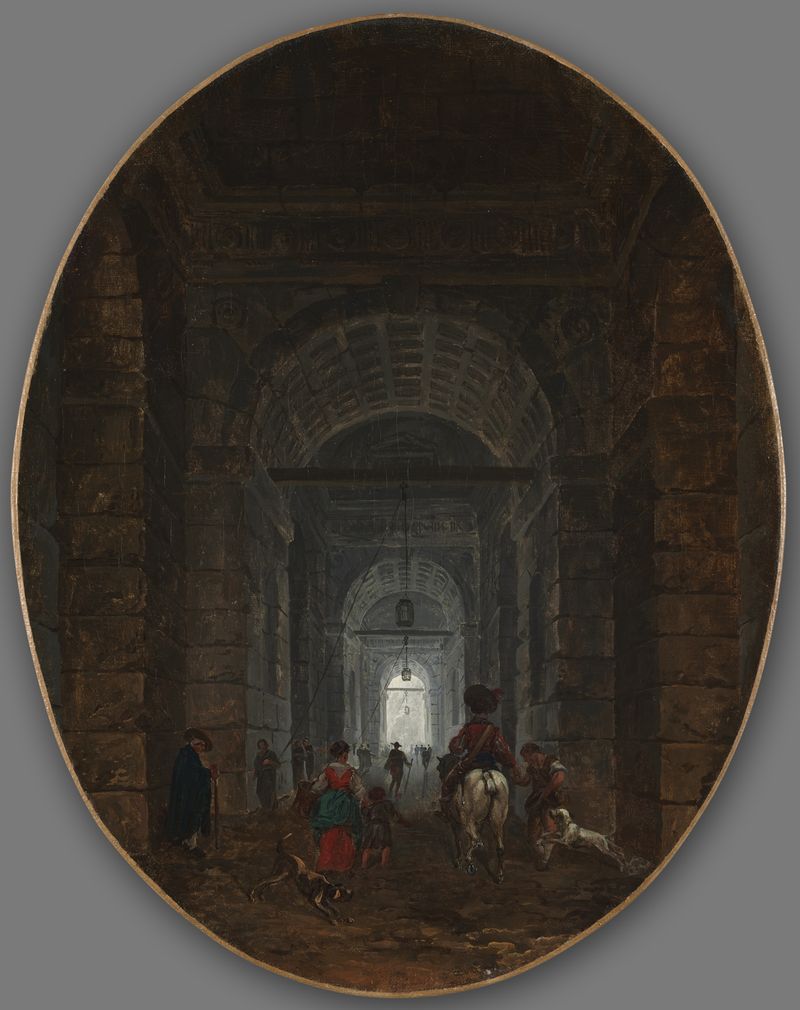
The Grotto of Posillipo
Hubert Robert

Architectural Capriccio with ruins of the Temple of Saturn and the Colosseum in the background
Hubert Robert
More Architecture Art
Browse all →
The statue of Liberty
Frédéric Auguste Bartholdi

View of Houses in Delft, Known as ‘The Little Street’
Johannes Vermeer

View of Houses in Delft, Known as ‘The Little Street’
Johannes Vermeer

The Cathedral in Rouen. The portal, Grey Weather
Claude Monet

The yellow house
Vincent van Gogh

The Church in Auvers-sur-Oise, View from the Chevet
Vincent van Gogh