
Ruins in a Rocky Landscape — History & Facts
When did color learn to lie? The hues of a landscape can deceive, wrapping truths in a vibrant veil that obscures the heart of the scene. Look to the left at the crumbling walls of ancient ruins, their weathered stone engraved with the passage of time. The artist employs a palette of earthy browns and ominous grays, contrasting the vibrant greens of the surrounding flora. Notice how the light refracts through the gaps, casting fragmented shadows that dance across the rocky terrain, creating an interplay between decay and vitality.
The composition draws the eye towards the horizon, where a stormy sky threatens to engulf the landscape—a tumultuous backdrop that elevates the tension. Beyond the physical elements lies a deeper narrative. The ruins suggest a forgotten history, a once-glorious civilization diminished by time, inviting reflections on mortality and transience. The rocky landscape feels both menacing and beautiful, echoing the duality of existence—where the sublime can coexist with the ruinous.
The subtle inclusion of human figures in the distance adds scale and provokes contemplation about our place in this expansive tableau of nature’s indifference. In the early 1640s, Rosa painted this work during an era deeply engaged with the themes of nature and ruin, drawing from the Baroque movement's fascination with drama. Living in Naples, he was surrounded by the remnants of ancient Rome while navigating a shifting artistic landscape. This period marked a time of personal struggle for the artist, as he sought to balance his passion for the sublime with the harsh realities of life, a tension palpably felt in this evocative piece.
More Artworks by Salvator Rosa
Browse all →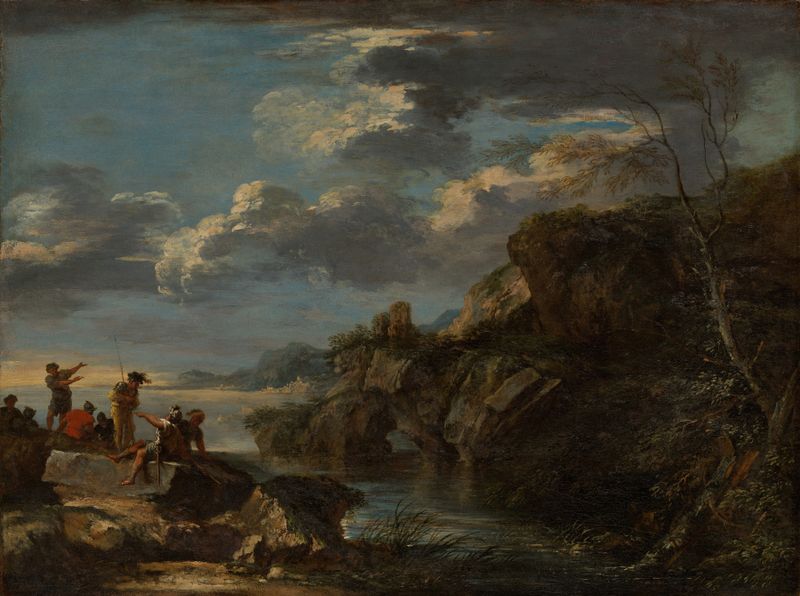
Bandits on a Rocky Coast
Salvator Rosa
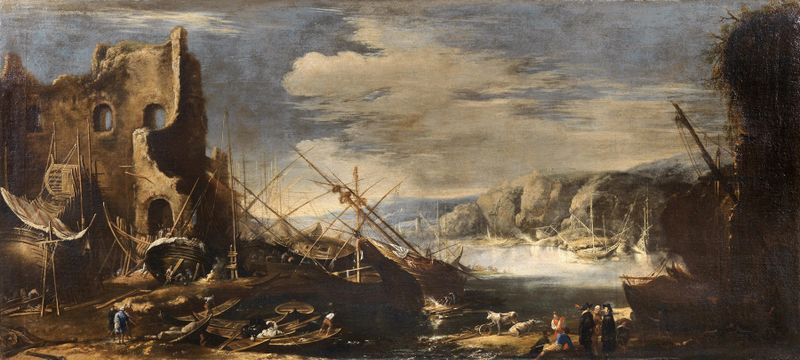
A coastal landscape with shipwrecks and ruins
Salvator Rosa

Landscape with Bathers
Salvator Rosa

Mountainous forest landscape with resting warriors
Salvator Rosa

A Mediterranean coastal landscape with a ship
Salvator Rosa
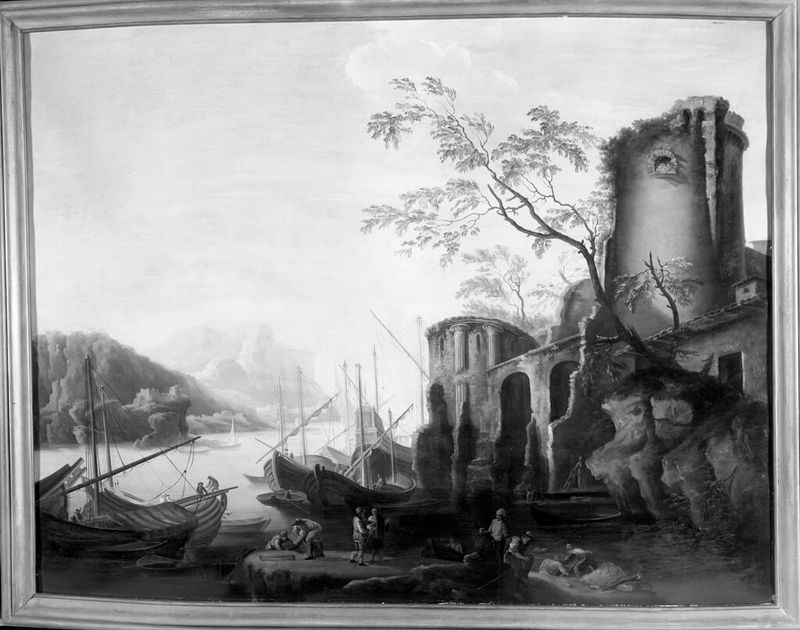
Harbor Scene with a Tower
Salvator Rosa

Polycrates and the Fisherman
Salvator Rosa
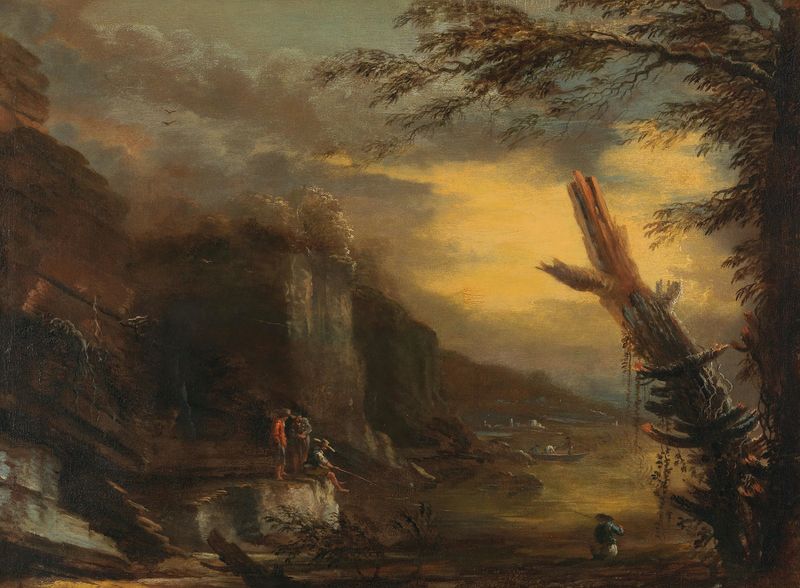
Figures fishing in a rocky coastal landscape
Salvator Rosa

Monks Fishing
Salvator Rosa

Polycrates' Crucifixion
Salvator Rosa





