
A coastal landscape with shipwrecks and ruins — History & Facts
Can paint confess what words never could? In A Coastal Landscape with Shipwrecks and Ruins, the canvas becomes a vessel of truth, revealing the remnants of nature's fury and mankind's folly. Look to the foreground and notice how the jagged rocks jut defiantly against the tumultuous waves, as if mourning the loss of the ships that once sailed the seas. The muted palette of gray and green evokes a somber atmosphere, while a deliberate interplay of light and shadow highlights the crumbling ruins intertwined with nature. The soft glow of the setting sun casts long shadows, suggesting a fleeting moment before darkness envelops the landscape, inviting the viewer to linger in its quiet tragedy. Hidden among the wreckage, a sense of melancholy permeates the scene, contrasting the natural beauty of the coastal setting with the stark remains of human ambition.
The shipwrecks symbolize fragility and chaos, while the distant ruins hint at past grandeur now swallowed by time. This duality speaks to the inevitable cycle of rise and fall, challenging the notion of permanence and revealing the harsh truths of existence. Salvator Rosa painted this work during the late 17th century, a time when he was exploring themes of nature’s power and humanity's vulnerability. Living and working in Naples, Rosa was influenced by the tumultuous political climate and the shifting tides of artistic expression, which helped shape his unique approach to landscape painting.
In this piece, he encapsulated a moment in his life when the world around him was in turmoil, reflecting both personal and universal struggles through the lens of a coastal wilderness.
More Artworks by Salvator Rosa
Browse all →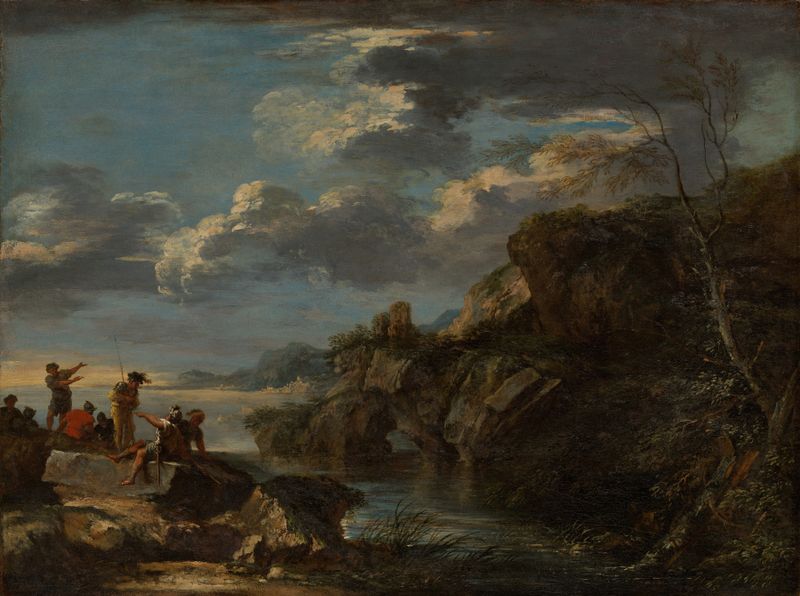
Bandits on a Rocky Coast
Salvator Rosa
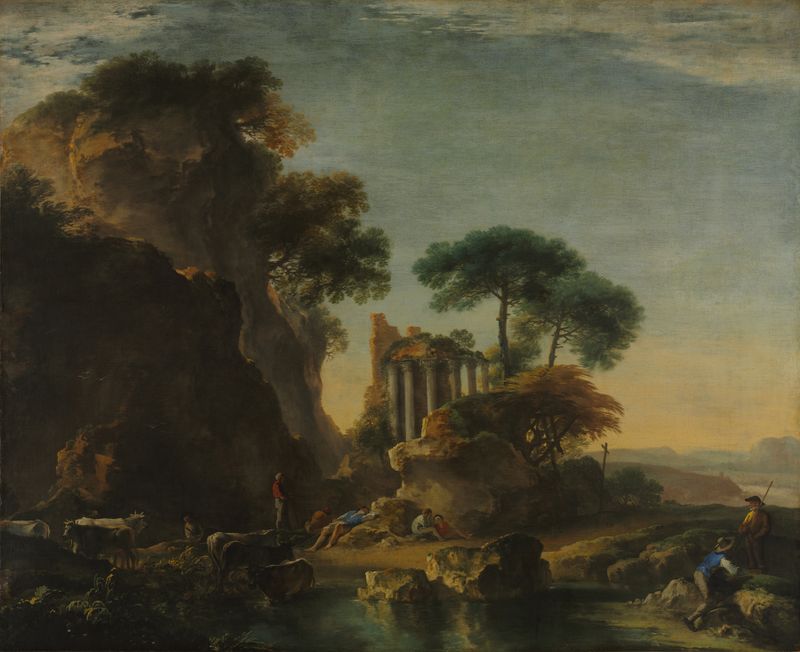
Ruins in a Rocky Landscape
Salvator Rosa

Landscape with Bathers
Salvator Rosa

Mountainous forest landscape with resting warriors
Salvator Rosa

A Mediterranean coastal landscape with a ship
Salvator Rosa
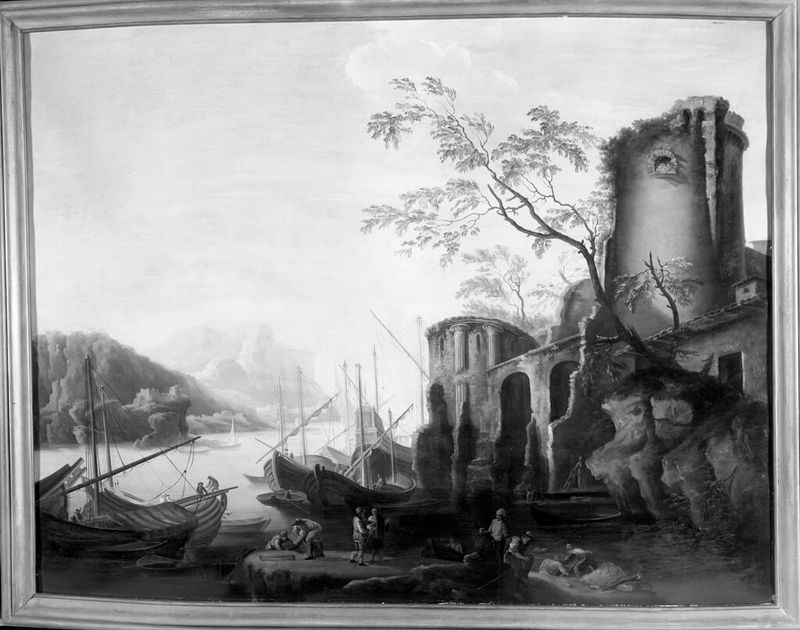
Harbor Scene with a Tower
Salvator Rosa

Polycrates and the Fisherman
Salvator Rosa
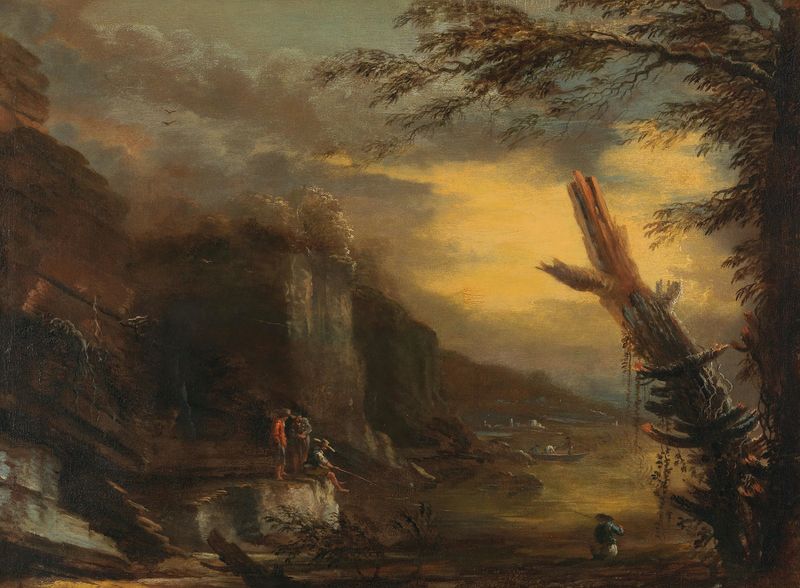
Figures fishing in a rocky coastal landscape
Salvator Rosa

Monks Fishing
Salvator Rosa

Polycrates' Crucifixion
Salvator Rosa





