
Ruins in Dargoire — History & Facts
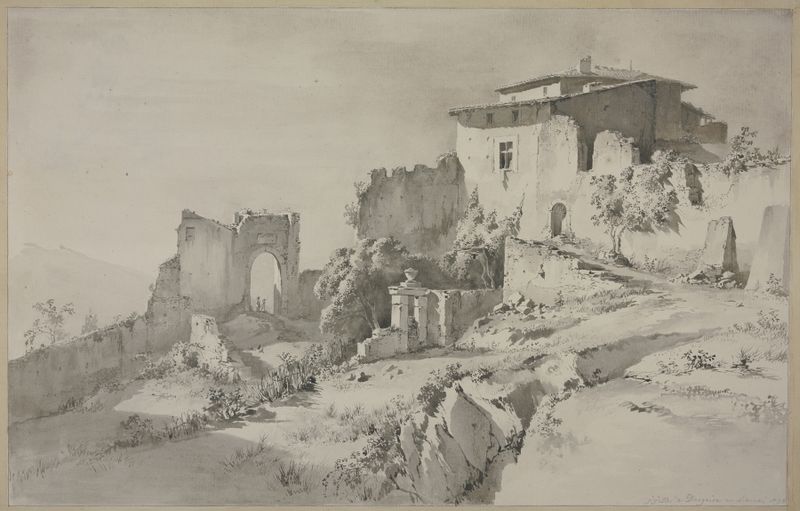
Did the painter know this moment would outlive them? In Ruins in Dargoire, time stands still amid the decay, reminding us of both the frailty of human endeavor and the persistence of nature's reclamation. Look to the left at the crumbling stone walls, where shadows deepen in the crevices, hinting at stories long forgotten. The soft palette of earth tones—ochres and muted greens—invites the eye across the landscape, leading towards a distant horizon that fades into a misty serenity. Notice how the light cascades over the ruins, illuminating patches of wild vegetation that burst through the stone, symbolizing resilience and the inexorable passage of time. In this composition, contrasts emerge: the man-made structures, once proud, are now mere fragments, while the vibrant life that encroaches upon them serves as a reminder of nature's endurance.
The juxtaposition of decay and renewal encapsulates a tension that resonates deeply—moments of beauty coexisting with the inevitability of loss. Each brushstroke encapsulates years, perhaps decades, as if the artist beckons us to ponder the legacies we leave behind. Jean-Jacques de Boissieu painted Ruins in Dargoire during a time when the Neoclassical movement was in full swing, primarily in the late 18th century. With a focus on themes of antiquity and natural beauty, he sought to capture the interplay of history and landscape.
Living in France, he was influenced by both the Romantic ideals of the day and the emerging fascination with the sublime, a response to the rapid changes in society and the environment around him.
More Artworks by Jean-Jacques de Boissieu
Browse all →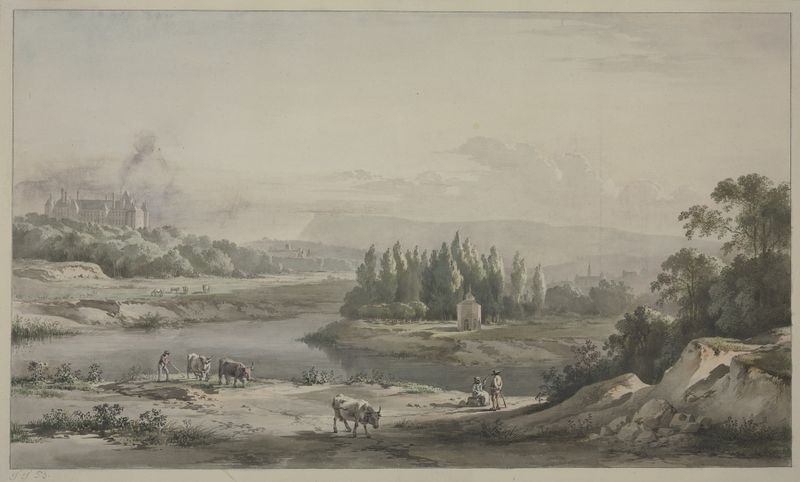
River Landscape
Jean-Jacques de Boissieu

Vestiges du temple d’Apollon au bord du Lac d’Auverne
Jean-Jacques de Boissieu

Vue du pont de la Guillotière à Lyon
Jean-Jacques de Boissieu
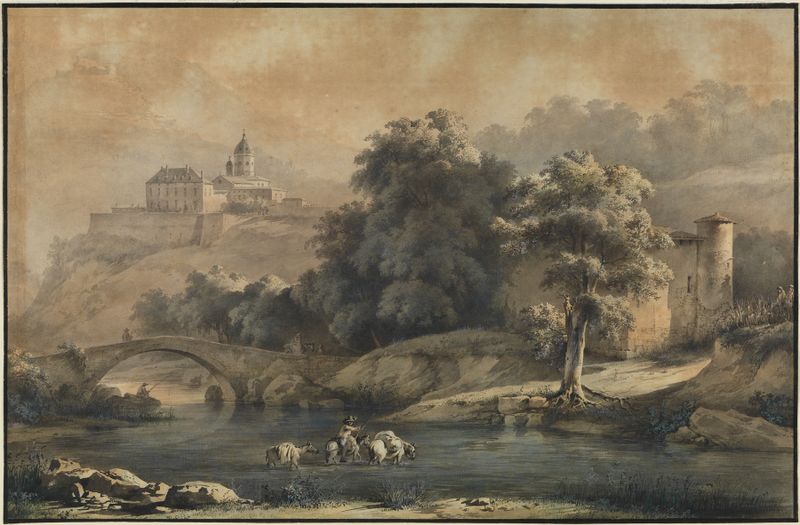
Flußlandschaft mit Bergkloster
Jean-Jacques de Boissieu
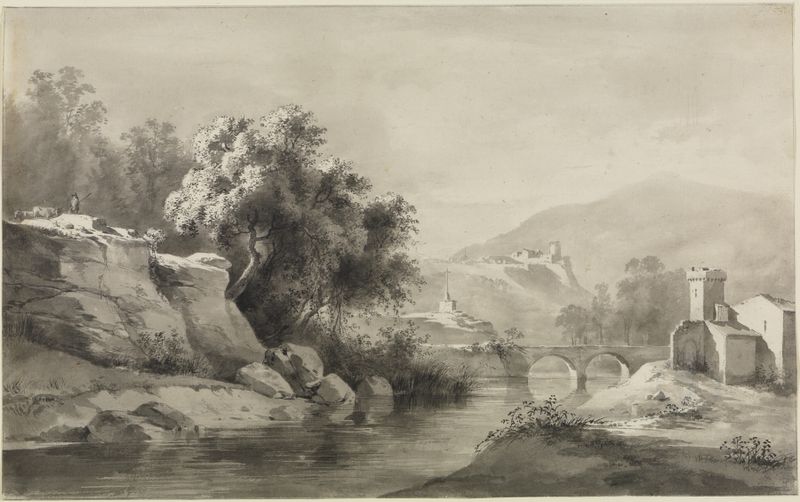
Flusslandschaft mit Doppelbogenbrücke und Kreuz
Jean-Jacques de Boissieu
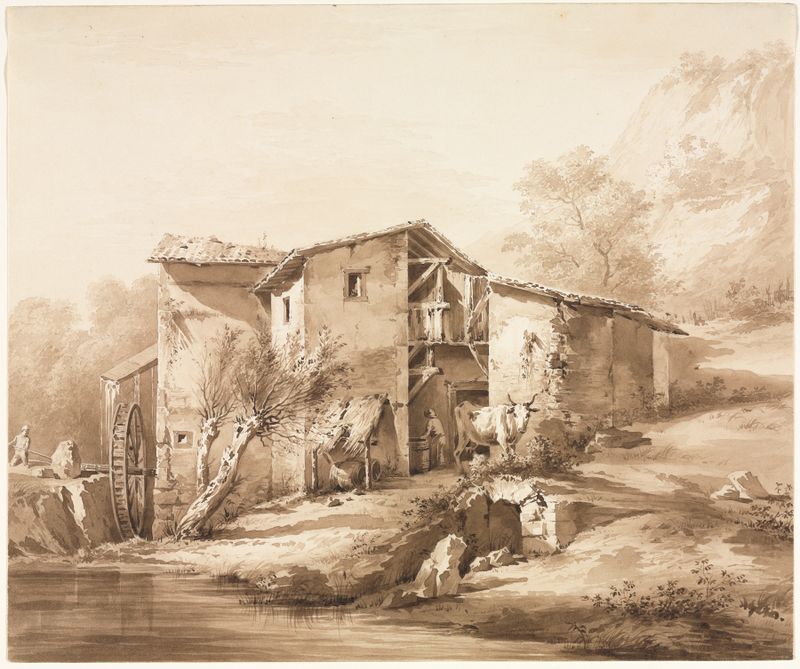
Landscape with Watermill
Jean-Jacques de Boissieu

Château Galliard
Jean-Jacques de Boissieu

Flußlandschaft bei L’Arbresle im Lyonnais
Jean-Jacques de Boissieu
Landscape near Dargoire
Jean-Jacques de Boissieu

Tree with leafless treetop
Jean-Jacques de Boissieu





