
Saint Paul M.T. (Montana Territory) — History & Facts
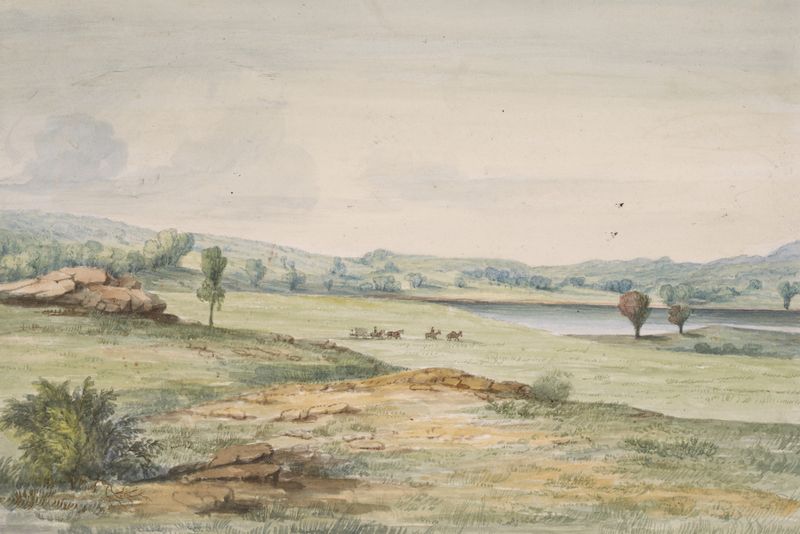
Can beauty exist without sorrow? In John Mix Stanley's Saint Paul M.T. (Montana Territory), a hauntingly serene landscape invites contemplation, suggesting that amid nature’s splendor, an undercurrent of melancholy lingers. Look to the left at the tumultuous river, its waters rushing with urgency, symbolizing both life and relentless passage. Notice how the soft hues of the sunset fade into the darkening sky, casting a golden glow across the rugged terrain, while the silhouettes of distant mountains loom like memories half-remembered.
The composition draws the eye toward the horizon, where land and sky meet, creating a sense of infinite possibility cloaked in quietude. Delve deeper into the lush foreground, where delicate wildflowers bloom defiantly beside the river’s edge. Their vibrant colors stand in stark contrast to the somber undertones of the vast expanse, weaving a narrative of resilience intertwined with longing. This juxtaposition of life and decay, light and shadow, evokes a bittersweet reflection on the human experience—an acknowledgment of beauty that cannot escape the grasp of sorrow. Stanley created this work in 1855, during a time when the West was on the cusp of transformation, teetering between untamed wilderness and burgeoning civilization.
Having moved to the Montana Territory, he sought to capture both the breathtaking landscape and the complex emotions surrounding the era of westward expansion. The painting reflects not just his artistic vision but also the historical tension of a nation grappling with its identity as it ventured into new frontiers.
More Artworks by John Mix Stanley
Browse all →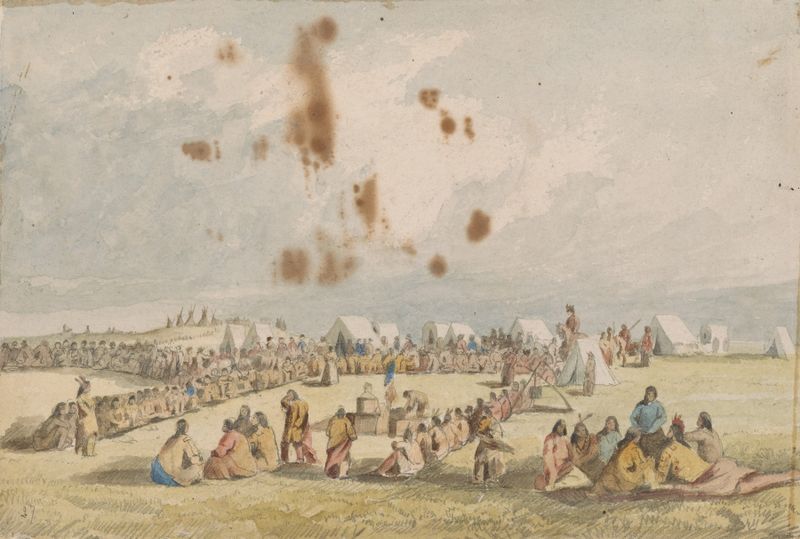
Distribution of Goods to the Assiniboins
John Mix Stanley
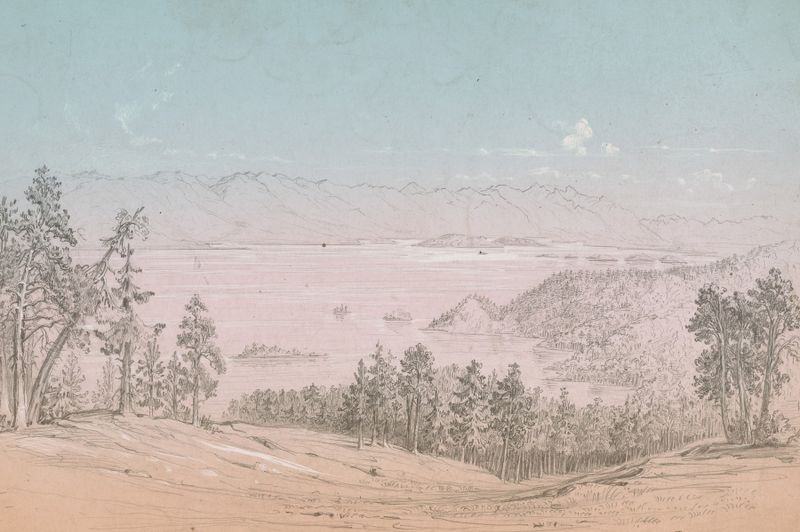
Flathead Lake, Looking toward the South
John Mix Stanley

A Morning in Milk River Valley
John Mix Stanley

Mount Rainier Viewed from Near Steilacoom
John Mix Stanley
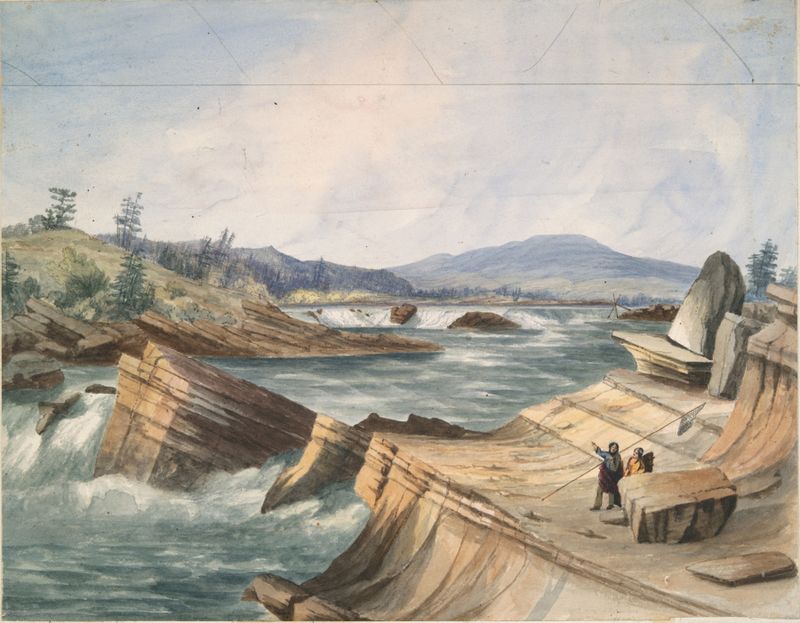
Kettle Falls, Columbia River
John Mix Stanley
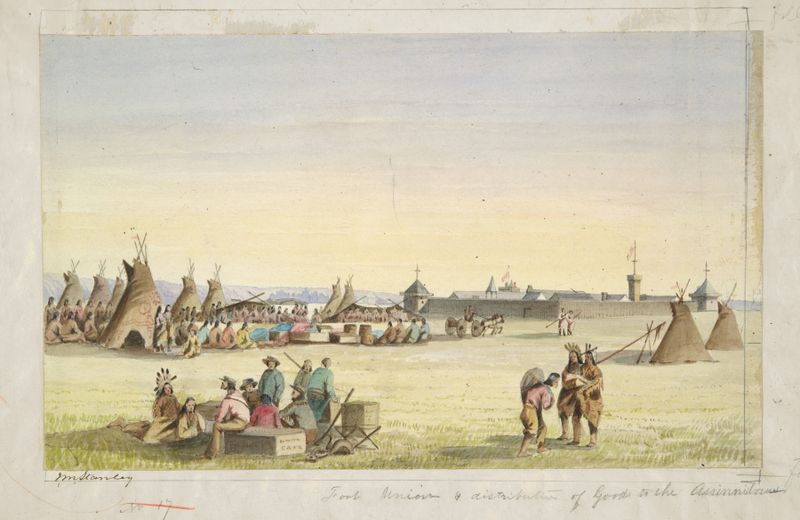
Fort Union and Distribution of Goods to the Assiniboins
John Mix Stanley

Pike Lake M.T.
John Mix Stanley
Sauk River
John Mix Stanley

Milk River – Bear’s Paw Mountain in Distance
John Mix Stanley

Fort Benton
John Mix Stanley





