
Saint-Tropez — History & Facts
In the delicate interplay of color and form, Saint-Tropez beckons with its fragile beauty, inviting our gaze into a sun-soaked world suspended in time. Look to the shimmering blue of the sea that occupies the lower half of the composition, its surface adorned with playful reflections of the warm golden sunlight. Notice how the gentle brushstrokes create a rhythmic flow, echoing the tranquil waves that lap against the shore. The figures, positioned leisurely within their surroundings, draw your eyes inward, as they seem to dissolve into the idyllic scenery, blending with the soft hues of the landscape. As the eye wanders, contrasts emerge between the vibrant activity and the serene backdrop of the town.
The lively figures suggest a moment of joy, yet their placement hints at an underlying solitude — a reminder of the transience of leisure. The vibrant colors may speak of summer's warmth, but there's an implicit fragility to this scene, a whisper of fleeting moments that life, like the paint on the canvas, might slip away all too quickly. In 1906, Maurice Denis painted Saint-Tropez during a period when he was exploring the intersections of Symbolism and the nascent approaches of modernism. Living in France, he sought to capture the essence of the moment with a freshness that mirrored the burgeoning changes in art.
His fascination with color and form positioned him as a pivotal figure within the Nabis movement, striving to elevate the emotional resonance of painting beyond mere representation.
More Artworks by Maurice Denis
Browse all →
La plage rouge
Maurice Denis
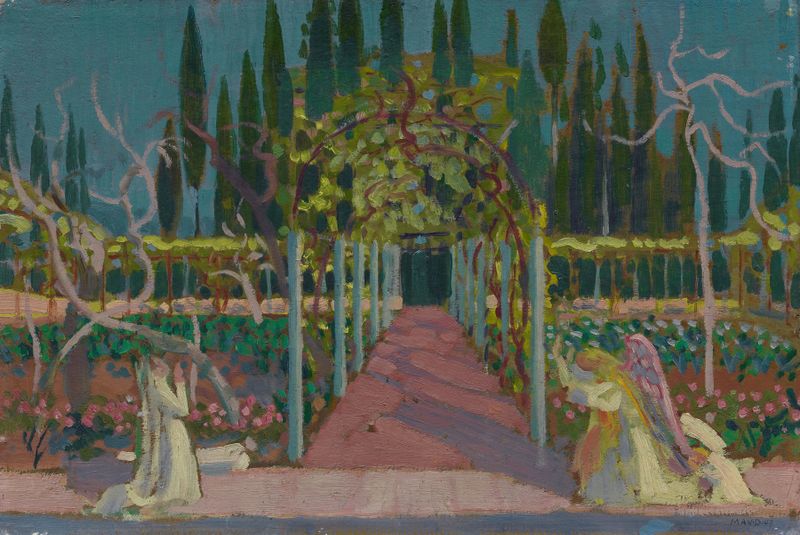
Annunciation
Maurice Denis
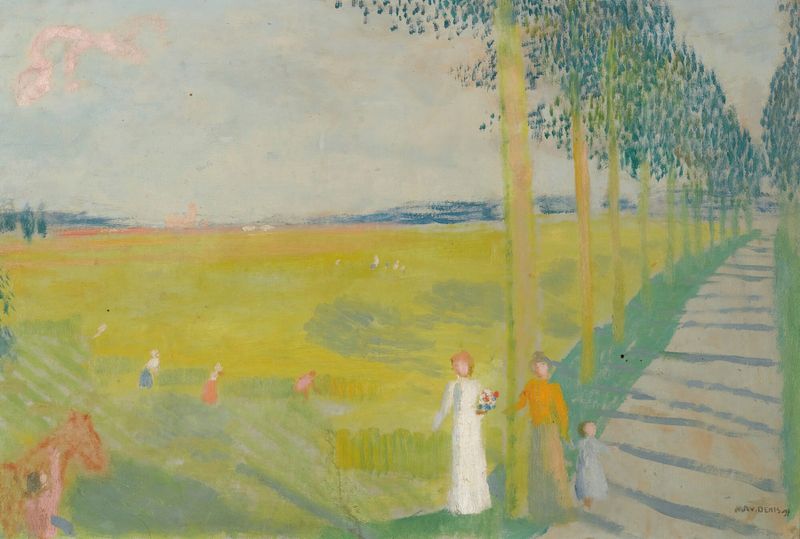
Paysage De Campagne
Maurice Denis

Étretat
Maurice Denis
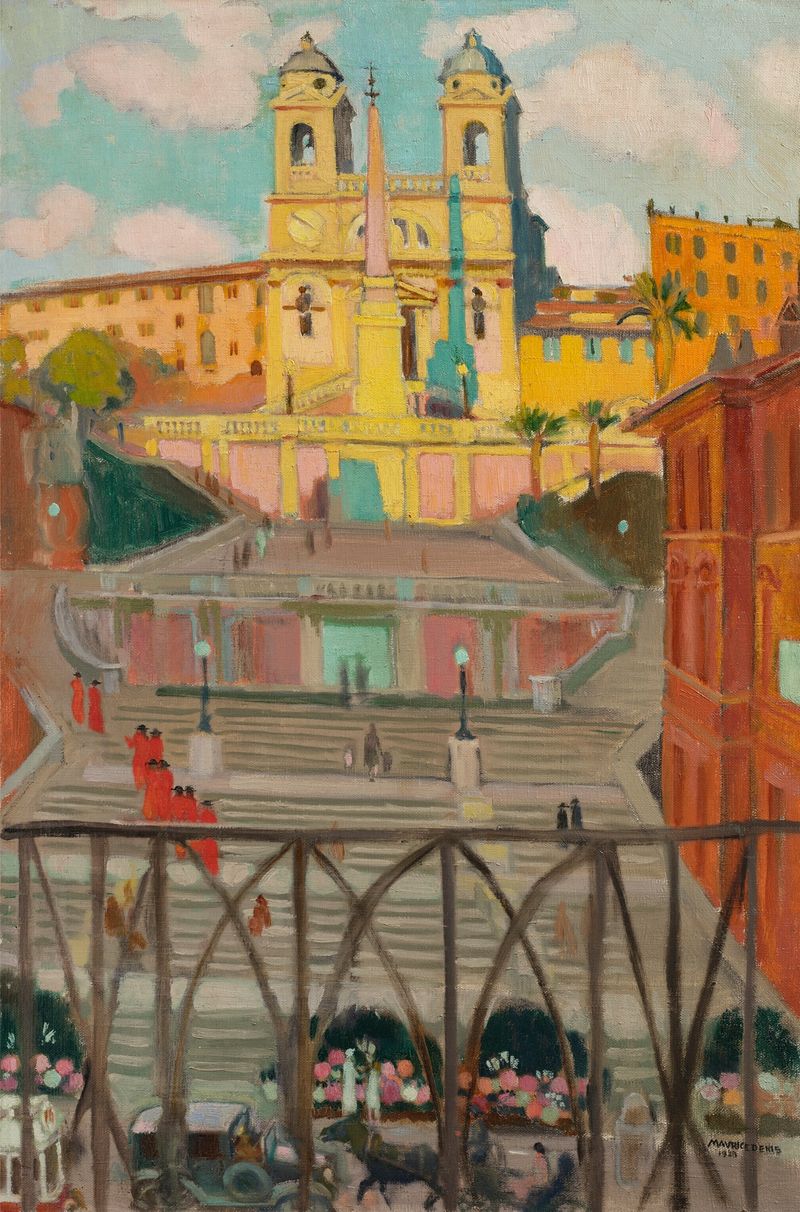
L’Escalier d’Espagne et la Trinité-des-Monts, le soir
Maurice Denis

Blessing of a Yacht on the Belon River
Maurice Denis

Vue du Colisée
Maurice Denis

Forum, l’Arc de Constantin
Maurice Denis

La Piazzetta, Venise
Maurice Denis

Jardin sous la neige
Maurice Denis





