
Salita in Genua — History & Facts
Can paint confess what words never could? In Salita in Genua, the canvas breathes life into a moment between faith and the mundane, inviting a dialogue that transcends the visible. Look to the right at the luminous sky, where soft blues and warm pinks cradle the fading sun, casting a gentle glow over the bustling streets of Genoa. The winding pathway, framed by lush vegetation and charming architecture, leads the viewer's eye deeper into the scene. Notice how the light falls upon the weathered stone of buildings, revealing textures that speak of time's passage, while the figures, engaged in their daily lives, seem both part of the landscape and infinitely separate from it. The emotional tension lies in the juxtaposition between the vibrant activity of the townsfolk and the serene assurance of the divine light above them.
Each figure, caught in their own moment, carries a semblance of faith—perhaps in routine, in community, or in the beauty that surrounds them. The delicate interplay of shadow and illumination suggests that the mundane can be a vessel for the sacred; every footstep on this ascent is not just a journey through space, but a path toward something greater. In 1872, Schönleber painted this work during a period of transformation in art, when realism began to carve out a space for impressionistic explorations. Living in Germany but drawing inspiration from Italian landscapes, he sought to capture the essence of life in vivid hues and tender moments.
His approach marked a bridge between the traditional and the avant-garde, reflecting a world at once familiar and profoundly reimagined.
More Artworks by Gustav Schönleber
Browse all →
Venezianisches Fischerboot
Gustav Schönleber
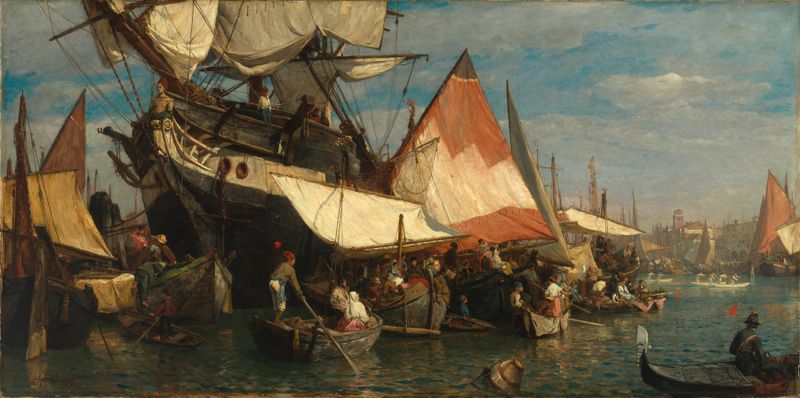
Regatta in Venedig
Gustav Schönleber
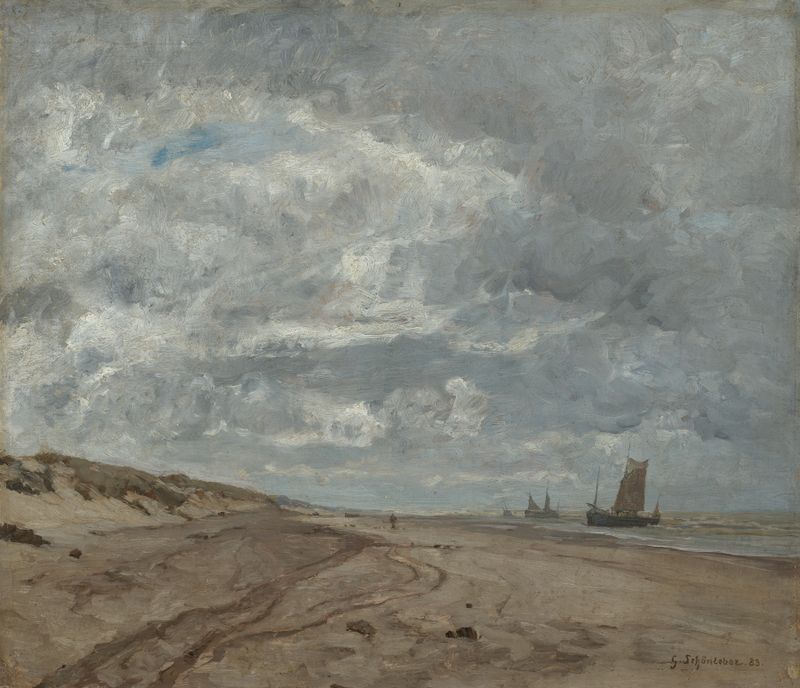
Strand von Scheveningen
Gustav Schönleber

Am Ufer der Waal
Gustav Schönleber

San Fruttuoso
Gustav Schönleber

Quinto al Mare (Genua)
Gustav Schönleber

Venezianische Häuser an einem Kanal
Gustav Schönleber
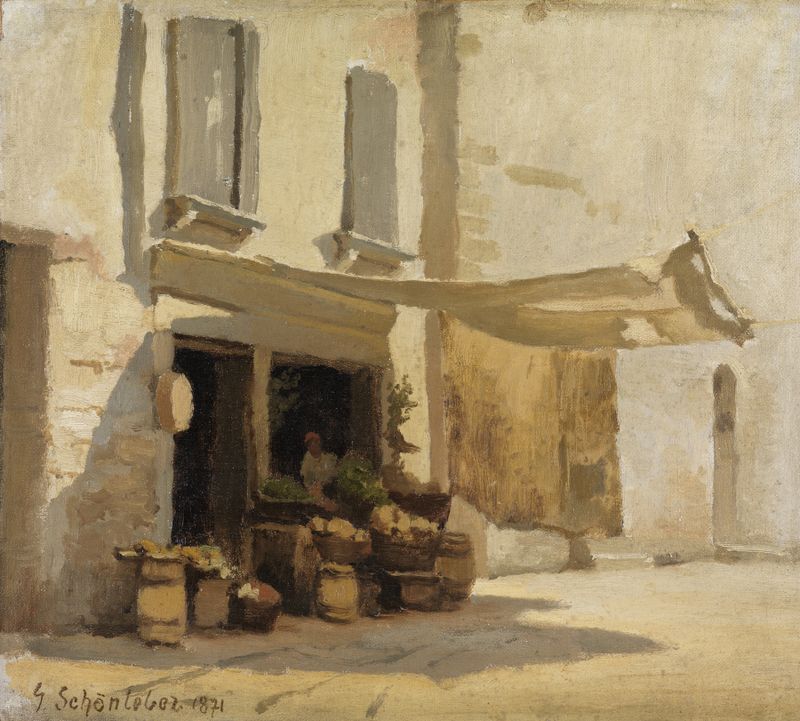
Obstbude in Venedig
Gustav Schönleber
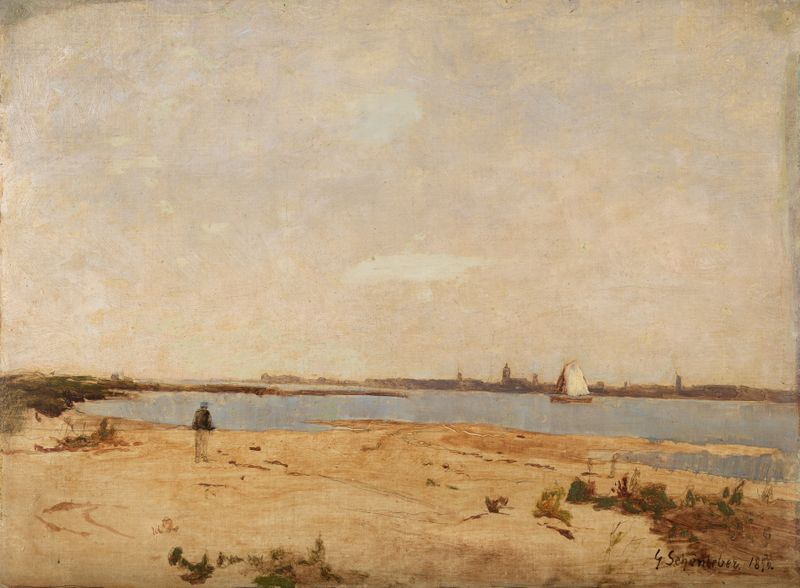
Blick auf Gorkum
Gustav Schönleber

Hafeneinfahrt von Vlissingen
Gustav Schönleber





