
Sandskrent — History & Facts
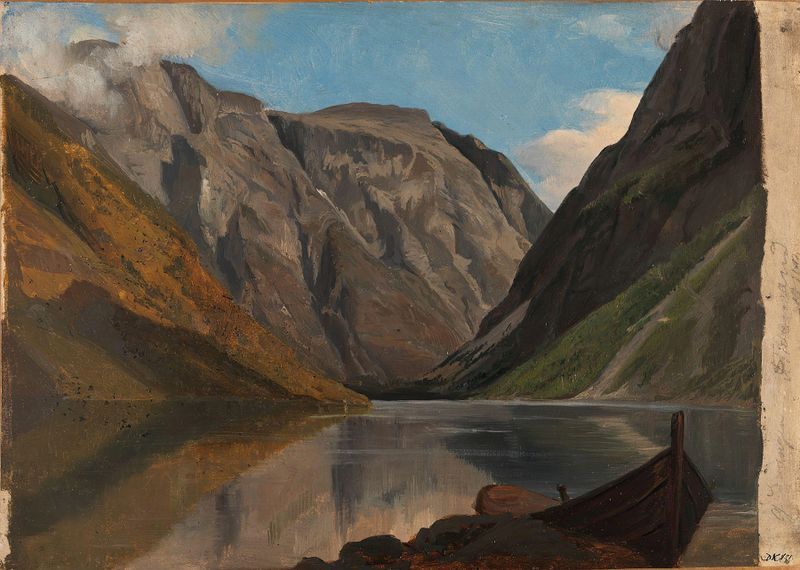
What if silence could speak through light? In the stillness of Sandskrent, a profound sense of loneliness weaves through the very essence of the scene. Look to the left at the solitary figure, draped in muted tones that blend with the shadowy landscape. The soft, diffused light illuminates the contours of the rugged terrain, highlighting a stark contrast between the warmth of the figure and the cold, unforgiving nature surrounding them. Notice how the brushstrokes capture the wind’s whisper, creating a haunting atmosphere that resonates with solitude and reflection. Beyond the visible, the painting encapsulates a deeper emotional tension—a battle between the internal and external worlds.
The lone figure stands, perhaps contemplating the vastness of the land, a mirror to their own isolation. The interplay of light and shadow not only emphasizes their solitude but also symbolizes the struggle for connection in an indifferent universe. Every detail, from the earthy palette to the distant horizon, evokes a sense of longing and introspection. Adolph Tidemand created Sandskrent in 1844 while living in Norway, a time marked by a growing fascination with national identity and the landscapes that shaped it.
The Romantic movement's influence permeated his work as he sought to reflect the emotional landscape of his people amidst societal changes. This painting captures that ethos, combining personal and collective narratives in a poignant exploration of solitude.
More Artworks by Adolph Tidemand
Browse all →
Bridal Procession on the Hardangerfjord
Adolph Tidemand

Fra Haugsbygd
Adolph Tidemand

Domkirkeruinen, Hamar
Adolph Tidemand
View of Gudvangen
Adolph Tidemand

Hagestad prestegård, Ulvik i Hardanger
Adolph Tidemand

View from Gudvangen
Adolph Tidemand

Fra Gulsvik
Adolph Tidemand

From Kullen in Sweden
Adolph Tidemand

Country Road
Adolph Tidemand

Untitled
Adolph Tidemand





