
Sappada — History & Facts
Could a single brushstroke hold eternity? In Sappada, Guglielmo Ciardi captures the fleeting essence of nature, encapsulating the beauty found in decay and transience. Look to the left at the delicate interplay of colors in the foliage; the vibrant greens yield to soft browns, revealing the passage of time. Notice how the light filters through the trees, creating a dappled effect that dances across the canvas. The composition is anchored by a winding path, inviting the viewer to venture deeper into this serene yet haunting landscape, where every brushstroke carries a whisper of both life and decline. The contrast between the lush vegetation and the hints of decay invites contemplation on mortality and renewal.
The subtle tension between the thriving nature and the inevitable signs of aging speaks to the cycle of life. Ciardi imbues the scene with a palpable stillness, encouraging viewers to reflect on their own relationship with time and the ephemeral beauty of the world around them. In 1898, Guglielmo Ciardi was immersed in the Italian art scene, where the rise of Impressionism was influencing his techniques. He painted Sappada amidst shifts in artistic focus toward naturalism and landscape, reflecting the symbiosis between man and nature.
During this period, the artist sought to convey not just the outward appearance of his subjects, but the deeper emotional resonance beneath the surface.
More Artworks by Guglielmo Ciardi
Browse all →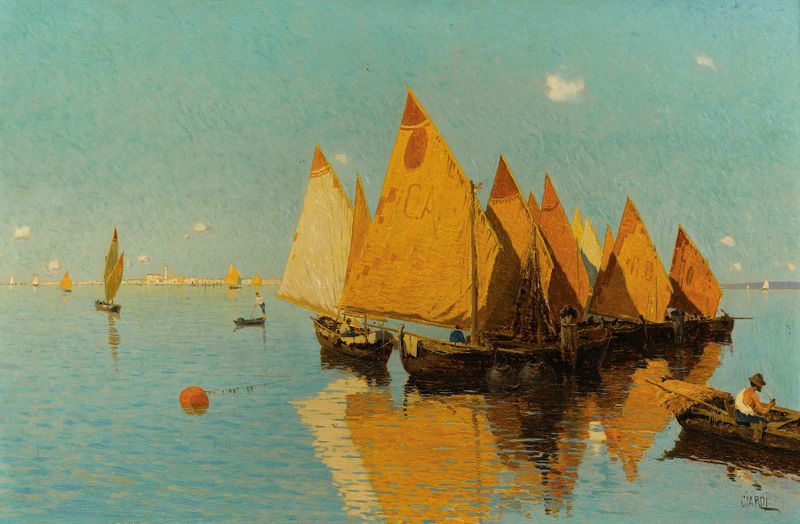
La Quiete In Laguna
Guglielmo Ciardi
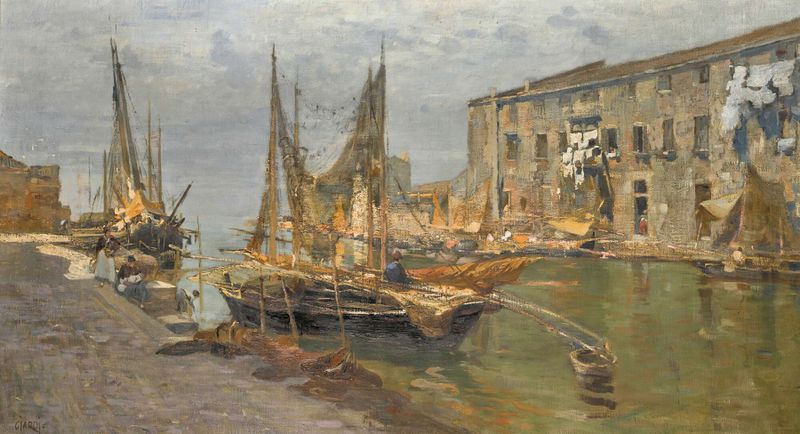
Canal In Venice
Guglielmo Ciardi

Venice, a Girl with Geese on the Banks of the Sile River
Guglielmo Ciardi
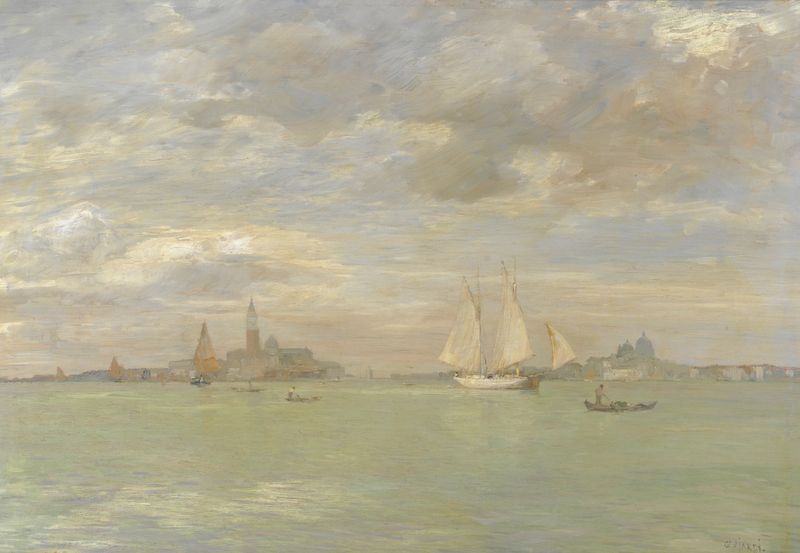
Laguna A Venezia
Guglielmo Ciardi
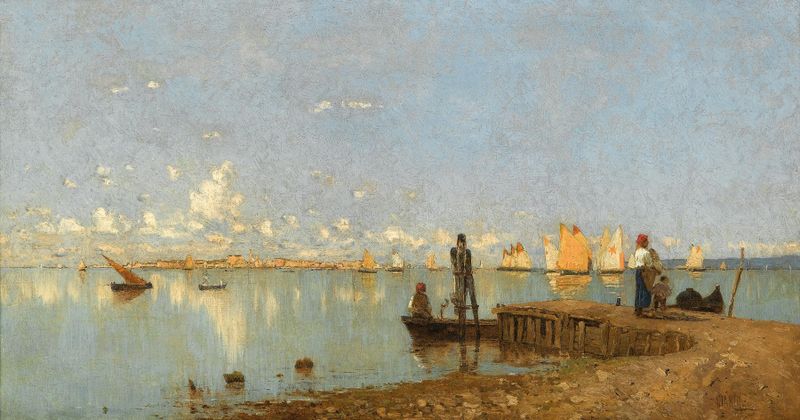
Lagune
Guglielmo Ciardi

A View Of St Marks Basin With The Punta Della Dogana
Guglielmo Ciardi
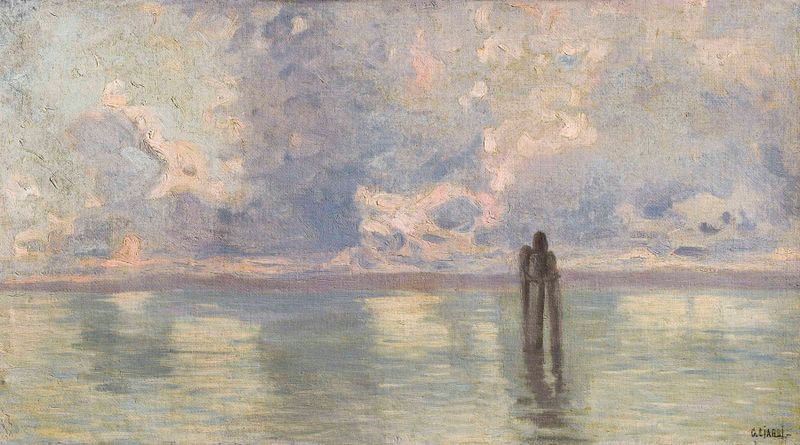
View of the lagoon, Venice
Guglielmo Ciardi
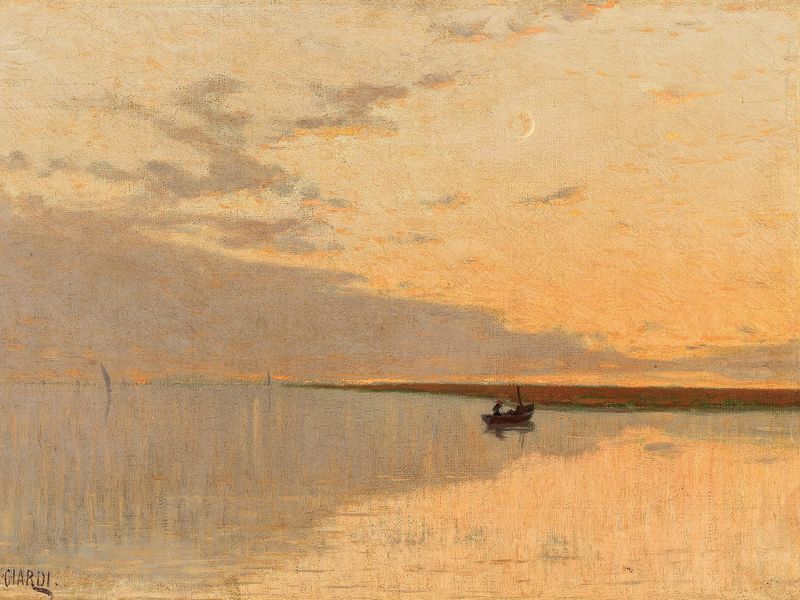
Barca al tramonto
Guglielmo Ciardi





