
Scene by the River — History & Facts
The eye is drawn first to the gentle shimmer of water, where sunlight glances off the river’s surface and guides us inward, past scattered boulders, toward a quiet homestead nestled beneath sheltering trees. The world here feels suspended between movement and stillness: the river flows, yet the distant hills are veiled in a tranquil haze, their outlines softened by the late afternoon light. A solitary figure, small against the sweep of nature, walks the path toward the cottage, suggesting a story of daily life that unfolds quietly and without drama.
The palette is warm and earthy, with greens and golds deepening into the shadowed foreground, while the sky opens above in a gentle crescendo of pink-tinged clouds. Every detail — the careful placement of rocks, the dappled light on the grass, the delicate gradation of distance — serves to heighten the sense of peace and rootedness in this riverside world. Works like Scene by the River by Adolf Chwala belong to a tradition of 19th-century landscape painting that flourished in Central Europe, where artists sought to capture not only the grandeur but also the intimacy of the natural world. Such paintings were often commissioned or collected by a rising middle class who found reassurance and pride in the beauty of their own countryside.
While the exact date and medium of this work remain undocumented, its presence in the Dorotheum collection is a reminder of the enduring appeal of these quiet vistas. History has kept few traces of this particular scene’s origins, but the painting’s careful observation and gentle mood invite the viewer to linger, tracing the path of the river and the rhythms of a vanished day.
More Artworks by Adolf Chwala

A View of lake Hintersee (Ramsauer Ache), in the background mount Halskopf
Adolf Chwala
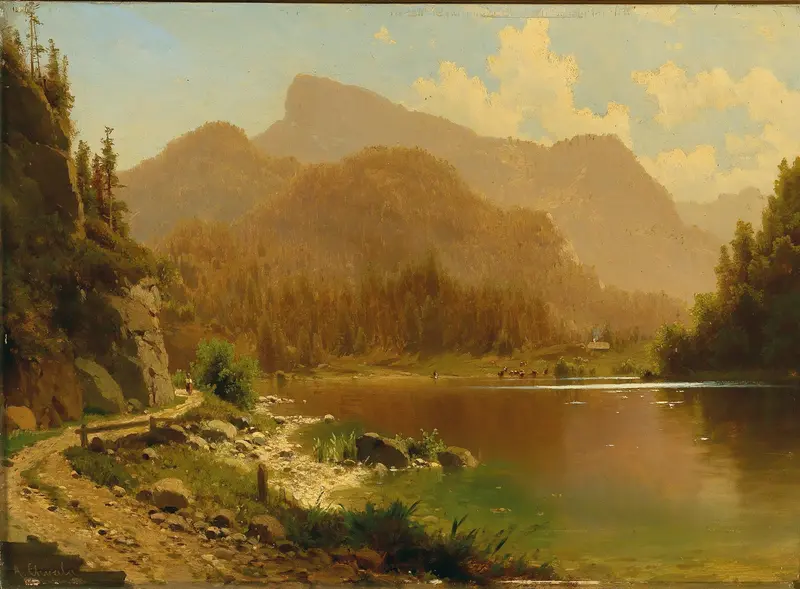
The Krottensee with View of the Schafberg
Adolf Chwala
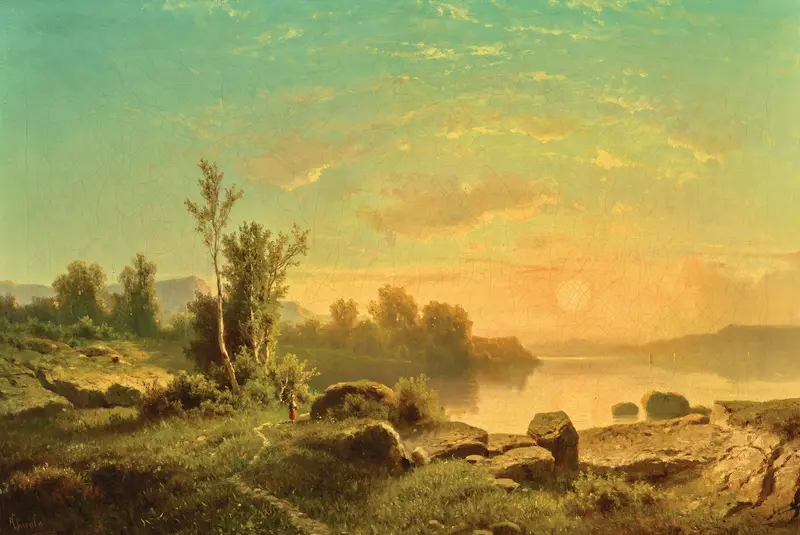
A River Landscape at Sunset
Adolf Chwala

A Lake in a Moonlit Night
Adolf Chwala
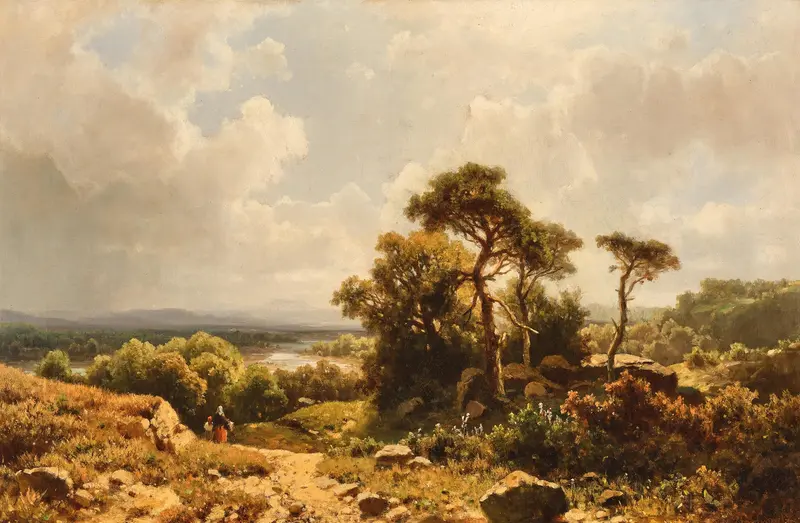
A view of the countryside
Adolf Chwala
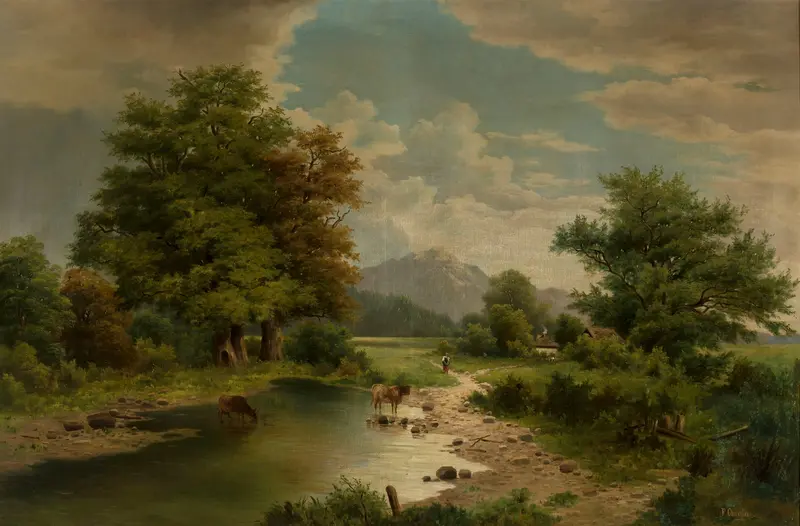
Landscape with cows at a water hole
Adolf Chwala
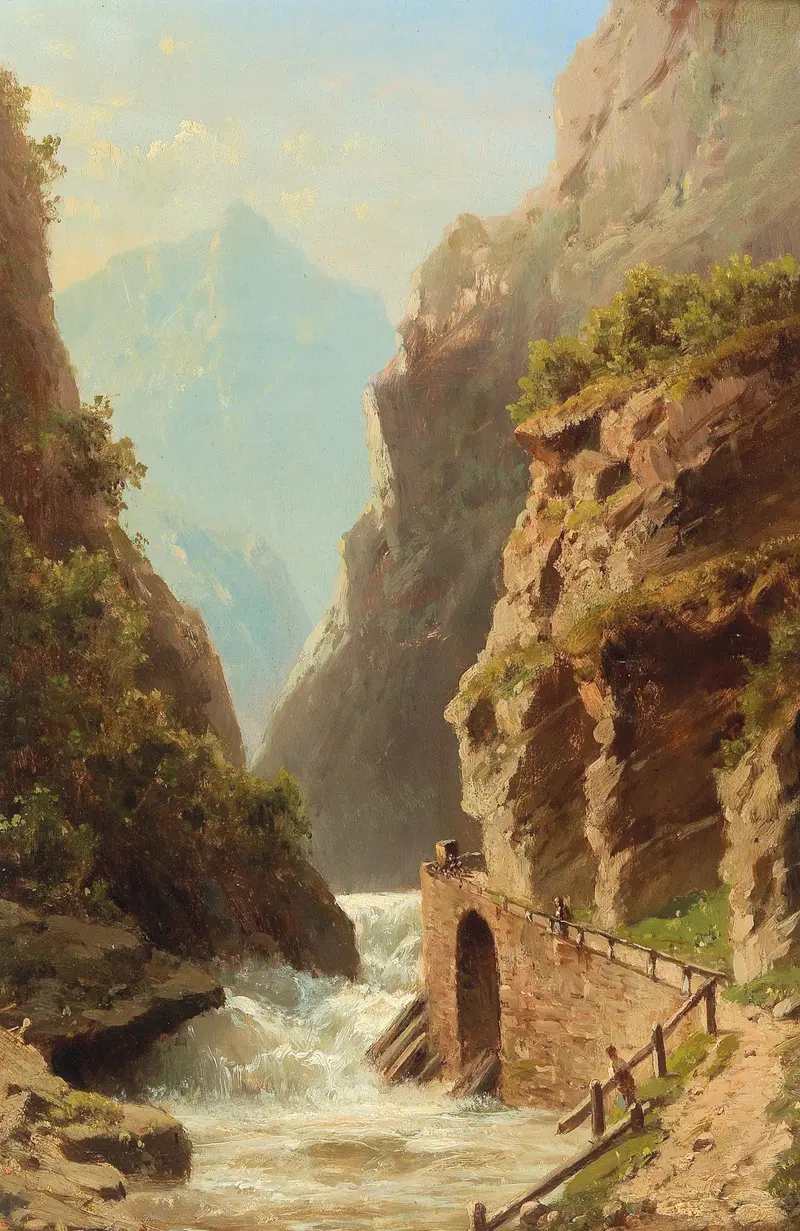
Path On A River Shore
Adolf Chwala
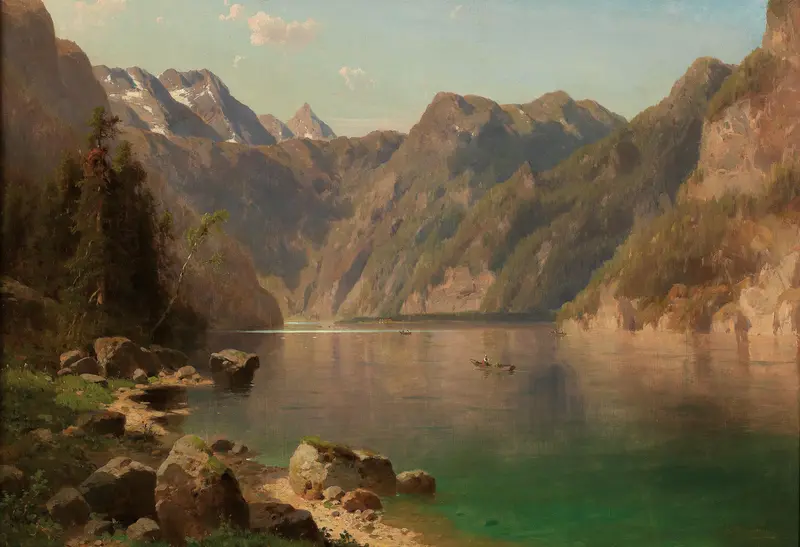
Königssee
Adolf Chwala
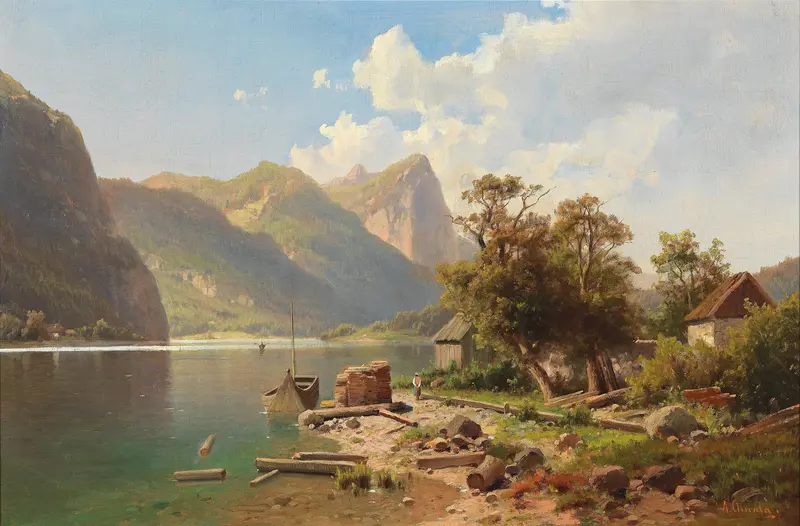
Partie am Mondsee
Adolf Chwala
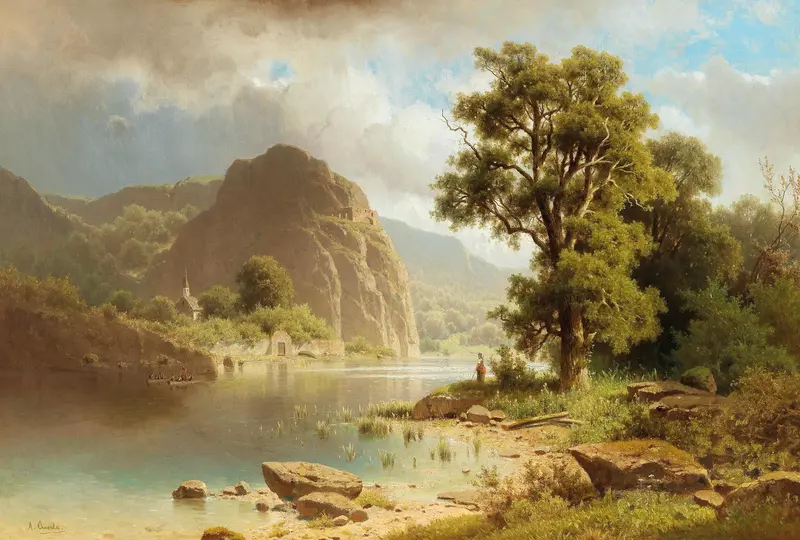
A Lake Landscape
Adolf Chwala
More Landscape Art

The Starry Night
Vincent van Gogh

View of Delft
Johannes Vermeer

Water Lilies
Claude Monet

The Grand Canal, Venice, looking north-west from the Ca' Corner to the Ca' Contarini degli Scrigni, with the campanile of Santa Maria della Carità
Canaletto

Windsor Castle
Canaletto

The Grand Canal looking North-East from the Palazzo Dolfin-Manin to the Rialto Bridge
Canaletto