Scene from the West Coast of Sweden — History & Facts
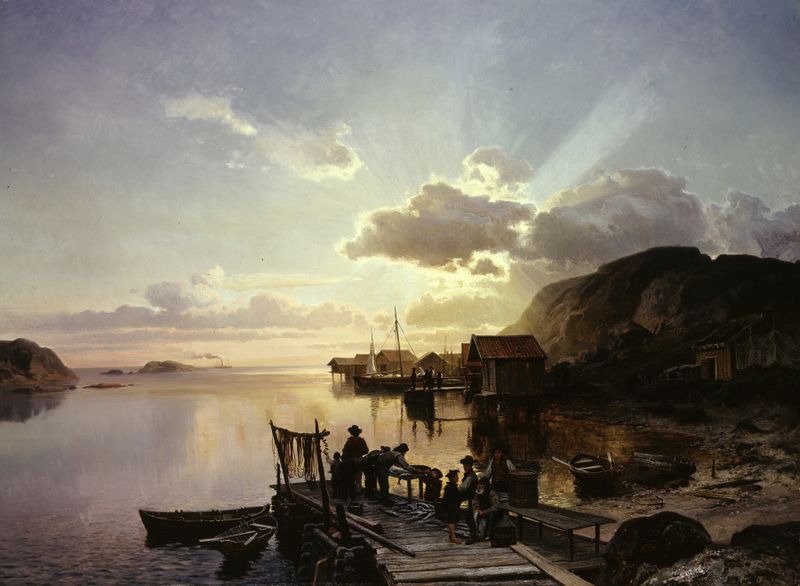
In the delicate dance of nature, every brushstroke whispers a promise of rebirth, urging us to listen closely to the world around us. Look to the horizon, where a gentle blend of blues and greens captures the essence of a tranquil coastline. The muted palette evokes the soft embrace of dawn, with the sun's first light caressing the water's surface, creating a soothing shimmer. Notice how the artist meticulously layers the paint to depict the rolling waves, their rhythm mirrored in the textured strokes of the land, inviting your gaze to traverse this serene landscape. Hidden within the calmness is a tension between the solidity of the rocky shore and the fluidity of the sea, suggesting a dialogue between permanence and change.
The sparse, yet vibrant, vegetation clinging to the cliffs serves as a metaphor for resilience. Each detail—the way the light penetrates the water or the shadows cast by the rocks—reinforces the theme of rebirth, illustrating nature's ability to endure and flourish in even the harshest conditions. In 1873, Johan Edvard Bergh painted this work amidst a burgeoning movement in Scandinavian art that sought to capture the essence of the natural world, moving away from romanticism toward a more intimate realism. Living in Sweden, he found inspiration in the landscapes around him, reflecting both personal and national identities during a time of cultural awakening.
This painting stands as a testament to his ability to fuse technique with emotion, encapsulating the spirit of a place at a moment of transformation.