Scene on the Hudson — History & Facts
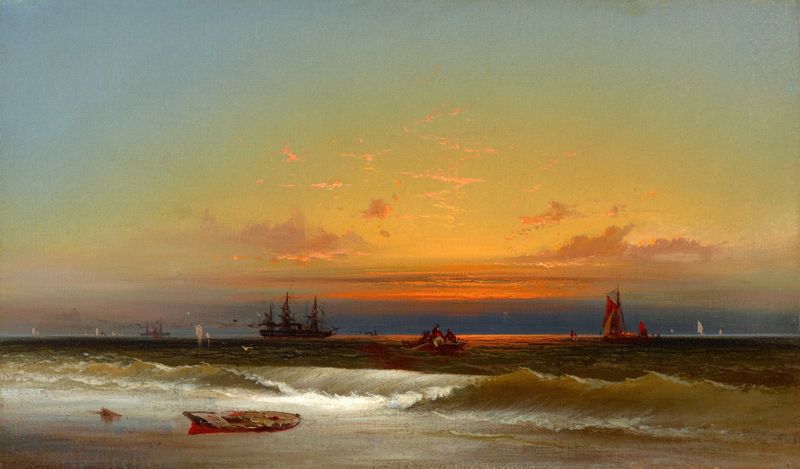
Did the painter know this moment would outlive them? In Scene on the Hudson, the ephemeral nature of life is captured, offering a glimpse into both peace and the underlying madness of existence. Look to the left at the serene river, where gentle ripples catch the light, reflecting the warm hues of a fading sunset. The soft gradation of colors — from golden yellows to deep purples — draws the eye across the canvas, invoking a sense of tranquility. Notice how the figures, poised in conversation by the water's edge, seem both engaged and distant, embodying a tension between camaraderie and isolation.
The lush greenery frames the scene, acting as a vibrant contrast to the stillness of the water, further emphasizing the complexity of human emotions in this fleeting moment. Yet, beneath the surface, a quiet madness lurks in the spontaneity of the brushstrokes. The blending of the natural landscape with the figures hints at the unpredictability of life, as if the serenity is but a façade. The juxtaposition of light and shadow conveys an unsteady balance between joy and despair, echoing the chaos entwined with human experience.
The idyllic setting stands in stark contrast to the uncertainty that time imposes, inviting contemplation of what lies beneath the surface. James Hamilton created this evocative piece during the early 19th century while living in America, a period marked by both artistic exploration and societal changes. As the nation began to grapple with its identity, Hamilton's work reflected the Romantic ideals of the era, celebrating nature while simultaneously acknowledging the complexities of human emotion. This painting emerged as a testament to the moment's beauty, destined to resonate across time.