
Sunset Seascape — History & Facts
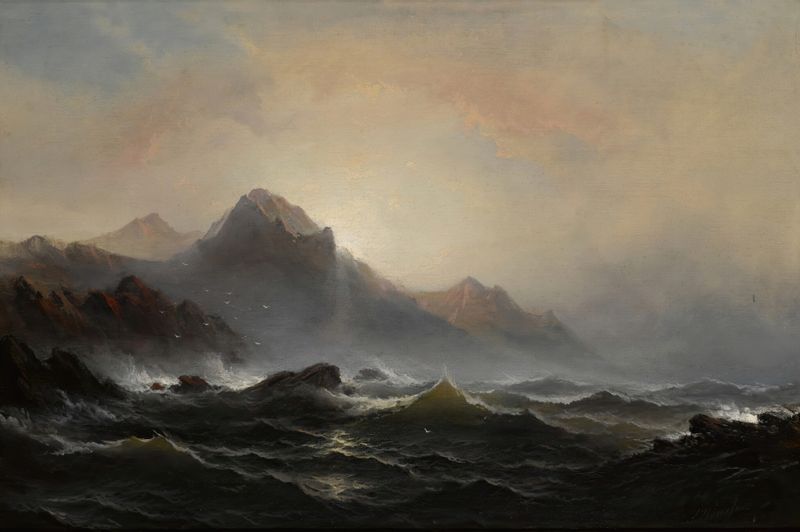
In Sunset Seascape, a quiet sense of hope emerges, beckoning the viewer to linger a moment longer in the embrace of its colors. Focus first on the horizon where the sun begins its descent, casting a golden glow that spills across the water's surface. The brushstrokes create ripples of shimmering light, inviting your eye to follow the path from the sky to the sea. To the left, dark clouds gather, hinting at a storm yet to pass, while the tranquil waves reflect the radiant colors, emphasizing the juxtaposition between turmoil and serenity.
The rich blues and warm golds weave a tapestry of emotion, evoking a sense of calm amidst chaos. Delve deeper, and notice the small fishing boat silhouetted against the brilliance of the sunset. It represents resilience and the human spirit's connection to nature, a tribute to those who find solace in the face of impending trials. The contrast between the vibrant light and the encroaching darkness speaks to the duality of existence, instilling a sense of yearning for brighter days ahead.
Each stroke captures a fleeting moment, a reminder of the beauty that can emerge from uncertainty. In 1865, the artist was navigating the evolving landscape of British art, amid the broader societal changes brought on by the Industrial Revolution. Working in England, he embraced the Romantic ideals, seeking to depict the sublime beauty of nature as a counterpoint to the rapid urbanization around him. Sunset Seascape stands as a poignant reflection of his time, embodying both a longing for the past and a hopeful glance towards the future.
More Artworks by James Hamilton
Browse all →
Evening on the Seashore (Sunset Breakers Philadelphia Harbor)
James Hamilton

Scene on the Hudson
James Hamilton

Beach Scene at Sunset
James Hamilton

Beach Scene
James Hamilton
Seascape
James Hamilton

Rounding the Cape, Sunset
James Hamilton

Beach Scene with Dramatic Sky
James Hamilton

From the Tempest
James Hamilton





