Beach Scene at Sunset — History & Facts
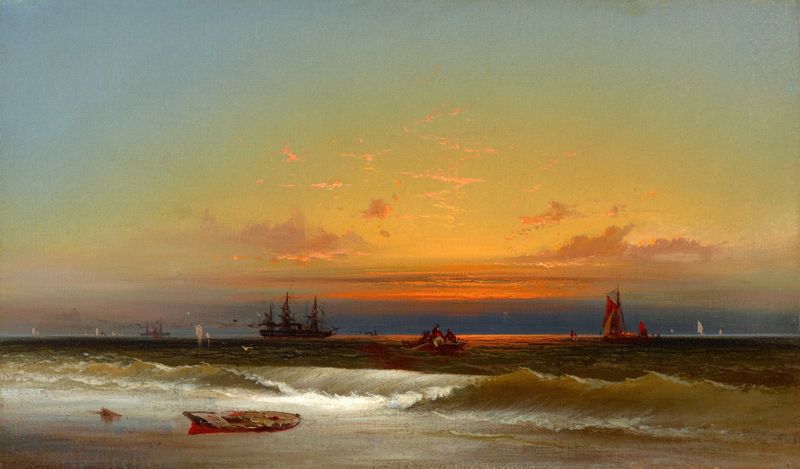
When did color learn to lie? In a world painted with innocence, a sunset can mask truths too deep to fathom. Look to the left at the sun dipping below the horizon, casting a warm, golden hue over the gentle waves that flow like liquid silk. Notice how the light dances on the water's surface, each ripple a whispering secret of the day’s end. The soft, blended palette of oranges and purples creates a serene atmosphere, drawing your eyes toward the figures in the foreground, where families frolic, their silhouettes playful against the vivid backdrop. Yet, there’s an underlying tension within this idyllic scene.
The vibrant colors suggest joy, but the quiet sea hints at the unspoken mysteries of life, as if the horizon holds both hope and an inevitable farewell. The carefree gestures of the families contrast sharply with the solitude of the fading light, creating a poignant reminder that innocence often resides on the edge of change. James Hamilton painted this piece during the period of 1865 to 1870, a time when the world was grappling with the aftermath of the Civil War in America. Living in the artistic milieu of the Victorian era, he was influenced by the burgeoning Impressionist movement, which emphasized natural light and color.
This work reflects not only a personal exploration of landscape but also a broader cultural yearning for peace and beauty amidst societal upheaval.