Schafherde im Frühmond — History & Facts
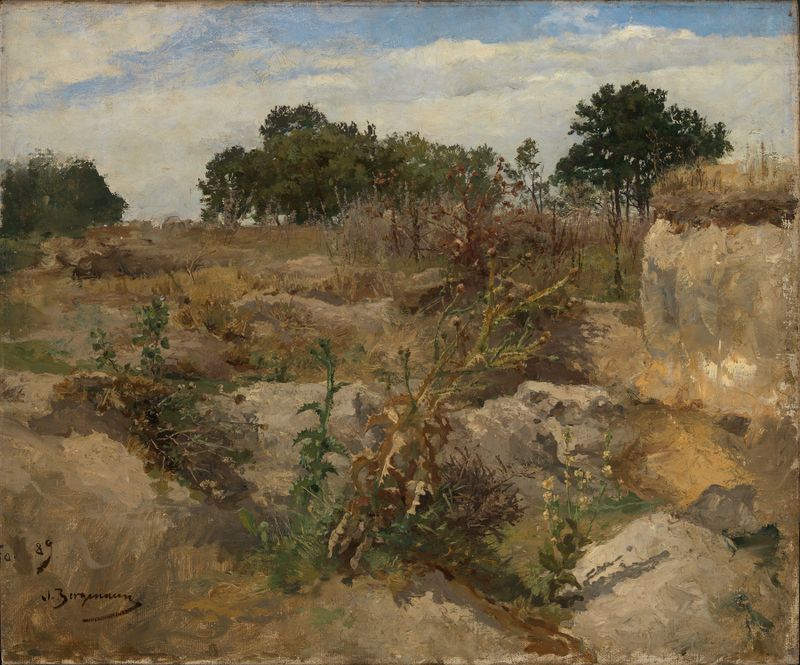
In the stillness of the early moonlight, shadows stretch and soften, revealing the delicate interplay between life and decay. Here, in a serene yet haunting scene, the remnants of nature’s vitality whisper stories of transience, urging us to contemplate the passage of time. Look to the left, where a gentle hillside cradles a flock of sheep, their woolly forms bathed in the pale glow of the moon. The use of soft blues and muted earth tones creates a dreamlike quality, inviting viewers to immerse themselves in this tranquil moment.
Notice how the brushstrokes vary in intensity, with swift, sweeping lines capturing the motion of the sheep, while the stillness of the landscape contrasts starkly with their liveliness. This careful balance between movement and serenity captures an ephemeral beauty. Yet, within the tranquility lies a profound tension. The contrast of light and shadow hints at the inevitability of decay, with the sheep embodying both innocence and vulnerability against the encroaching night.
The barren trees in the background serve as silent sentinels, their skeletal branches reaching toward the heavens as they silently witness the cycle of life. This duality evokes a poignant sense of longing — for clarity amidst confusion, and life amidst looming decay. Julius Hugo Bergmann created this evocative piece during a period marked by introspection and transition in the art world. Active around the turn of the 20th century, he navigated the shift toward modernism, experimenting with color and form while drawing on traditional themes.
This painting reflects not only his personal exploration of perception but also the broader existential inquiries of an era poised between the romanticism of the past and the uncertainties of the future.