Schedel en een ribbenkast — History & Facts
This thought lingers in the air as one gazes upon the haunting intricacies of this still life. Look to the center, where the skull lies, almost brazenly, against a backdrop of muted colors. The delicate brushwork captures its texture with such precision that it seems to breathe, inviting you closer. Surrounding the skull, the ribcage is rendered with an almost surgical clarity, the bones appearing as fragile as porcelain in contrast to the darker shades that envelop them.
Notice how the soft hues meld into shadow, the gold accents shimmering subtly, evoking a sense of fleeting beauty amidst the starkness of mortality. Within this composition, the juxtaposition of life and death enfolds the viewer in an emotional tension. The skeletal remains suggest a human story; the beauty of the form starkly contrasts the inevitability of decay. Every curve of the ribcage whispers of desires unfulfilled, hopes extinguished, while the gold touches might signify the transcendence of that desire into something more profound.
It becomes a meditation on the ephemeral nature of existence, a reminder that beauty often emerges from the depths of sorrow. Hokusai painted this work in the late Edo period, a time marked by both artistic innovation and cultural reflection in Japan. He was exploring the themes of nature, life, and death while navigating the burgeoning popularity of ukiyo-e prints. The era was characterized by a fascination with the interplay of beauty and mortality, a sentiment that resonates deeply within this piece.
More Artworks by Katsushika Hokusai
Browse all →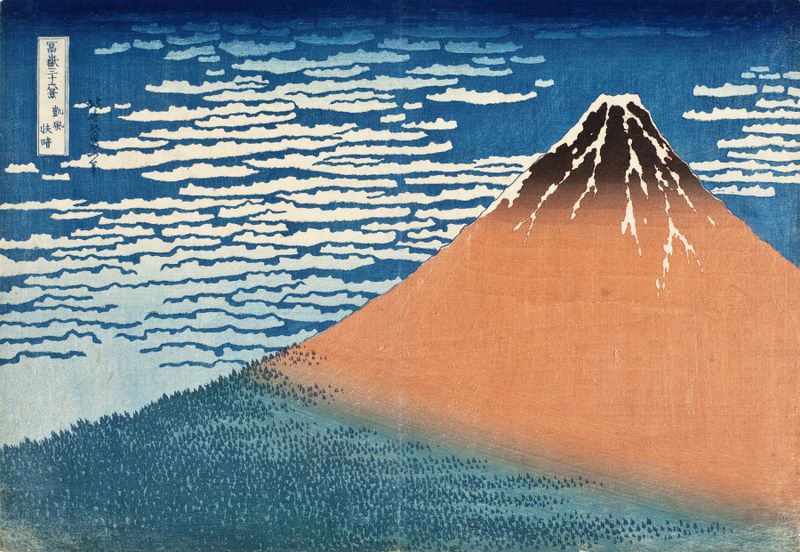
South Wind, Clear Dawn
Katsushika Hokusai

South Wind, Clear Weather
Katsushika Hokusai

Clear Weather with a Southerly Wind
Katsushika Hokusai
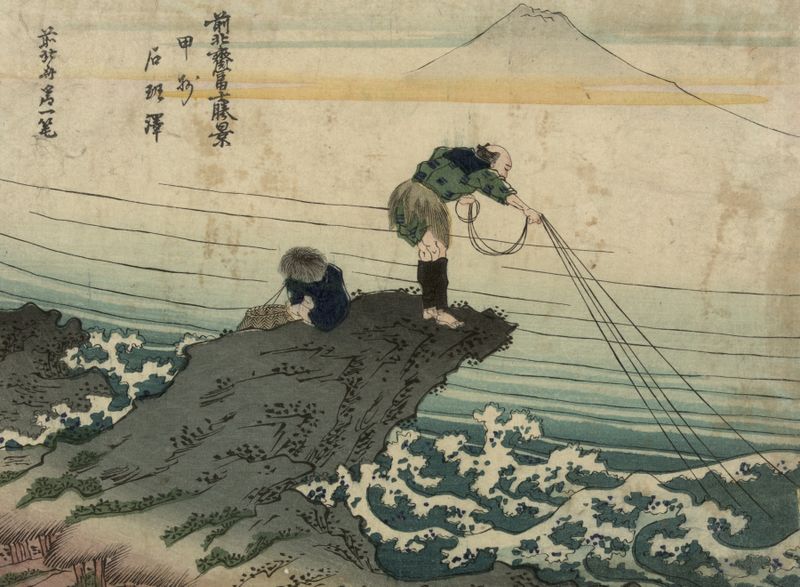
Kōshū kajikazawa
Katsushika Hokusai

Rainstorm beneath the Summit (Sanka Haku-u)
Katsushika Hokusai

Kōshū kajikazawa 2
Katsushika Hokusai
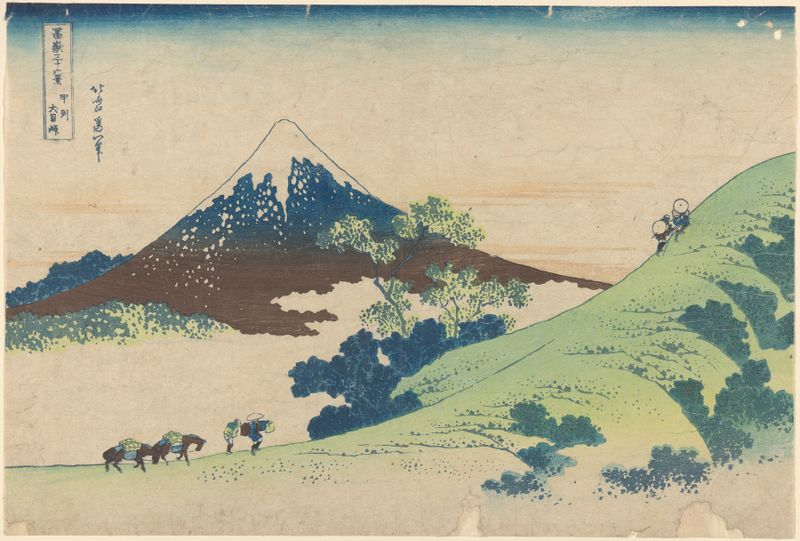
Inume Pass in Kai Province (Kôshû inume-tôge)
Katsushika Hokusai

Yoro Falls in Mino Province (Mino no Yoro no taki), from the series "A Tour of Waterfalls in Various Provinces (Shokoku taki meguri)"
Katsushika Hokusai
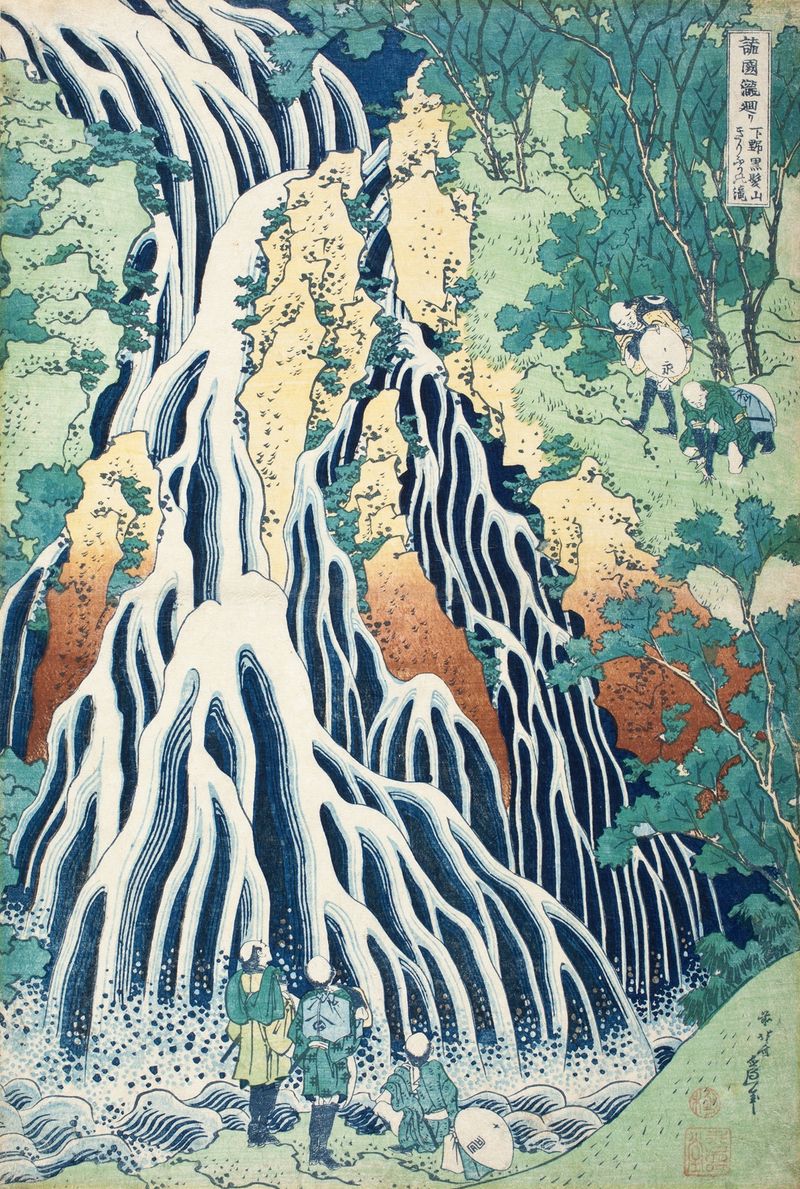
Falls of Kirifuri at Mt. Kurokami, Shimotsuke Province
Katsushika Hokusai
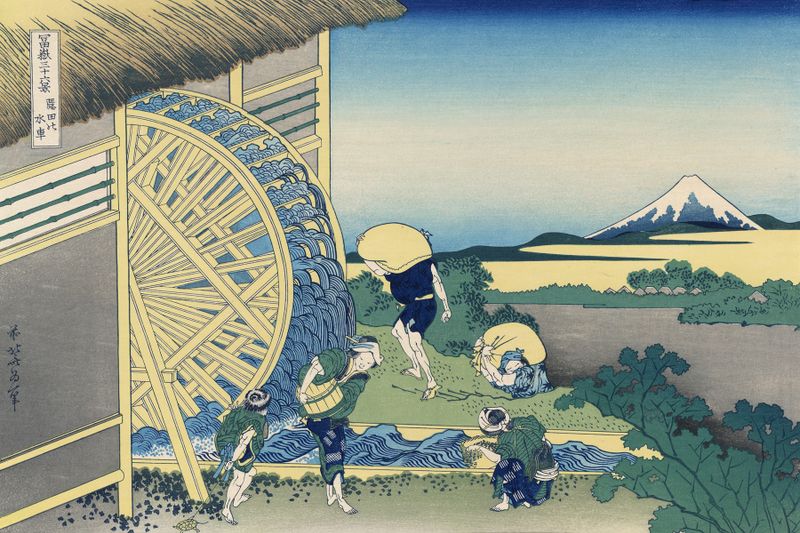
Onden no suisha
Katsushika Hokusai