
Schützengraben — History & Facts
In a world laden with unspoken fears, the weight of the unsaid can be more profound than the chaos of sound itself. This poignant moment captured within Schützengraben speaks to the haunting echoes of war, a visceral reminder of the human condition when faced with dread. Look closely at the foreground, where shadows dominate and figures crouch low in the trench. Notice how the muted browns and grays envelop the soldiers, emphasizing their vulnerability against the backdrop of uncertainty.
The stark contrast between light and dark not only delineates space but also hints at the emotional tumult brewing within. The artist’s meticulous brushwork draws the eye to the tension in their body language, each soldier a study in restraint and fear. As you observe the scene, layers of meaning unfold; the stillness speaks volumes about their shared dread and camaraderie amid chaos. The absence of overt action allows the viewer to sense the palpable anxiety, the breath held tight like a fragile secret waiting to escape.
The rugged texture of the canvas reflects the harsh realities of war—every crease and stroke a testament to the soldiers’ plight, echoing the internal struggle between survival and despair. Created in 1915, Schützengraben emerged during a tumultuous time in history. Hans Larwin, influenced by the horrors of World War I, portrayed the visceral experiences of soldiers stationed in the trenches. His work came at a crossroads for modern art, where expression shifted towards the raw emotional landscape shaped by the war's brutality, forever altering the perception of conflict in artistic representation.
More Artworks by Hans Larwin
Browse all →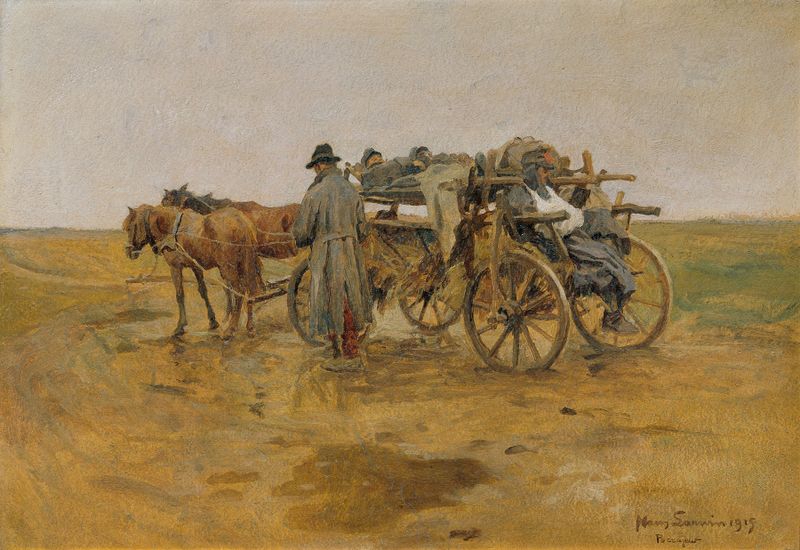

More Historical Art
Browse all →
The Night Watch Militia Company of District II under the Command of Captain Frans Banninck Cocq
Rembrandt van Rijn

Lincoln Memorial
Henry Bacon

The Third of May 1808
Francisco de Goya

Isaac and Rebecca, Known as ‘The Jewish Bride’
Rembrandt van Rijn

The Charge of the Mamelukes (1814)
Francisco de Goya

De vier ruiters van de apocalyps
Albrecht Dürer