
Seascape — History & Facts
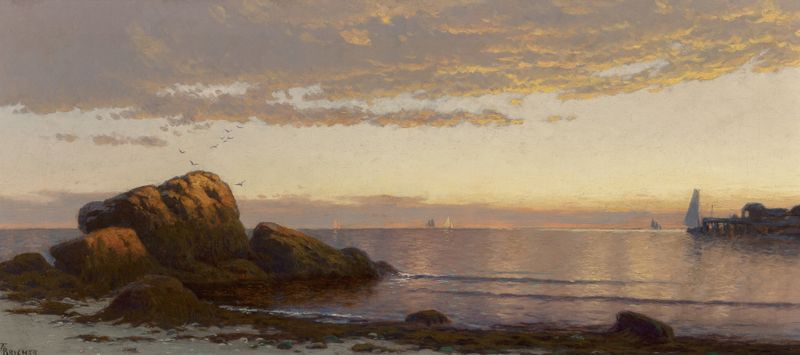
Each wave that ebbs and flows carries whispers of longing and solitude, inviting contemplation in the vastness it reveals. Look to the horizon where the deep blue sea meets the soft, pale sky. The expanse draws your gaze, a seamless blend of hues that radiates tranquility and isolation. Notice how the gentle light dances upon the water’s surface, creating a shimmering path that leads you deeper into the painting.
The meticulous brushstrokes of clouds, almost ethereal, frame the scene, accentuating an atmosphere that is both serene and haunting. Delve into the contrasts present in this artwork: the boldness of the ocean's expanse against the delicate wisps of cloud. Each wave speaks of movement and fleeting moments, while the calm sky suggests an unbroken stillness, evoking a sense of emptiness that resonates with the viewer. The distant sailboat, barely discernible, serves as a poignant reminder of human presence within nature’s grandeur, yet it further emphasizes the feeling of isolation amidst the expansive seascape. Bricher painted this piece in 1878, during a time when American artists were increasingly captivated by nature's beauty and the complexities of light.
Living in New England, he was at the forefront of the Hudson River School's influence, where the harmony of land and sea began to unfold on canvas. In this period, the burgeoning appreciation for realism and impressionism began to shape art, reflecting both the inner and outer worlds of human experience.
More Artworks by Alfred Thompson Bricher
Browse all →
New England Coast
Alfred Thompson Bricher
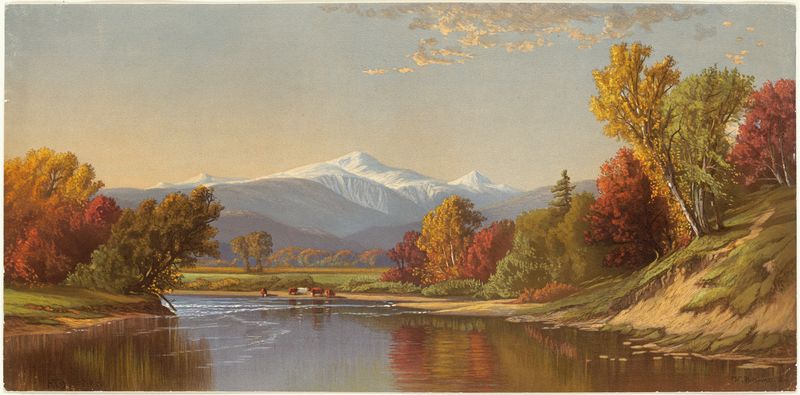
Late Autumn in the White Mountains
Alfred Thompson Bricher
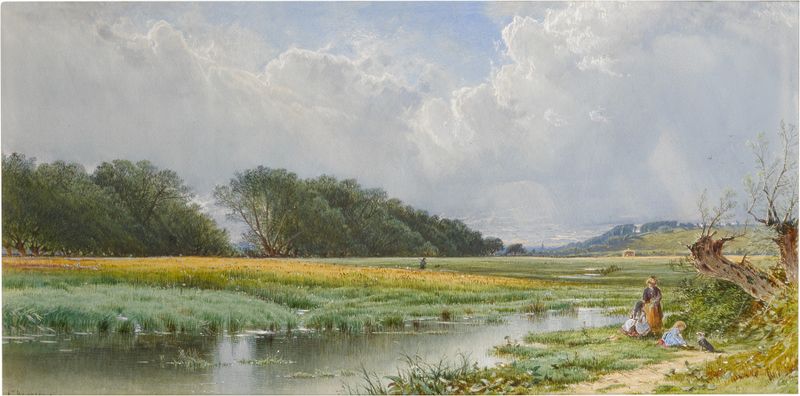
On the Meadows of Old Newburyport
Alfred Thompson Bricher

Along the Maine Coast
Alfred Thompson Bricher
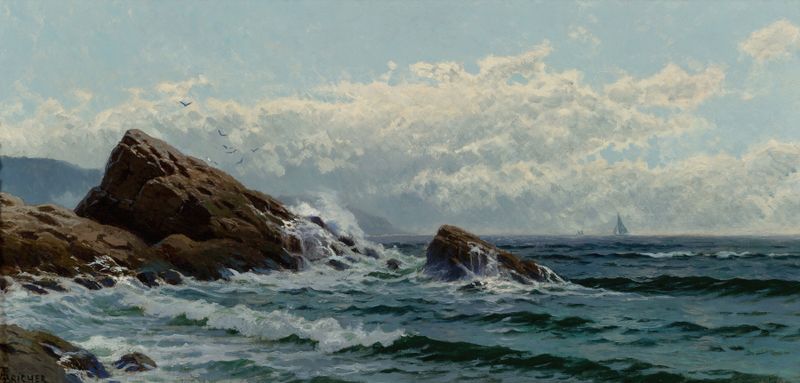
Crashing Waves
Alfred Thompson Bricher

At Water’s Edge
Alfred Thompson Bricher
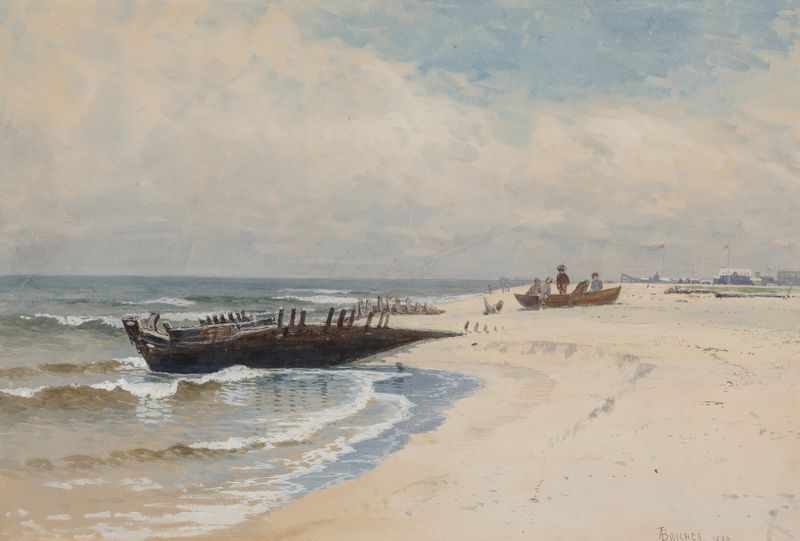
Low Tide
Alfred Thompson Bricher
Sunset on the Coast
Alfred Thompson Bricher

Castle Rock, Nahant, Massachusetts
Alfred Thompson Bricher

On the Meadows of Old Newburyport
Alfred Thompson Bricher





