Seaside Landscape I. — History & Facts
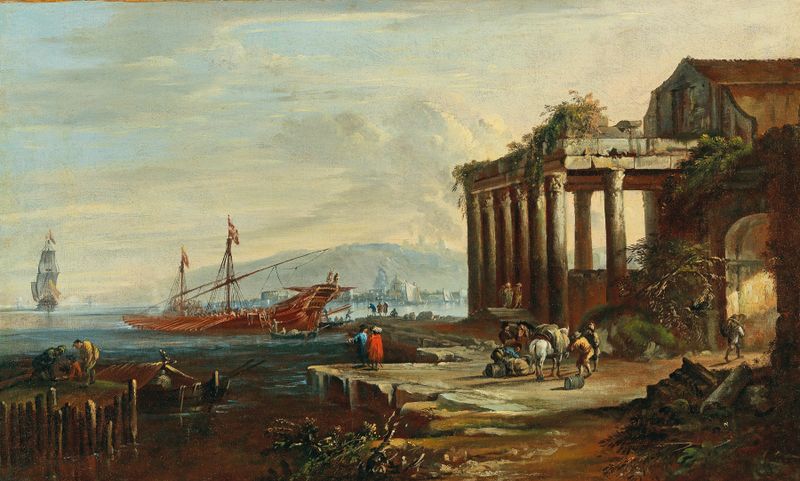
Did the painter know this moment would outlive them? In Seaside Landscape I, the tranquility of a coastal scene belies a subtle undercurrent of betrayal, where nature's beauty conceals the fragility of human life. Look to the right at the gentle curve of the shoreline, where waves lap softly against the sand, inviting a sense of peace. Your eyes should follow the horizon, where soft clouds blend seamlessly into the azure sky, their colors echoing the palette of muted greens and browns. The brushwork is delicate yet confident, capturing the shimmering light that dances over the water, a testament to Eismann's keen observation and mastery of light.
Each layer invites the viewer to linger, revealing the artist's intention to capture both a moment and an everlasting sense of calm. Yet, amid the idyllic scenery, hidden meanings emerge. The stillness of the water contrasts with the tumultuous emotions that the landscape may represent—perhaps a longing for stability in a world of chaos. The distant ships, mere silhouettes against the horizon, suggest exploration, but also the uncertainty that comes with venturing into the unknown.
This juxtaposition speaks to the duality of human experience, where serenity can often mask deeper turmoil. In the early 1720s, Eismann was immersed in the transition from Baroque to a more naturalistic style, painting in the tranquil landscapes of his native Germany. Influenced by the landscapes of the Dutch masters, he sought to capture an idealized vision of nature amidst the shifting tides of artistic expression. The world was embracing new ideas, yet his work remained a tribute to the enduring beauty of the natural landscape, even as it hinted at the complexities of human emotions.