Seaside Landscape II. — History & Facts
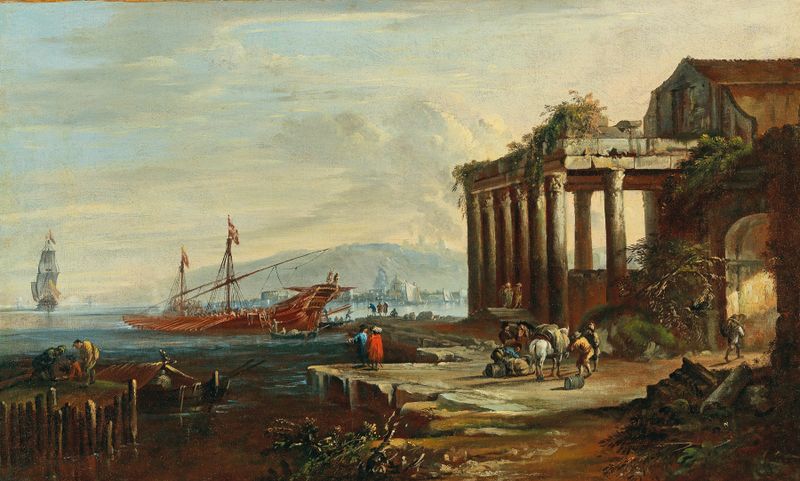
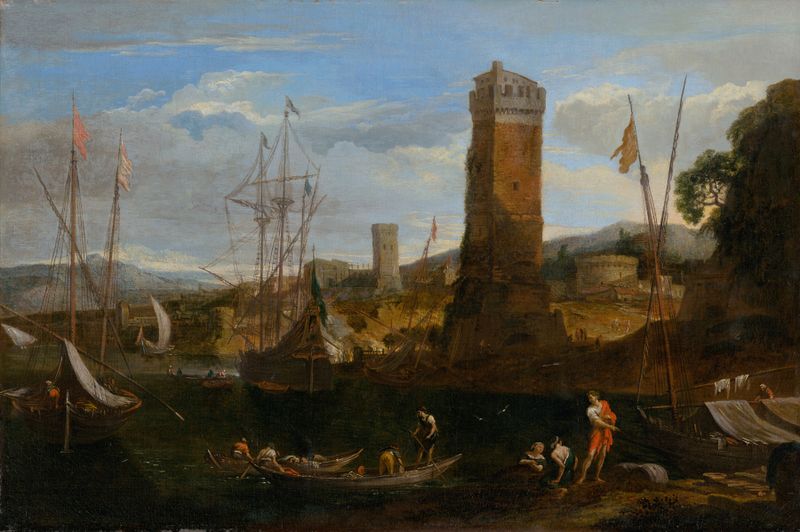
Did the painter know this moment would outlive them? In the stillness of a sunlit afternoon, the canvas breathes the essence of faith in nature’s eternal beauty. Look to the left at the rolling waves, their gentle caress against the shore, each brushstroke meticulously defining the rhythm of the sea. Notice how the muted blues and greens blend harmoniously, inviting the eye to wander into the horizon. The golden light spills across the scene, illuminating the soft sandy beach, where the figures appear almost ethereal, as if they are part of the landscape itself.
Eismann’s delicate handling of light and shadow reveals not just the physicality of the seaside but also a sense of serenity that envelops the moment. Yet, beneath this pastoral surface lies a deeper tension. The figures, seemingly at peace, evoke a solitude that contrasts with the vibrancy of nature around them. The distant clouds gathering on the horizon suggest an impending change, hinting at life’s unpredictable storms.
This juxtaposition speaks to the transient nature of human existence—a reminder of our fleeting moments in the face of an enduring landscape, where faith in the beauty of the world becomes a refuge. Created between 1720 and 1730, during a period of burgeoning interest in landscape painting, Eismann found his footing in the rich traditions of the Baroque style. Living in the early 18th century, he navigated a world marked by shifts in artistic values, as the appreciation of natural beauty began to overshadow religious themes. This work reflects not only his personal exploration of landscapes but also a wider cultural embrace of the sublime, positioning him as a significant figure within the evolving art scene of his time.