
Seiltänzer — History & Facts
A rush of orange and red pulls the viewer straight into the heart of spectacle. The crowd is faceless, absorbed, their backs forming a living frame for the lone figure balanced high above—an acrobat frozen in the moment of risk. The diagonal beams slice the scene, echoing the tension of the tightrope, while the tents and banners dissolve into bold, angular patches of color.
Light is not used to model flesh or fabric, but to heighten drama, drawing the eye upward from the shadowed audience to the performer’s poised, luminous form. The palette is restless, urgent, as if the very air inside the tent vibrates with anticipation. Painted in 1914, this work belongs to a world on the brink of upheaval, when artists like August Macke sought new ways to capture the pulse of modern life. The circus and fairground were favorite subjects for the Expressionists, who saw in them both the excitement and the alienation of the crowd.
Such paintings were rarely made on commission; instead, they were personal explorations, meant to be shown in progressive galleries or reproduced in art books, as this copy was. History has kept few traces of the journeys of this particular piece, but its energy remains undimmed—an invitation to step into the ring and feel, for a moment, the collective breath of an audience held in suspense.
More Artworks by August Macke
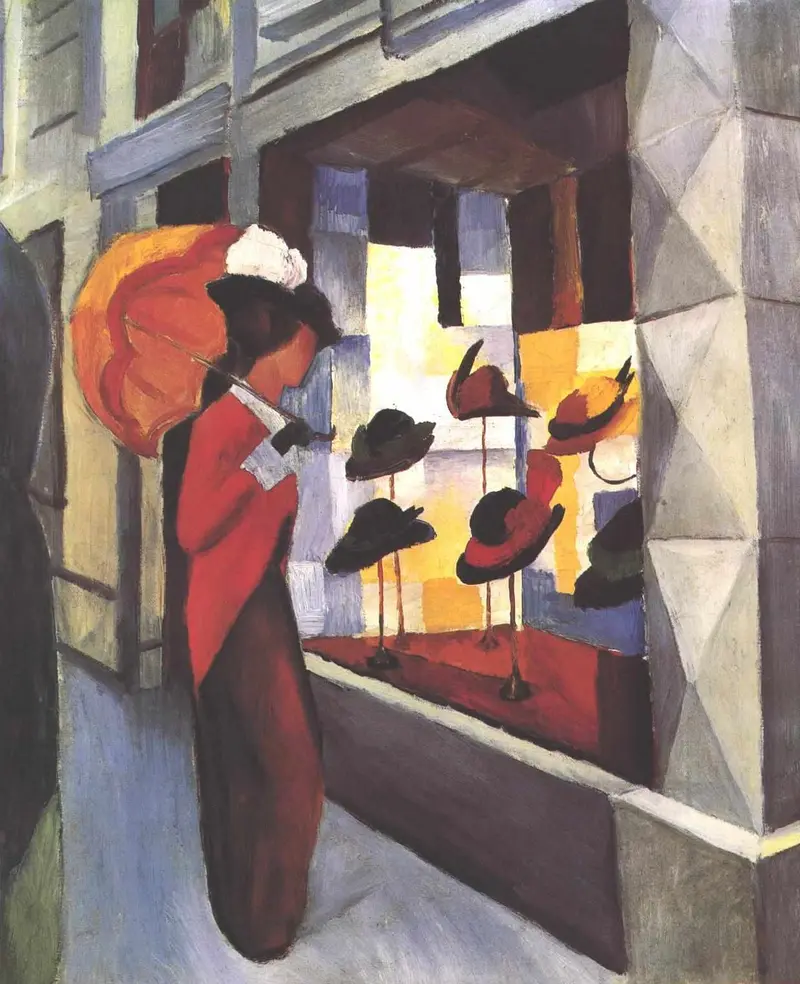
Woman with a Parasol in Front of a Hat Shop
August Macke

Street with Church in Kandern
August Macke
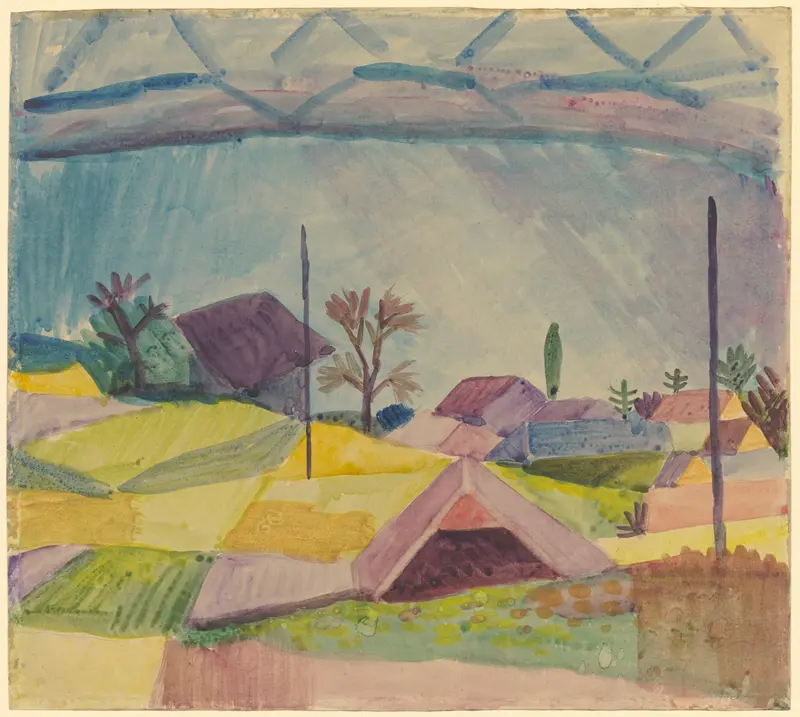
View of Hilterfingen
August Macke

Paar im Nachen
August Macke
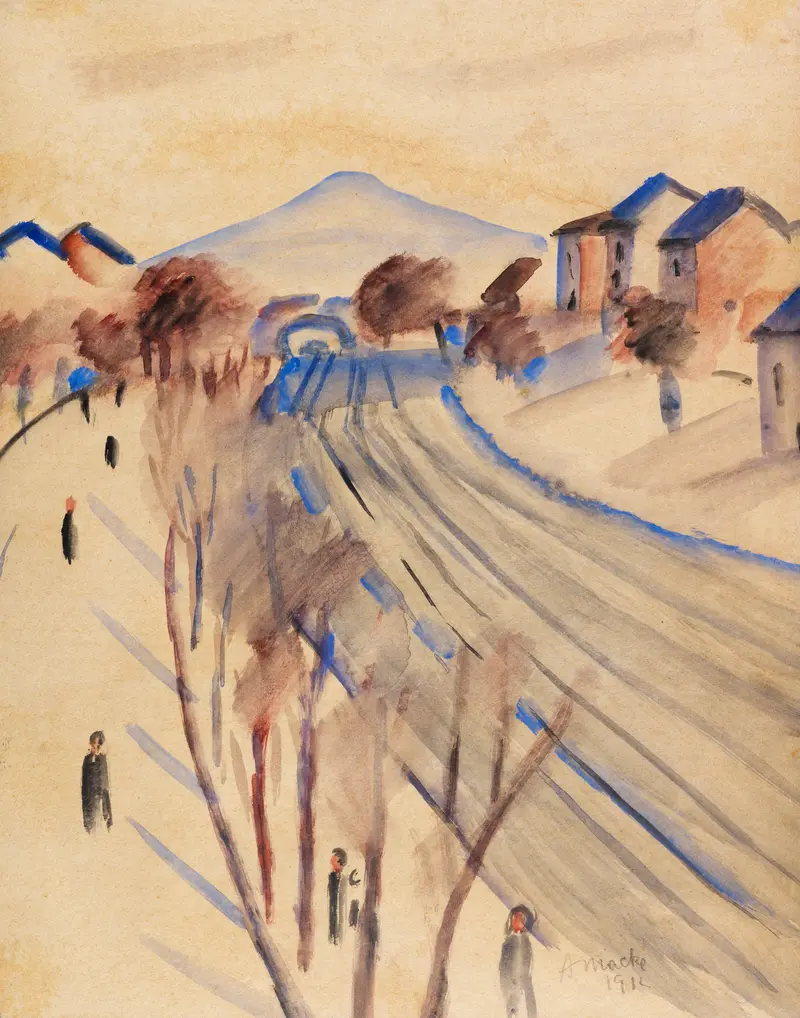
Ölberg mit Bahngleisen II
August Macke
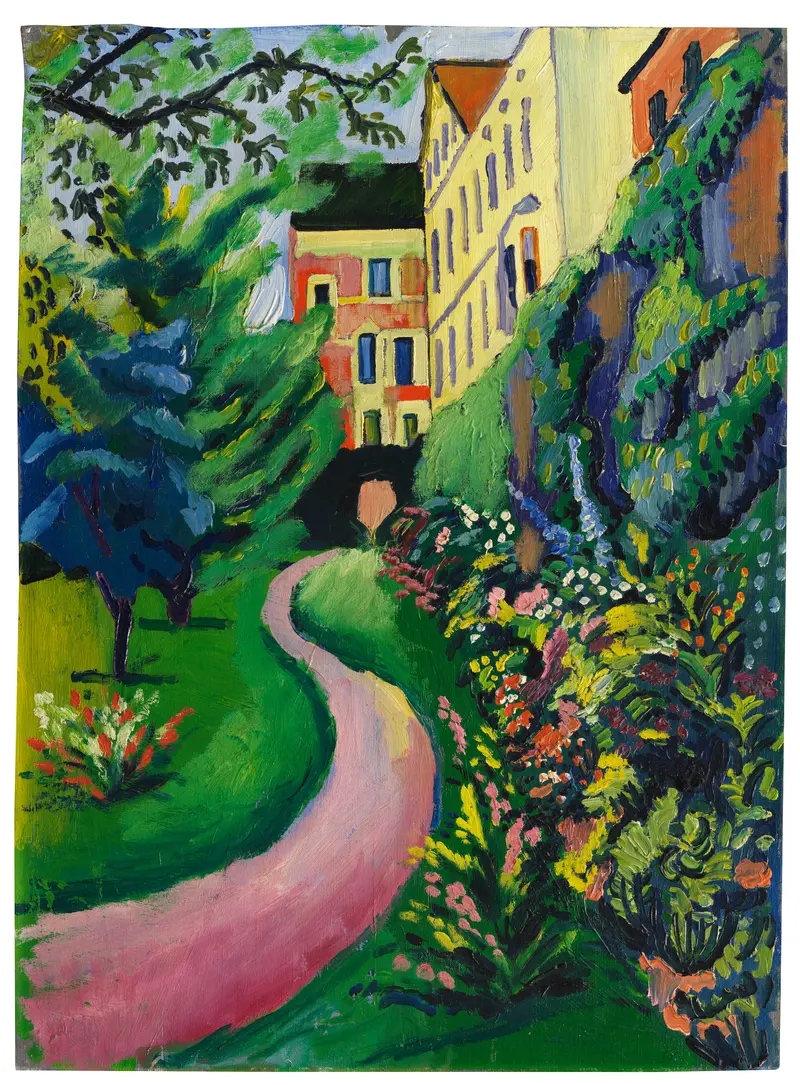
Unser Garten mit blühenden Rabatten
August Macke
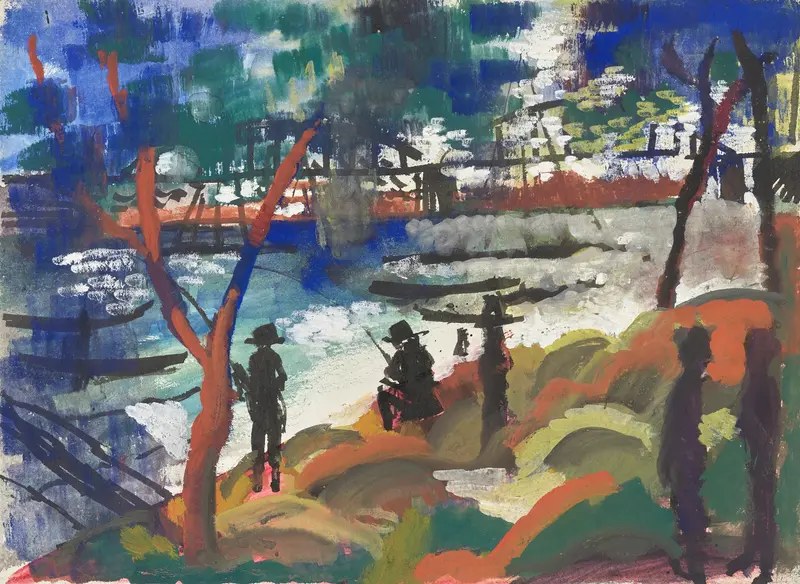
Angler am Fluss
August Macke
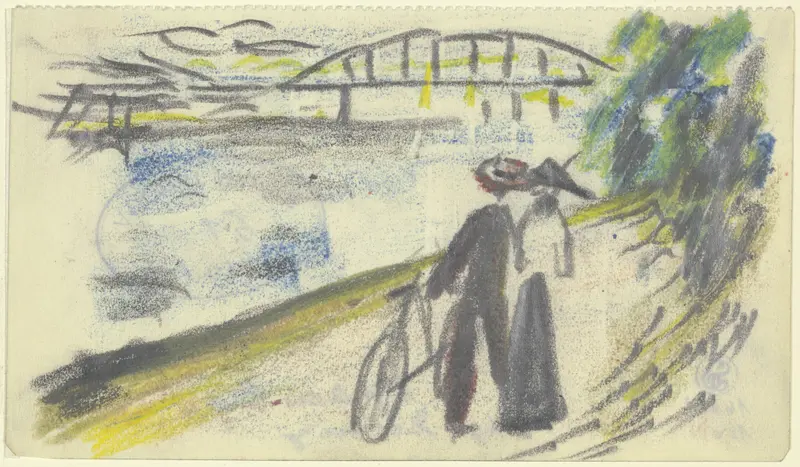
Path at the Rhine
August Macke
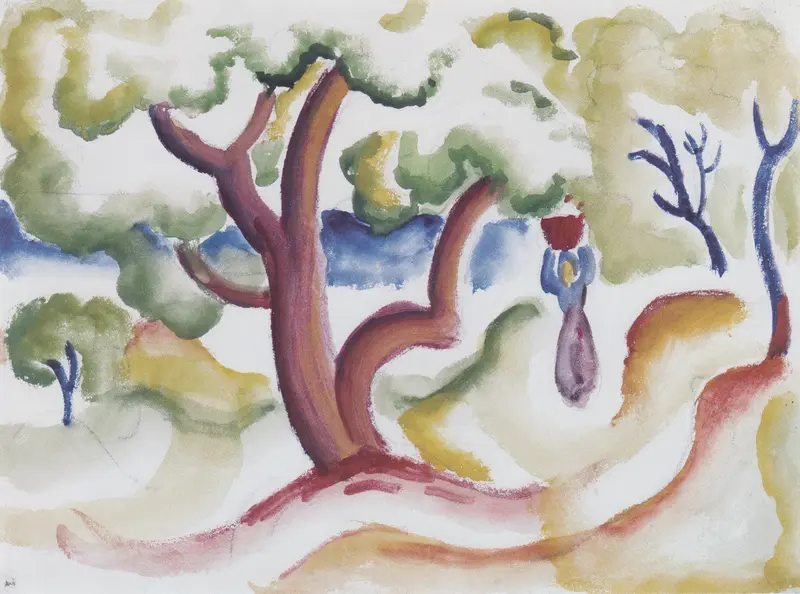
Frau mit Krug unter Bäumen
August Macke
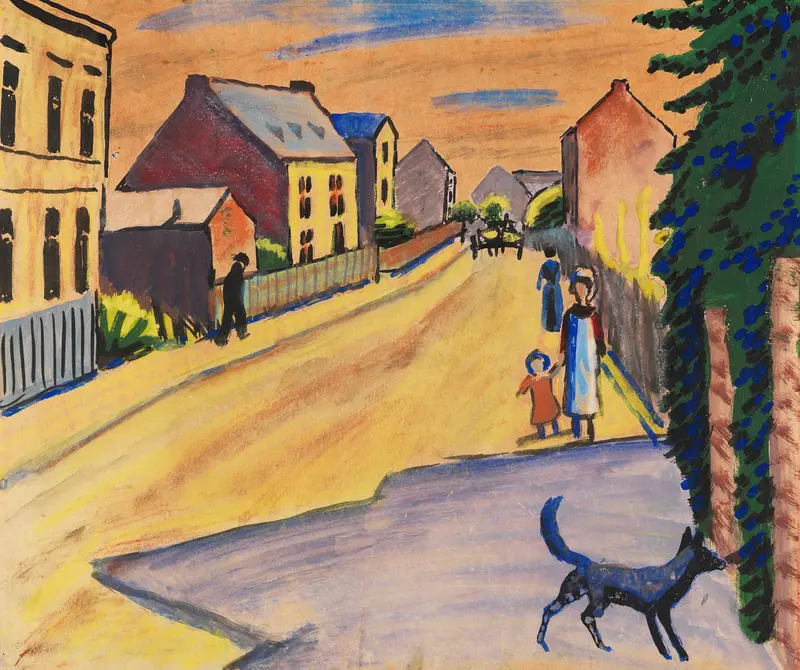
Sonnige Straße mit Hund
August Macke



