
Self-Portrait — History & Facts
What if silence could speak through light? In that quietude, fragility finds its voice, woven into the very fabric of a soul’s expression. Look closely at the center where the artist’s visage emerges, framed by delicate brushwork that evokes both vulnerability and strength. The soft interplay of light and shadow caresses the contours of the face, accentuating the depth of emotion in the downturned eyes. Notice how the muted palette, dominated by earthy tones, envelops the figure, creating an intimate atmosphere that invites contemplation. Within this intimate portrayal lies a poignant tension between the self and the external world.
The subtle cracks in the surface of the paint suggest a complex interplay of resilience and fragility, a reminder that existence is often marked by impermanence. The warmth in the skin tones contrasts with the coolness of the background, mirroring the duality of inner peace and external turmoil, as if the artist grapples with self-identity amidst a shifting reality. In the late 19th to early 20th century, Kanji Nakamura was navigating a transformative period in Japanese art. After returning from his studies abroad, he sought to merge traditional techniques with contemporary influences, reflecting the cultural tensions of his time.
Self-Portrait emerged amidst these explorations, capturing not only his likeness but also the subtleties of an artist’s introspection during a pivotal era of change.
More Artworks by Kanji Nakamura
Browse all →
Courtyard of an Old Palace, Palermo
Kanji Nakamura
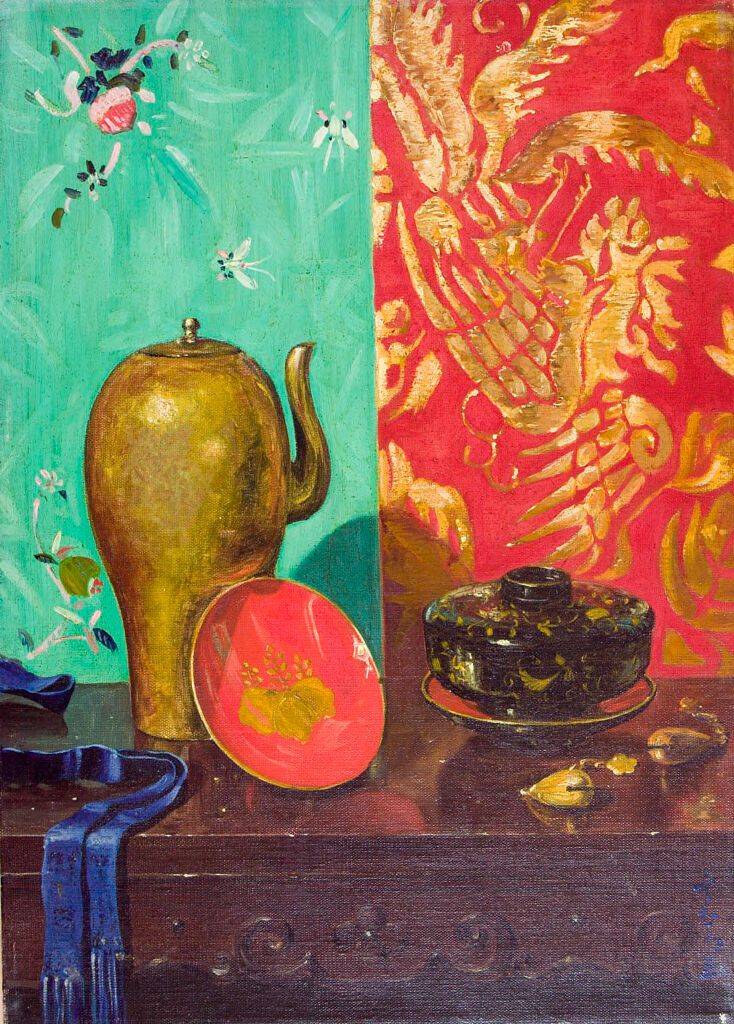
Still Life with Vessel, Plate and Ink Jar
Kanji Nakamura
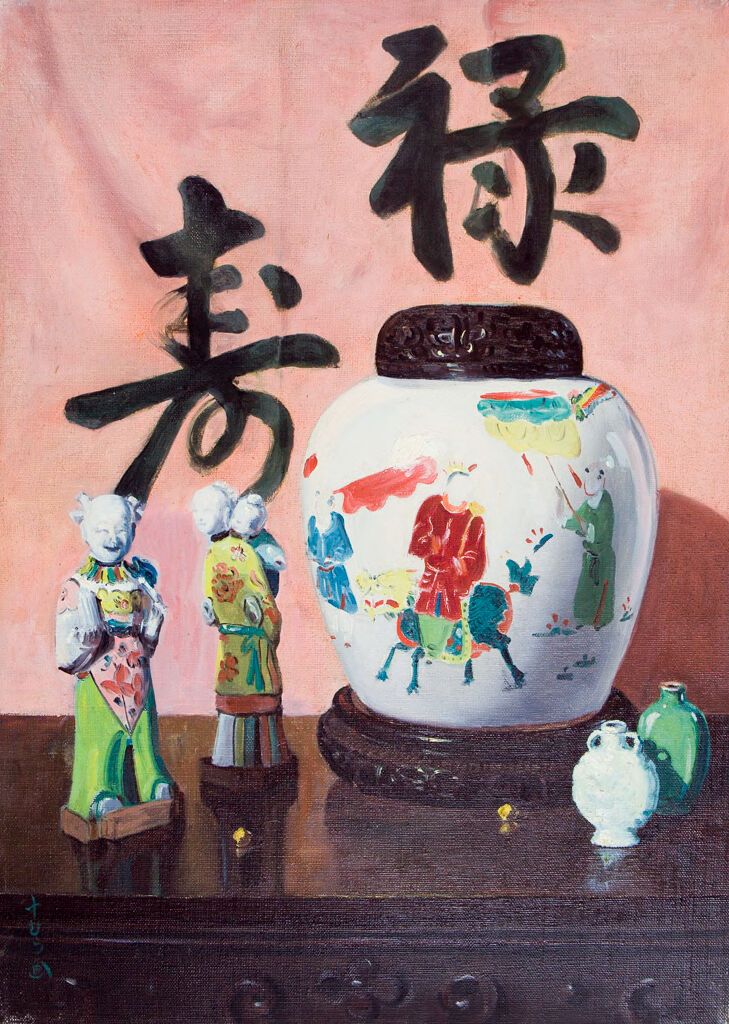
Still Life with Jars and Figurines
Kanji Nakamura
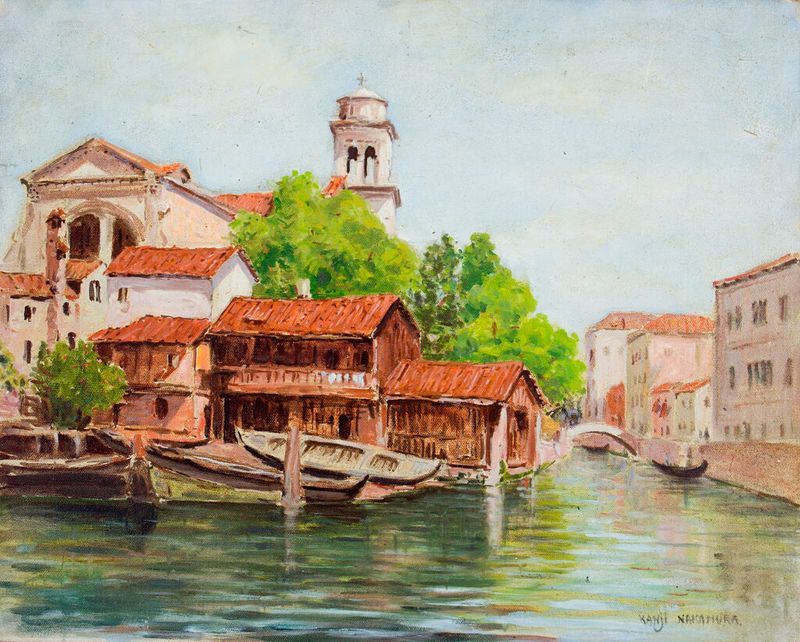
Canal Scene with Buildings and Steeple
Kanji Nakamura

Flowers
Kanji Nakamura

Orizaba, Mexico
Kanji Nakamura

Still Life with Oriental Head
Kanji Nakamura
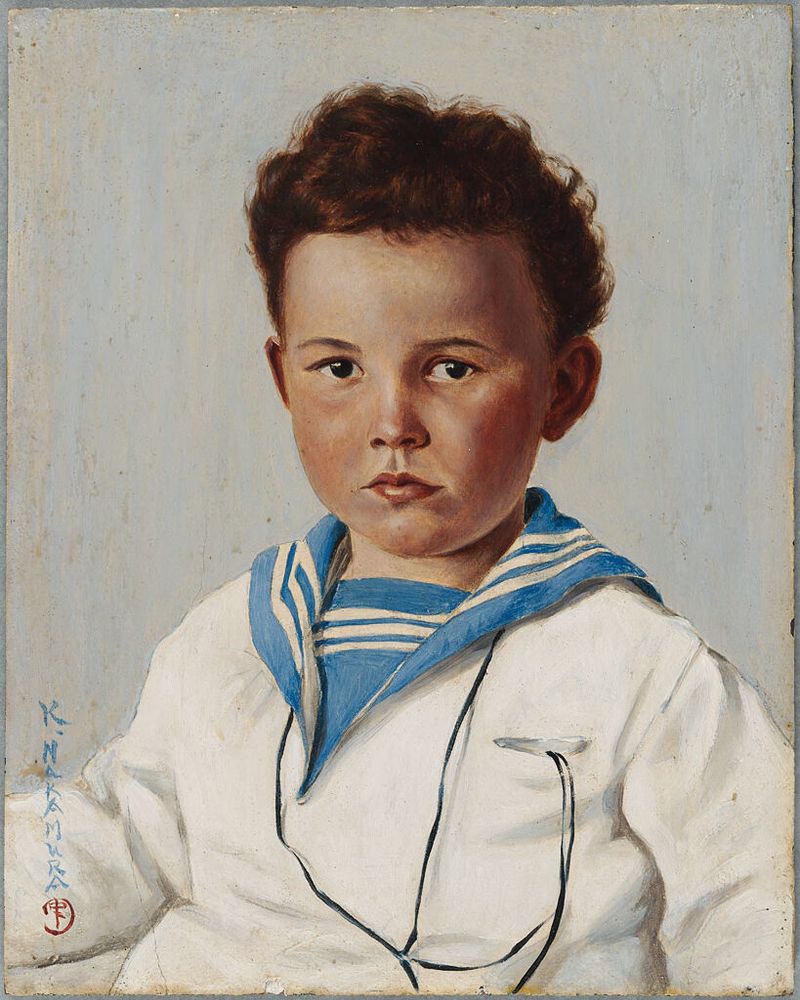
Portrait of a Boy
Kanji Nakamura

Still Life with Grapes and Pomegranates
Kanji Nakamura
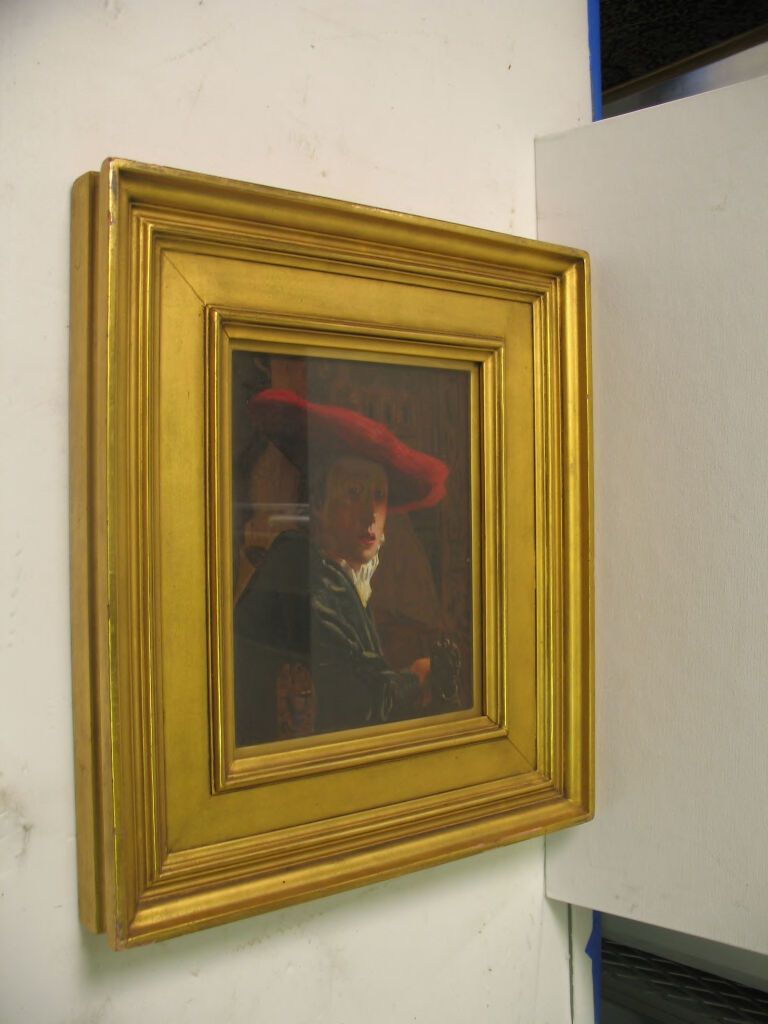
Portrait of a Young Woman in a Red Hat, after Vermeer
Kanji Nakamura
More Portrait Art
Browse all →
Las meninas
Diego Velázquez

Self-portrait with a Bandaged Ear and Pipe
Unidentified artist

Girl with a Pearl Earring
Johannes Vermeer

The Sampling Officials of the Amsterdam Drapers’ Guild, Known as ‘The Syndics’
Rembrandt van Rijn

The Hundred Guilder Print: the man seen on the back in the lower left corner
Rembrandt van Rijn

Portrait of Dr Gachet
Vincent van Gogh