Still Life with Vessel, Plate and Ink Jar — History & Facts
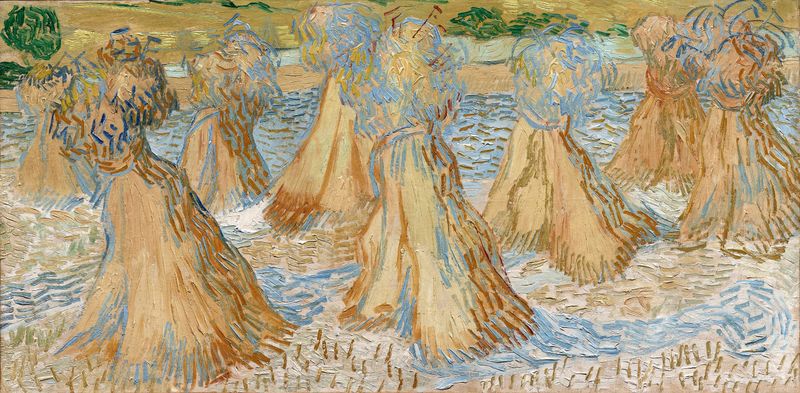
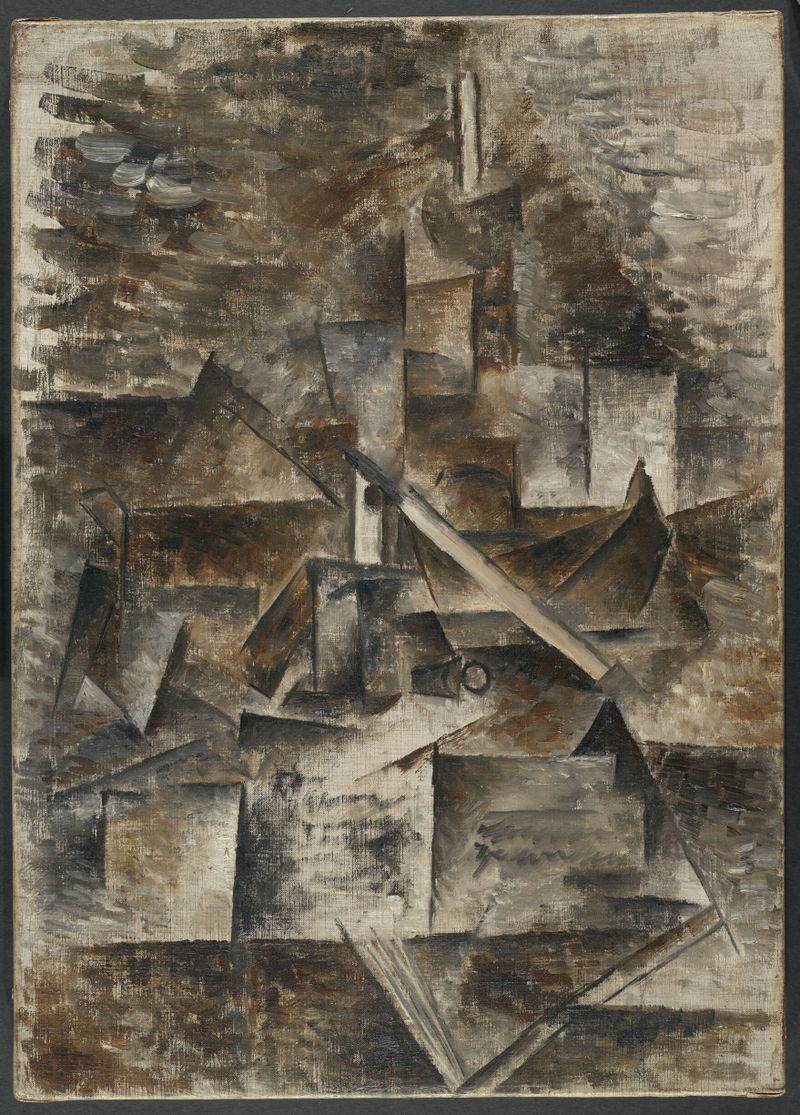
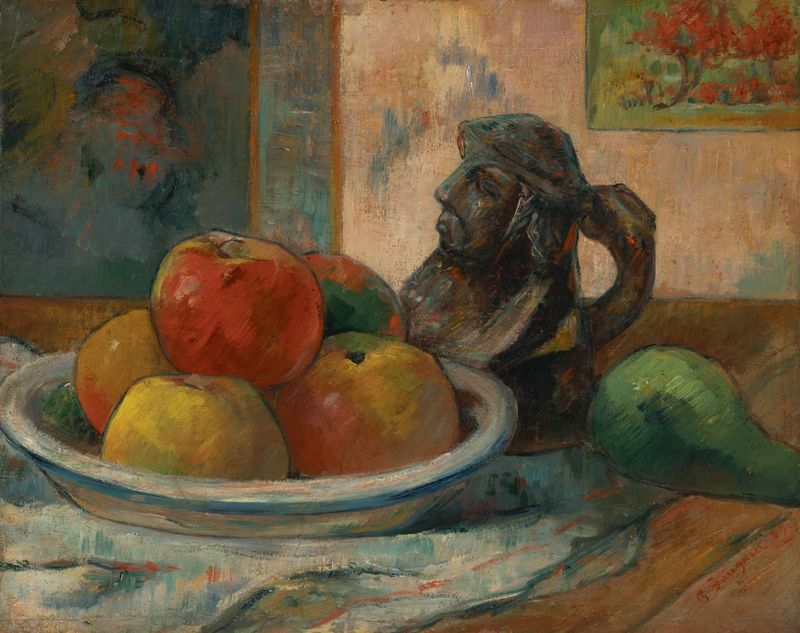
Did the painter know this moment would outlive them? The stillness captured in Still Life with Vessel, Plate and Ink Jar invites us to ponder the relationship between transience and permanence, urging us to consider the weight of the light that bathes each object within its frame. Focus on the soft glow illuminating the surface of the bowl, where the reflection dances lightly, hinting at life beyond the canvas. The artist's deliberate arrangement of the ink jar, vessel, and plate draws your gaze inwards, creating a harmonious balance between form and emptiness. Rich, earthy tones contrast with the delicate highlights, conveying a sense of quiet contemplation, while the subtle play of shadows adds depth to the composition, inviting viewers to engage their imagination. Hidden within this tranquil scene are themes of creation and destruction, permanence and ephemerality.
The ink jar, symbolizing the act of creation, stands firm, while the plate—a vessel for nourishment—suggests human experience that is always fleeting. The light, a silent observer, weaves through the objects, binding them together in a moment that speaks of both solitude and the shared intimacy of life’s mundane moments. Created in the late 19th to early 20th century, the artist found inspiration in the simplicity of everyday objects, reflective of a broader movement toward still life in Japanese art during this period. As the world was rapidly modernizing, the focus on such intimate scenes demonstrated a desire to preserve the beauty of fleeting moments before they vanished into history.
More Artworks by Kanji Nakamura
Browse all →
Courtyard of an Old Palace, Palermo
Kanji Nakamura
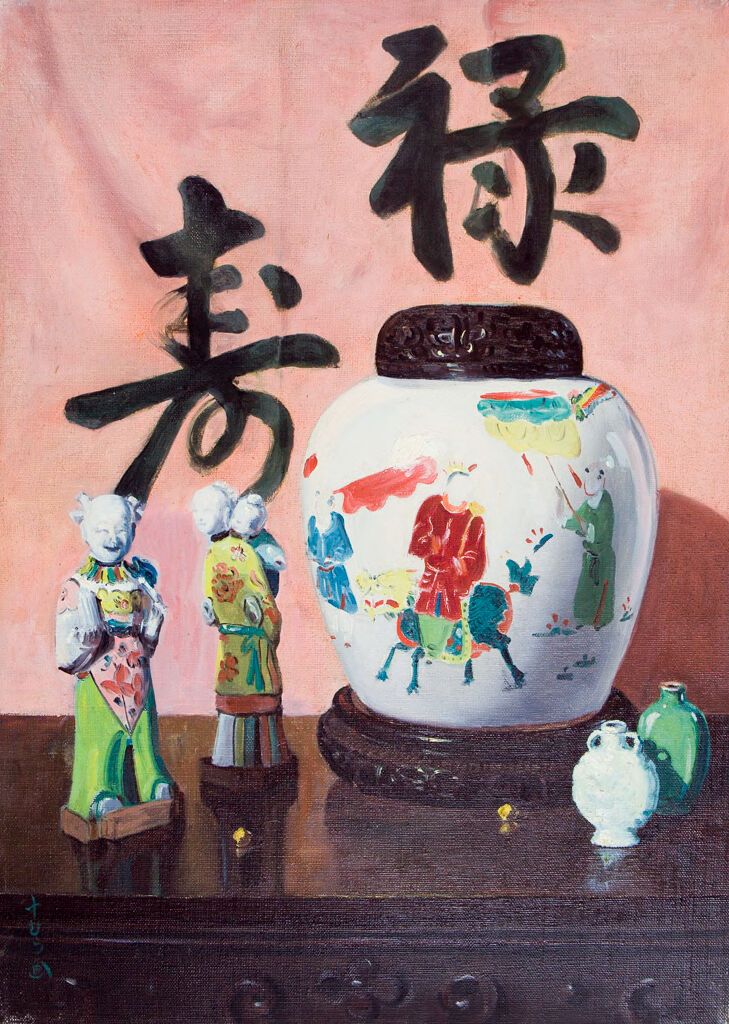
Still Life with Jars and Figurines
Kanji Nakamura
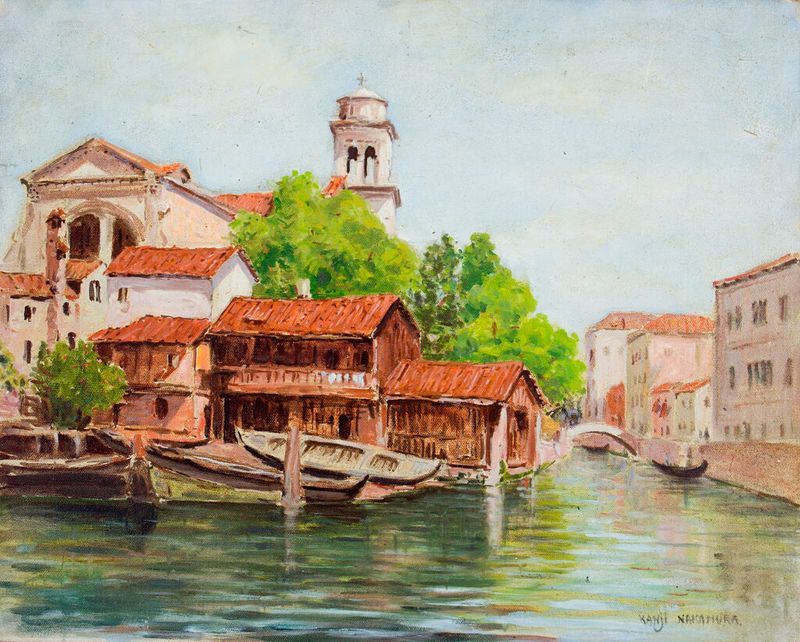
Canal Scene with Buildings and Steeple
Kanji Nakamura

Flowers
Kanji Nakamura

Orizaba, Mexico
Kanji Nakamura

Self-Portrait
Kanji Nakamura

Still Life with Oriental Head
Kanji Nakamura
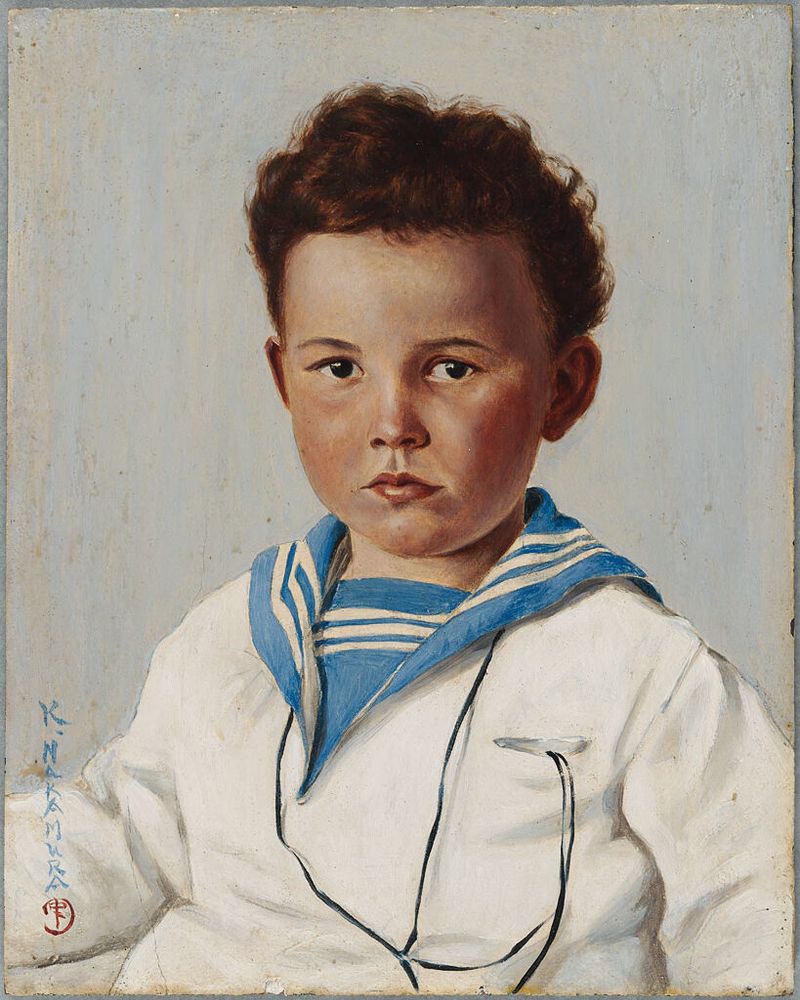
Portrait of a Boy
Kanji Nakamura

Still Life with Grapes and Pomegranates
Kanji Nakamura
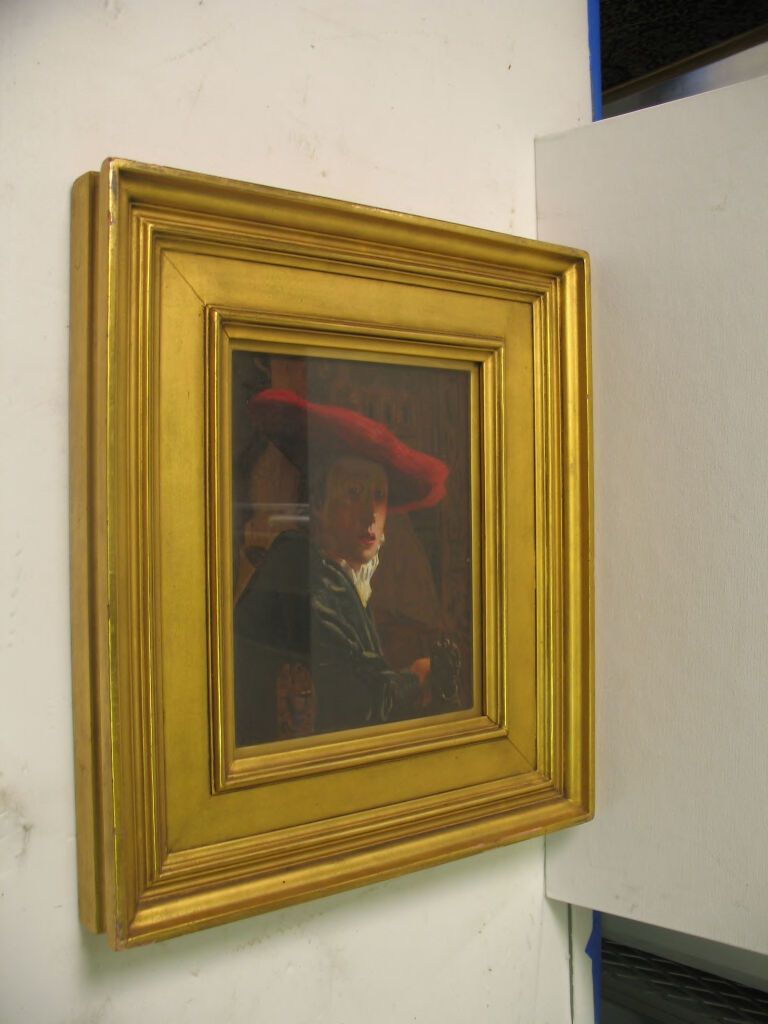
Portrait of a Young Woman in a Red Hat, after Vermeer
Kanji Nakamura