
Self-portrait with long bushy hair: head only — History & Facts
Can paint confess what words never could? In Self-portrait with long bushy hair: head only, we encounter an intimate reflection, a moment where the artist lays bare not just his visage but the illusions of identity and self-perception. Look closely at the brushwork that captures the wild cascade of hair, each stroke possessing a vitality that seems to vibrate with life. The deep umbers and luminous highlights create a movement that draws the eye to the texture and form of the hair, while the pale skin contrasts sharply against it. The thoughtful positioning of the face—slightly turned, yet fully engaging—invites a dialogue with the viewer, revealing vulnerability and confidence alike. Within this solitary frame lies a tension between reality and artifice.
The unyielding gaze hints at an inner turmoil, perhaps reflecting the artist’s struggles with self-image and public persona. The play of light and shadow serves as a metaphor for the dualities within us all; the warmth of the flesh against the stark reality of the human condition. This intricate dance between perception and illusion, between self and the world outside, transforms the piece into a universal exploration of identity. This self-portrait was created around 1631, during a time when Rembrandt was establishing his reputation in Amsterdam, refining his skills and experimenting with new techniques.
Art was evolving rapidly in the Dutch Golden Age, and artists were beginning to delve deeper into personal expression. At this juncture, he faced both personal challenges and artistic aspirations, which shaped his approach to self-representation, imbuing it with both sincerity and complexity.
More Artworks by Rembrandt van Rijn
Browse all →
The Night Watch Militia Company of District II under the Command of Captain Frans Banninck Cocq
Rembrandt van Rijn

The Return of the Prodigal Son
Rembrandt van Rijn

The Hundred Guilder Print: the figures leaning on the wall in the centre left
Rembrandt van Rijn

The Hundred Guilder Print: the central piece with Christ preaching, the plate arched
Rembrandt van Rijn

Isaac and Rebecca, Known as ‘The Jewish Bride’
Rembrandt van Rijn
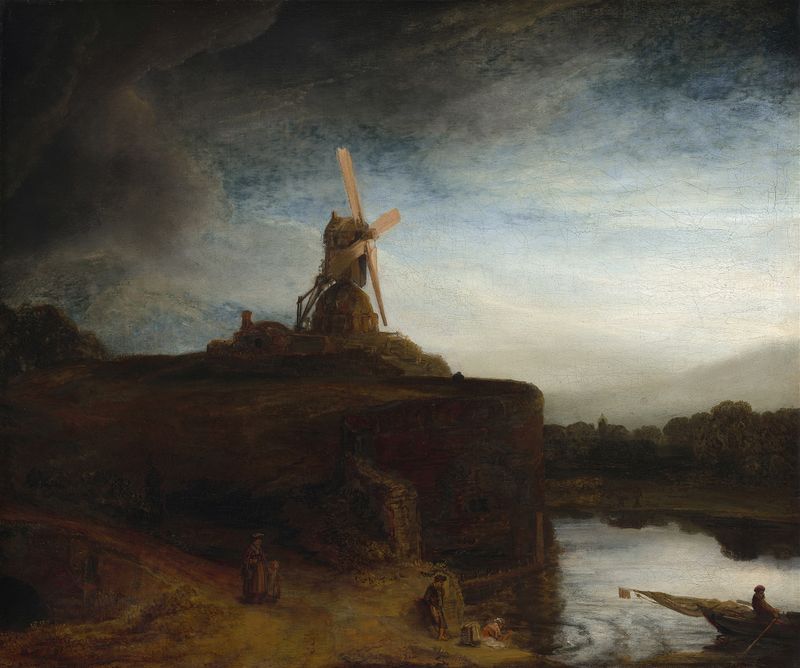
The Mill
Rembrandt van Rijn

The Sampling Officials of the Amsterdam Drapers’ Guild, Known as ‘The Syndics’
Rembrandt van Rijn

The return of the prodigal son
Rembrandt van Rijn
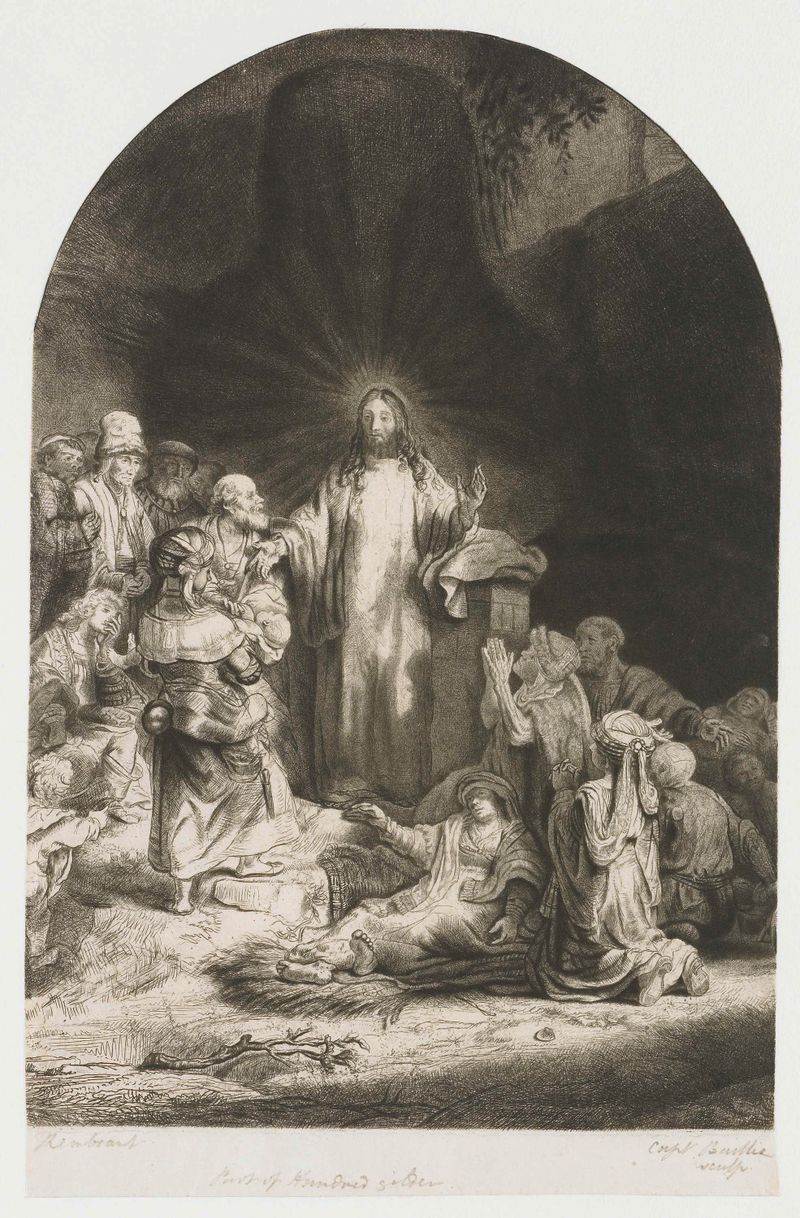
The Hundred Guilder Print: the central piece with Christ preaching, the plate arched
Rembrandt van Rijn

The Hundred Guilder Print: the man seen on the back in the lower left corner
Rembrandt van Rijn
More Portrait Art
Browse all →
Las meninas
Diego Velázquez

Self-portrait with a Bandaged Ear and Pipe
Unidentified artist

Girl with a Pearl Earring
Johannes Vermeer
The Sampling Officials of the Amsterdam Drapers’ Guild, Known as ‘The Syndics’
Rembrandt van Rijn
The Hundred Guilder Print: the man seen on the back in the lower left corner
Rembrandt van Rijn

Portrait of Dr Gachet
Vincent van Gogh