Sheaves of Grain — History & Facts
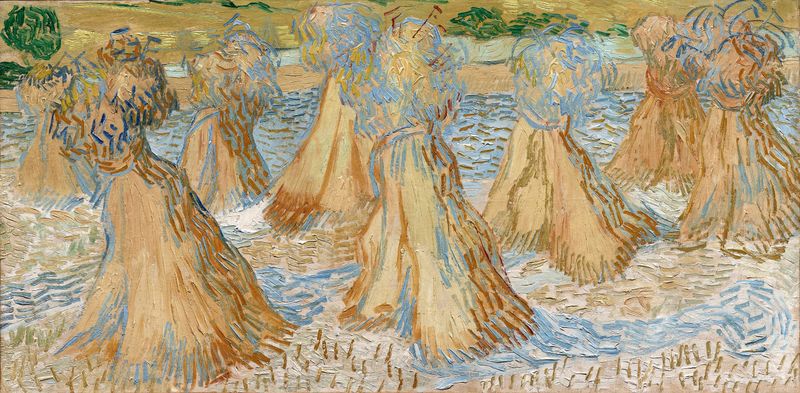
Where does light end, and longing begin? In the quiet embrace of nature, rebirth intertwines with stillness, urging us to reflect on the cycles of life. Look to the bottom left, where lush sheaves of grain emerge, their golden hues contrasting against the rich, deep greens of the background. Notice how the artist employs brushstrokes that are both soft and precise, inviting an intimate engagement with the texture of the wheat. The play of light dances across the surface, illuminating each golden blade while casting delicate shadows that hint at the time of day—perhaps dusk, when day gently bows to night, symbolizing transition and renewal. The composition evokes a sense of anticipation; each sheaf stands as a marker of potential and growth.
The vibrant colors suggest warmth and abundance, while the muted tones in the background introduce a layer of reflective melancholy. This duality—the interplay of brightness and shadow—creates a profound emotional tension, prompting viewers to contemplate not just the harvest but the cycle of loss and regeneration that defines the human experience. Gerhard Munthe painted this work in 1876 during a period of artistic exploration in Norway, where he began to embrace the themes of nature and folklore. Influenced by the burgeoning Romanticism movement, Munthe sought to portray the beauty and complexity of the natural world, marking a significant phase in his evolution as an artist.
In this work, he captures not only the essence of the landscape but also the deep emotional resonance intertwined with it, reflecting a time of personal and collective transformation.
More Artworks by Gerhard Munthe
Browse all →
Waterfall at Stange in Hedmark
Gerhard Munthe
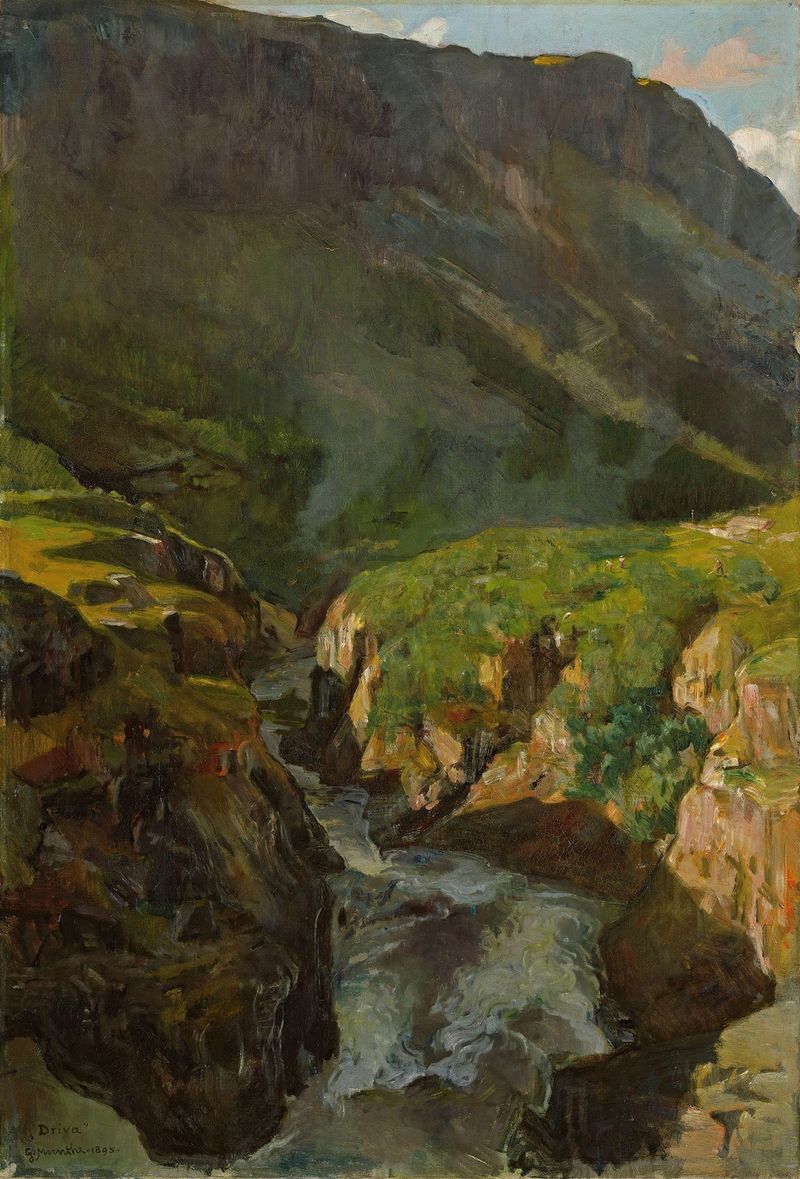
The River Driva
Gerhard Munthe
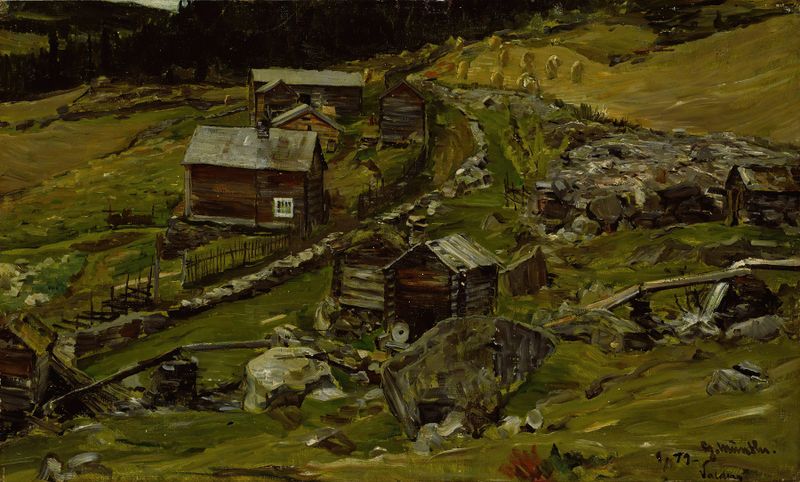
Farm in Valdres
Gerhard Munthe

At the Farm, Ulvin
Gerhard Munthe
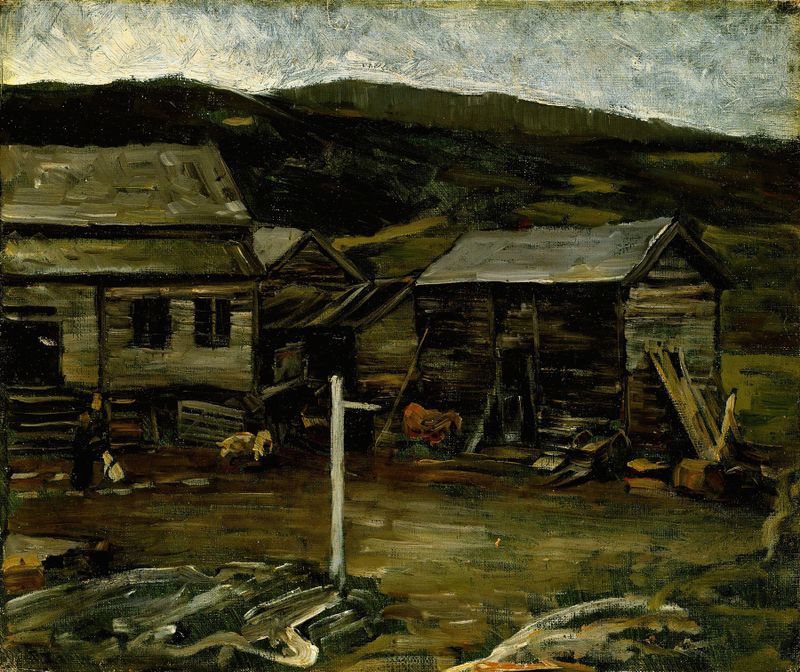
Autumn Evening at the Farm, Øylo
Gerhard Munthe
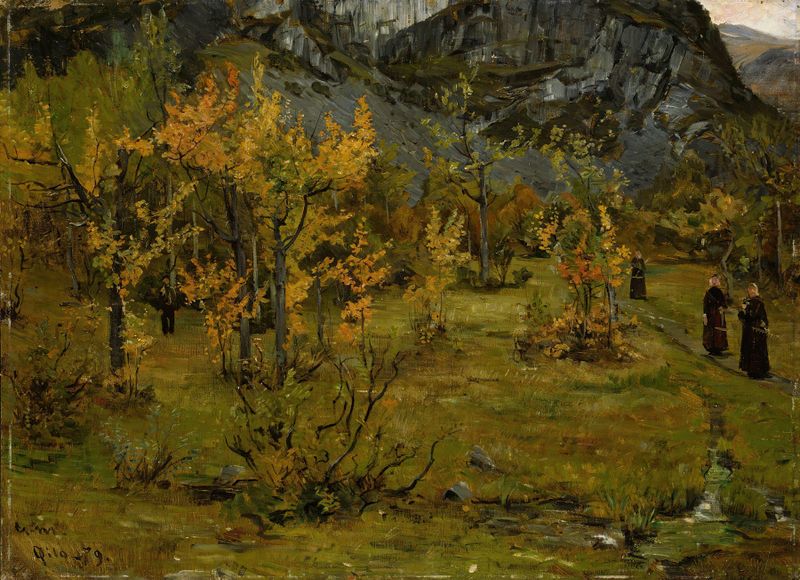
Autumn Landscape, Øylo
Gerhard Munthe

Throwing Snowballs
Gerhard Munthe

Brook at Øylo
Gerhard Munthe

Fields at Hedmark in Summer
Gerhard Munthe

Autumn Landscape, Øylo
Gerhard Munthe