Sheep in the snow — History & Facts
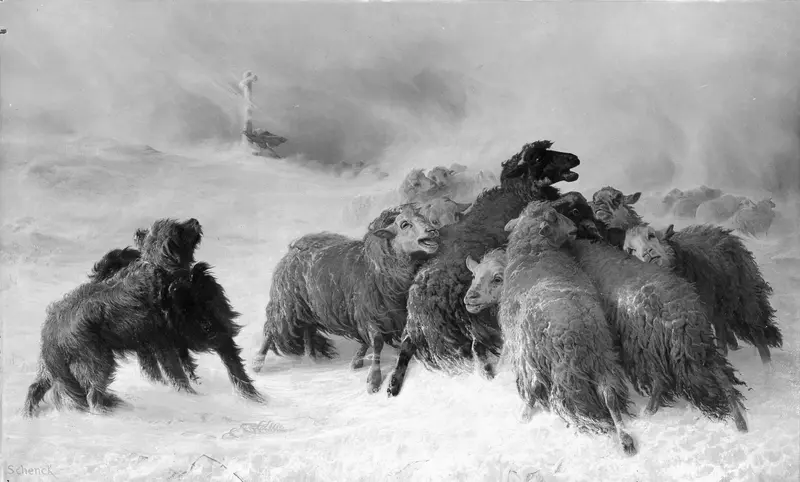
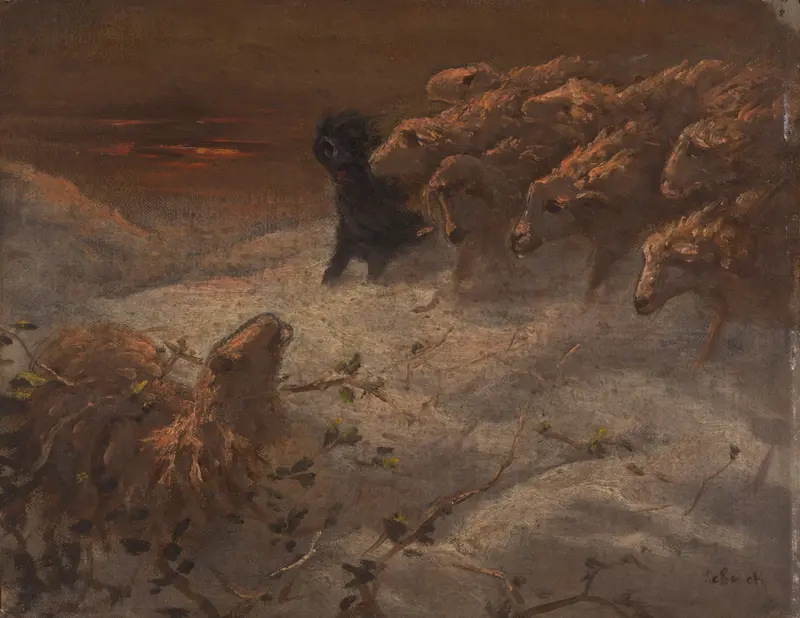
What grips the viewer first in Sheep in the snow is the way the animals huddle together, their warm bodies pressed into a single mass against a world stripped down to icy essentials. The snow is not just background but a presence, swallowing detail and muting the landscape until only the ochre of wool and the faintest shadow of a shepherd or dog are left to break the white silence. The brushwork is loose, almost impatient, as if the painter wanted to capture the urgency of the flock’s instinct to gather for warmth and safety.
The light, diffused and cold, flattens the scene but also throws the sheep’s forms into gentle relief, their backs catching what little warmth the day offers. In this small drama, the animals’ huddled shapes become a living response to the elements, and the viewer is drawn into their quiet struggle. Works like this, painted by August Friedrich Schenck, belong to a tradition of 19th-century animal painting that flourished in Europe, where artists found new poetry in the everyday lives of rural creatures. These paintings were often collected by urban patrons hungry for reminders of a vanishing countryside, and they offered viewers a window onto the rhythms and hardships of rural life.
The unknown date of this work, now part of the Google Arts & Culture collection, only adds to its sense of timelessness—history has kept few traces of its journey, but the image itself remains immediate and alive. Look again at the way the snow seems to press in, and you may sense the artist’s own fascination with the quiet drama of survival.