Shinjuku at night — History & Facts
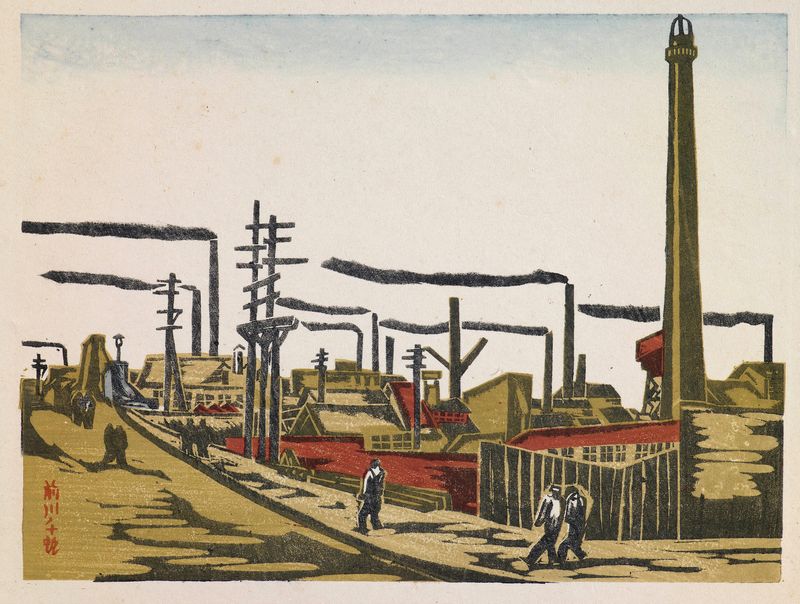
In the glow of neon, vibrant hues of light dance upon the shadows of urban solitude, revealing the duality of existence in a post-war world. Look to the left where the striking contrast of rich blues and bright yellows draws your eye into the heart of Shinjuku at night. The composition is alive with movement, the flickering lights hinting at the stories hidden within the nightlife, while the deep outlines of buildings frame the scene like dark sentinels. Maekawa Senpan’s meticulous brushwork captures the pulse of the city, each stroke reflecting not just light, but the restless energy of its inhabitants. Delve deeper into the delicate interplay between light and shadow, where every illuminated surface speaks of fleeting moments—laughter, longing, and loss.
Notice the juxtaposition of warmth against the cold silence of night, suggesting that even in the vibrant chaos, there is an undercurrent of yearning. This tension between exuberance and desolation encapsulates the emotional landscape of a city emerging from the echoes of conflict. In 1945, Maekawa Senpan painted this piece amidst the scars of World War II, encapsulating the complexity of urban life as Japan began to rebuild. Living in a time of transformation, his work reflects the social and emotional upheaval prevalent in post-war society, marking his place in the Nihonga movement which sought to blend traditional Japanese aesthetics with contemporary themes, capturing a pivotal moment in both his life and the history of art.