
Ship in Fog, Gloucester Harbor — History & Facts
Can paint confess what words never could? In Ship in Fog, Gloucester Harbor, the weight of longing is palpable, evoking a sense of yearning that transcends language. Look to the left at the hazy silhouette of the ship, its ghostly form gently emerging from the fog. The muted palette of greys and blues envelops the scene, creating an ethereal atmosphere where the boundaries between sea and sky dissolve. Notice how the light appears to cling to the water, casting shimmering reflections that dance lightly, hinting at the presence of unseen mysteries lurking within the mist. The juxtaposition of clarity and obscurity is striking; while the ship is rendered with precision, the fog blurs the surrounding landscape, suggesting the uncertainty of the journey that lies ahead.
This tension between the known and the unknown resonates with the viewer, evoking feelings of both adventure and trepidation. The lonely boat, seemingly adrift, reflects a universal quest for connection amidst the vastness of nature—a poignant metaphor for the search for meaning in life itself. Fitz Henry Lane painted Ship in Fog, Gloucester Harbor in 1860 while based in Massachusetts, a period marked by significant developments in American art. This era saw the rise of the luminism movement, with artists exploring the effects of light on landscapes.
Lane was captivated by the coastal scenes of New England, and through this work, he captured not only the physical beauty of Gloucester Harbor, but also the emotional landscapes that define human experience.
More Artworks by Fitz Henry Lane
Browse all →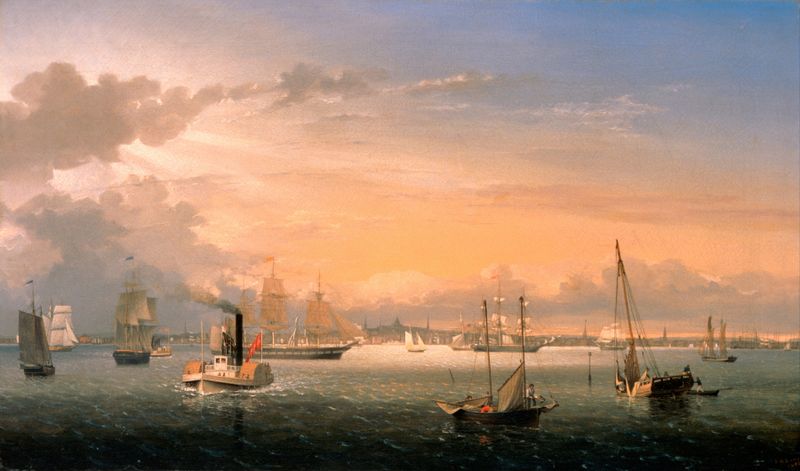
Boston Harbor
Fitz Henry Lane

Becalmed off Halfway Rock
Fitz Henry Lane

Owl’s Head, Penobscot Bay, Maine
Fitz Henry Lane

Stage Fort across Gloucester Harbor
Fitz Henry Lane
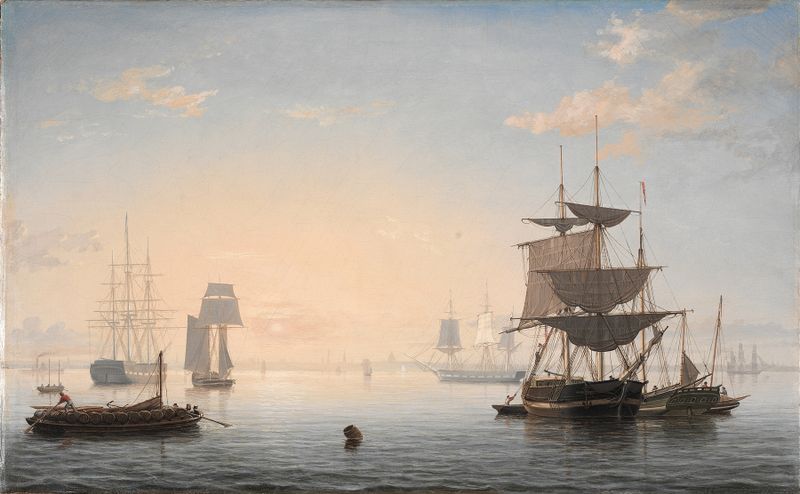
Harbor of Boston, with the City in the Distance
Fitz Henry Lane

The Ships ‘Winged Arrow’ and ‘Southern Cross’ in Boston Harbor
Fitz Henry Lane
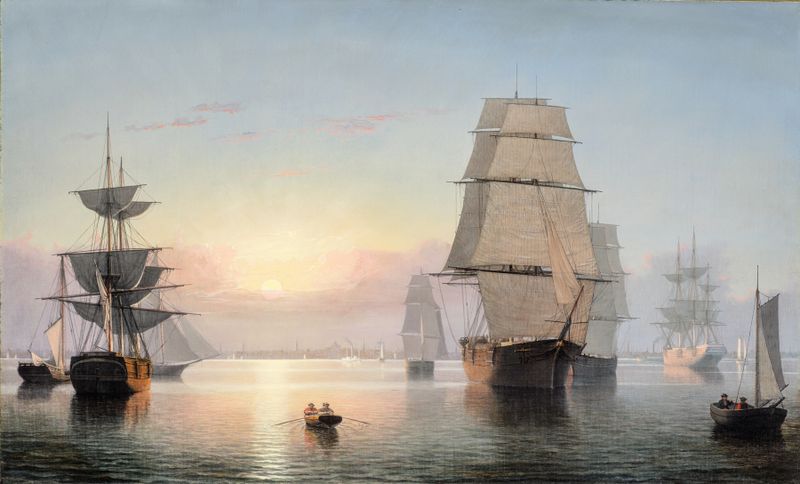
Boston Harbor, Sunset
Fitz Henry Lane

Brig Off the Maine Coast
Fitz Henry Lane
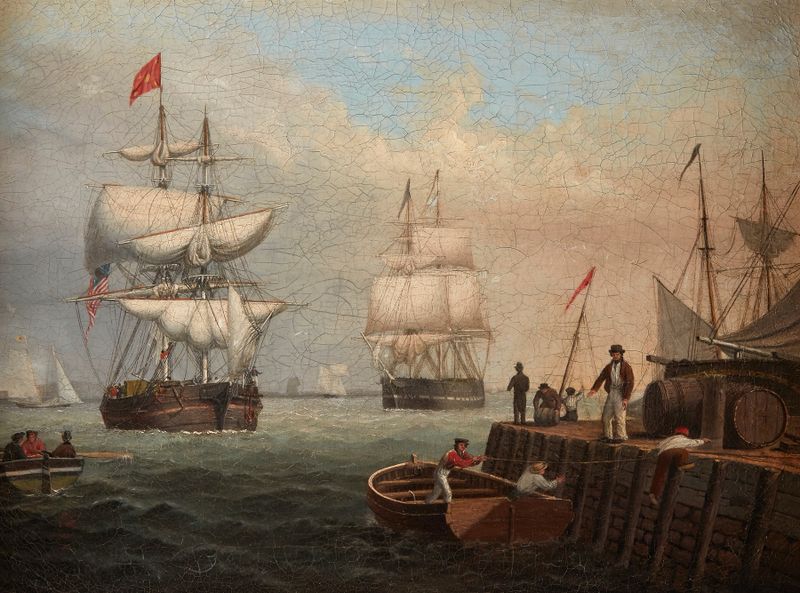
Boston Harbor
Fitz Henry Lane

Brace’s Rock, Brace’s Cove
Fitz Henry Lane





