
Ships off the coast — History & Facts
What first draws the eye in Ships off the coast is the quiet choreography between land and sea—a gathering of ships under Dutch flags, their sails swollen with wind, while figures on the shore watch, gesture, and wait. The low horizon gives the sky a commanding presence, its clouds billowing with the same restless energy that animates the water below. The painter, Adam Willaerts, arranges each group with purpose: the cluster of people near the beacon, the solitary figure waving from the surf, the sailors busy at their anchored boats.
Every gesture hints at anticipation and connection, as if the whole coast is alive with the business of arrivals and departures. The palette, full of muted ochres and greens, sets a mood of brisk, briny air and the perpetual motion of maritime life. Painted in 1628, this work belongs to a world where the Dutch Republic’s fortunes rode on the waves. Seascapes like this were prized by merchants and burghers who saw their own prosperity reflected in the bustle of trade and travel.
Adam Willaerts was part of a generation that made the Dutch coast a subject of national pride, capturing not just ships but the people whose lives were bound to the tides. The presence of both Dutch and English flags hints at a cosmopolitan traffic, the North Sea a stage for commerce and rivalry alike. Today, this painting resides in the Rijksmuseum collection, a window onto the era when the horizon promised both risk and reward—look again, and you might catch the moment a ship returns home.
More Artworks by Adam Willaerts
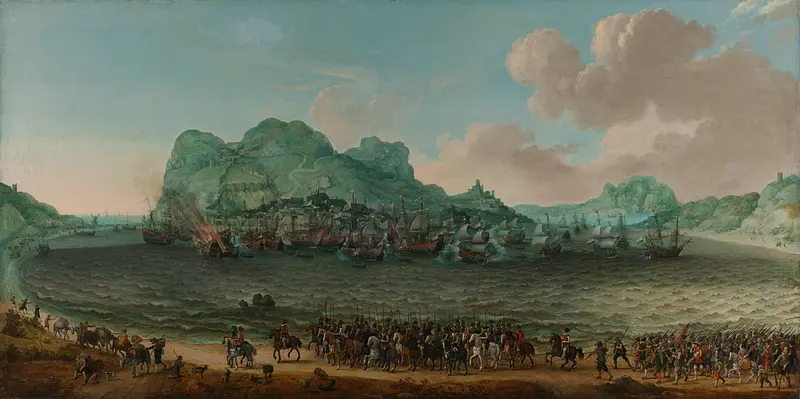
Victory over the Spanish near Gibraltar by a Fleet Commanded by Admiral Jacob van Heemskerck, 25 April 1607
Adam Willaerts
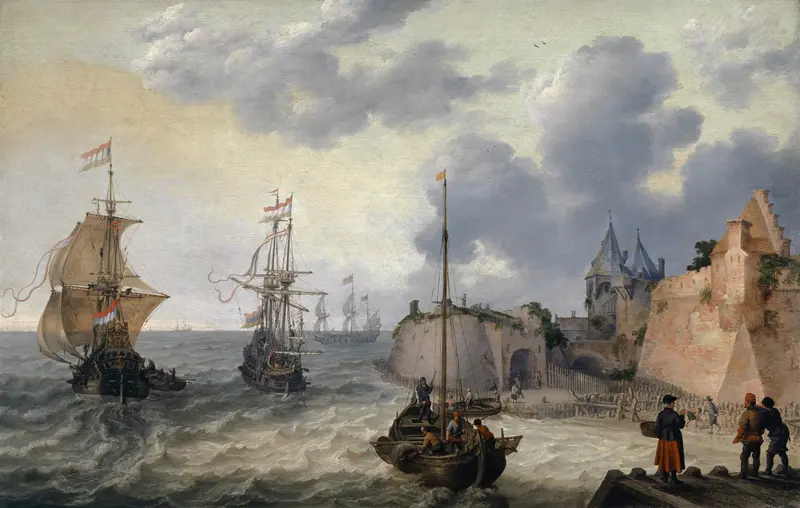
Dutch Harbour with Sailing Ships
Adam Willaerts
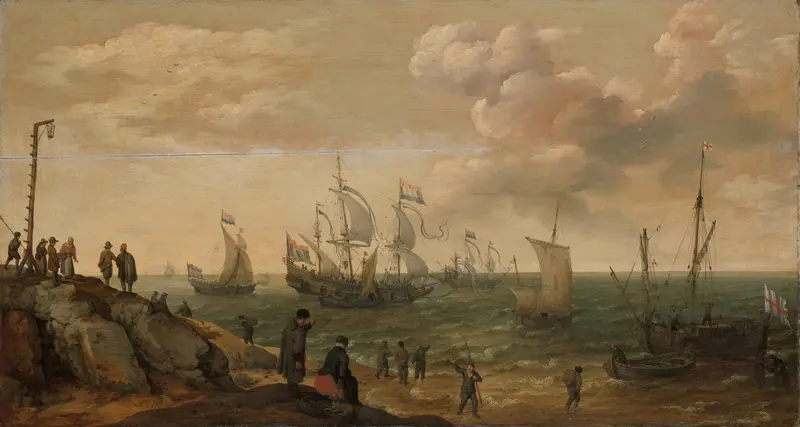
Ships along the Shore
Adam Willaerts
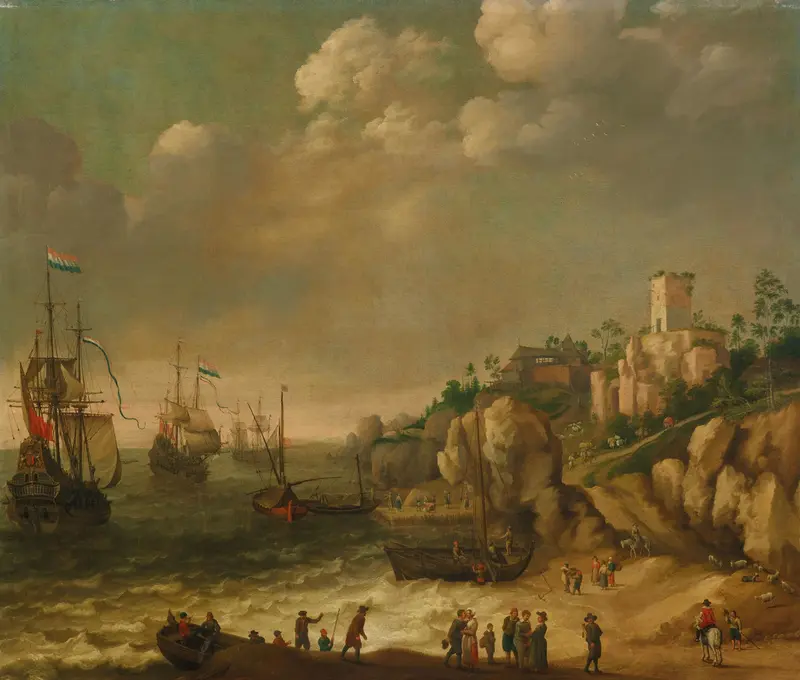
Dutch ships in front of a rocky coast with figures, buildings beyond
Adam Willaerts
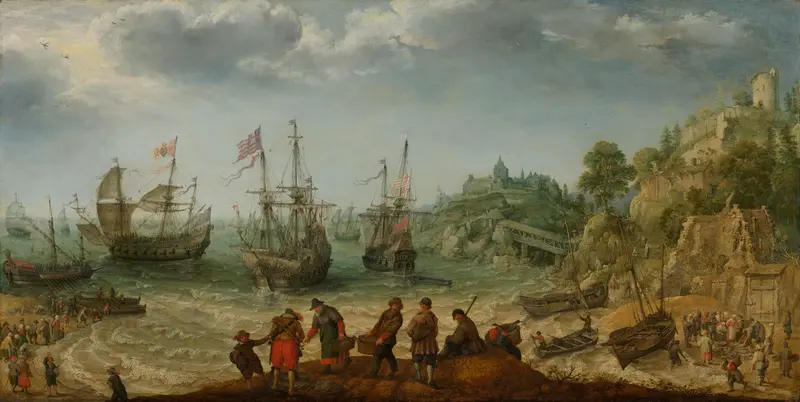
Ships off a Rocky Coast
Adam Willaerts
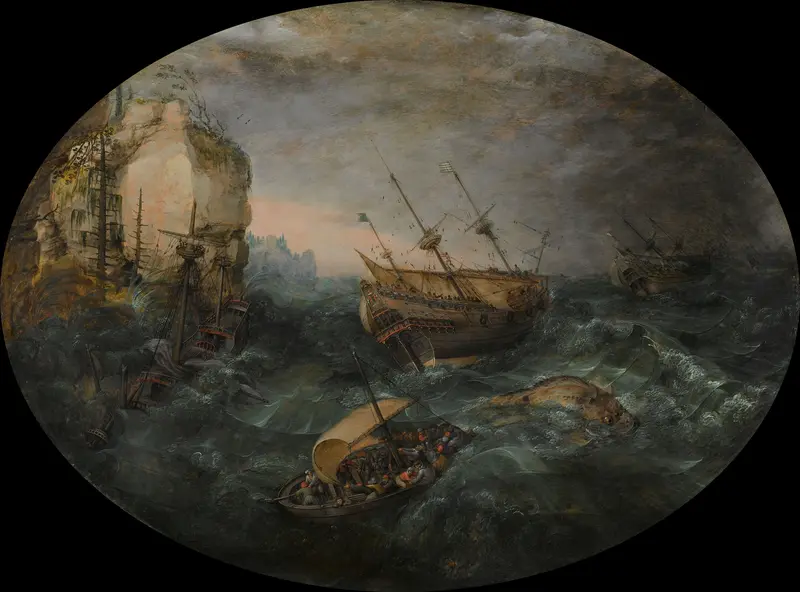
Shipwreck off a Rocky Coast
Adam Willaerts
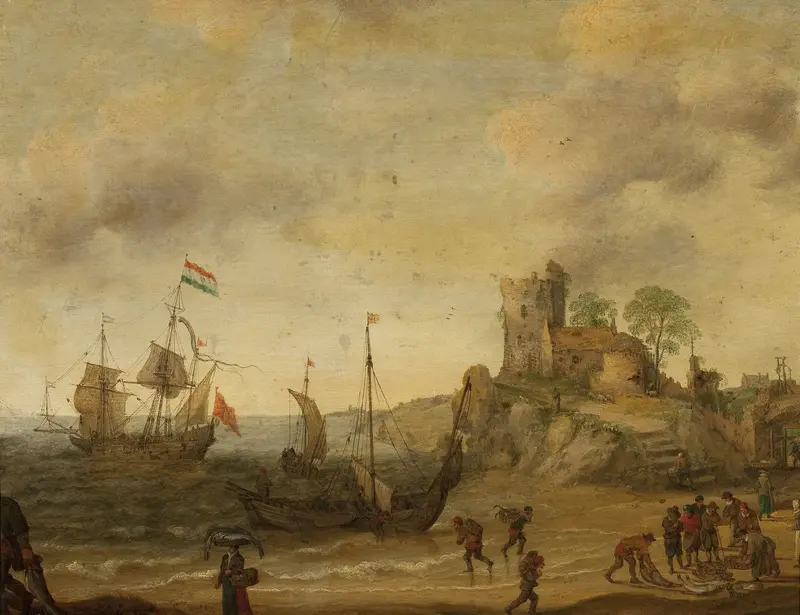
Fishermen at the seaside
Adam Willaerts
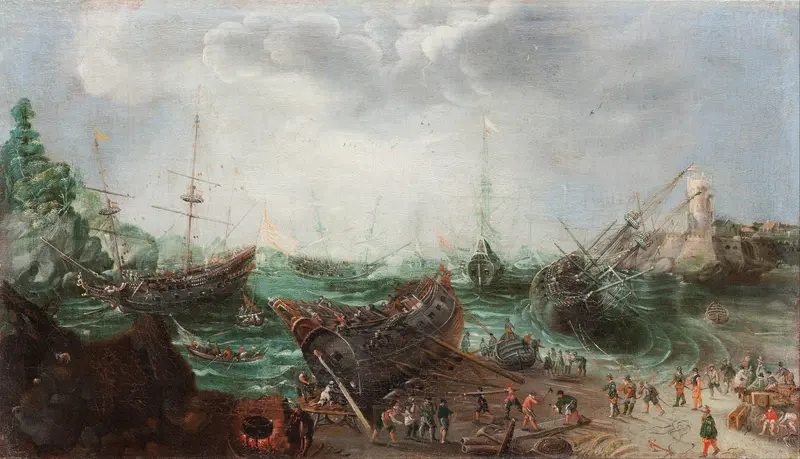
Harbour scene
Adam Willaerts
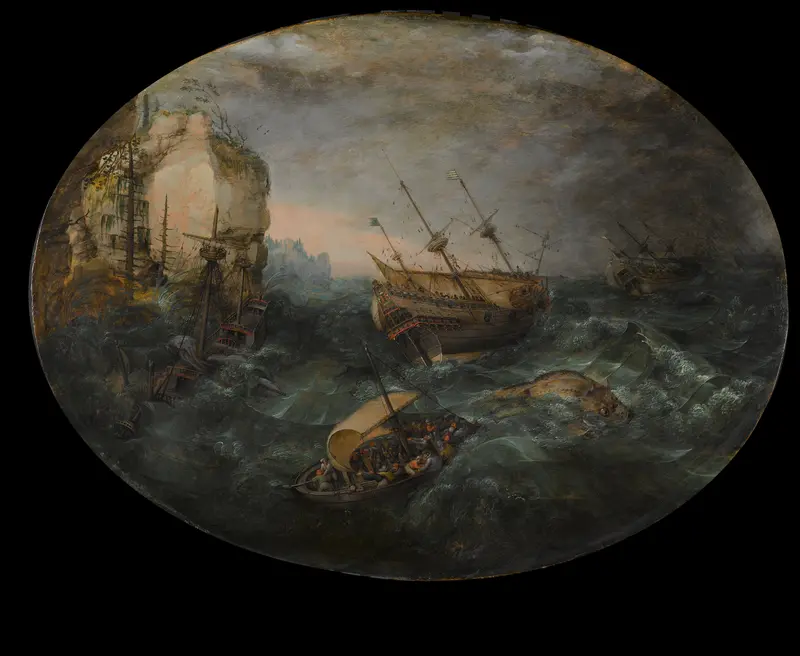
Shipwreck off a Rocky Coast
Adam Willaerts
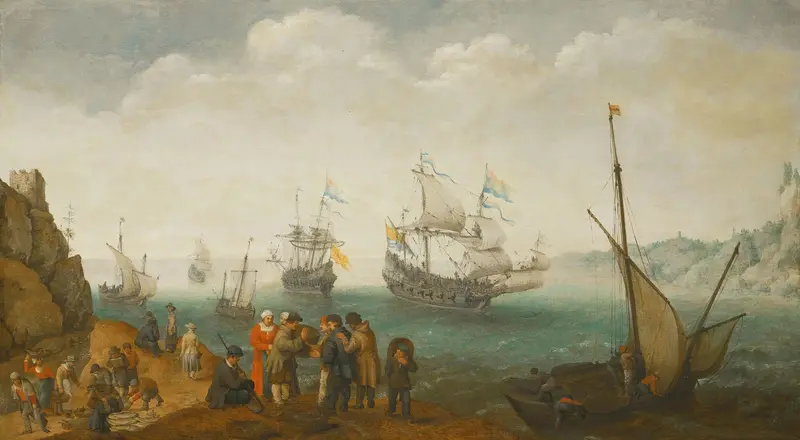
A Marine With Five Vessels Out To Sea And Another In Port, And With Groups Of Largely Male Figures Engaged In Buying Or Selling Fish Or Other Wares
Adam Willaerts





