
Sitzende Frau — History & Facts
A single, drowsy figure commands the space, her form outlined in thick, confident strokes that seem to pulse with life against the deep red of the sofa. The most striking element is the way her arm arches overhead, drawing the viewer’s gaze to the quiet drama of her face, half-shadowed, half-lit, as if caught between thought and dream. The palette—vivid reds, cool greens, and flashes of yellow—creates a sense of intimacy and warmth, while the bold, almost sculptural brushwork gives weight to the woman’s presence.
The background recedes into abstraction, allowing the viewer to linger on the tactile contrast between the soft, pink cushion and the solidity of her body. Every color seems chosen to heighten the emotional temperature, inviting us to wonder what thoughts pass behind those heavy lids. Painted in 1909, Sitzende Frau belongs to a world on the brink of transformation, when artists like Alexej von Jawlensky were breaking away from traditional portraiture to explore the expressive power of color and form. This was the age of the Expressionists, who sought not to record appearances but to reveal inner states, often painting friends, lovers, or models in domestic interiors.
While little is recorded about this specific work beyond its appearance at Christie’s in 2010, it stands as a vivid testament to an era when the boundaries of painting were being redrawn. Look again at the slant of the woman’s brow, the restless energy of the brushwork, and sense the pulse of a world in flux, captured in a single, private moment.
More Artworks by Alexej von Jawlensky

Murnau
Alexej von Jawlensky
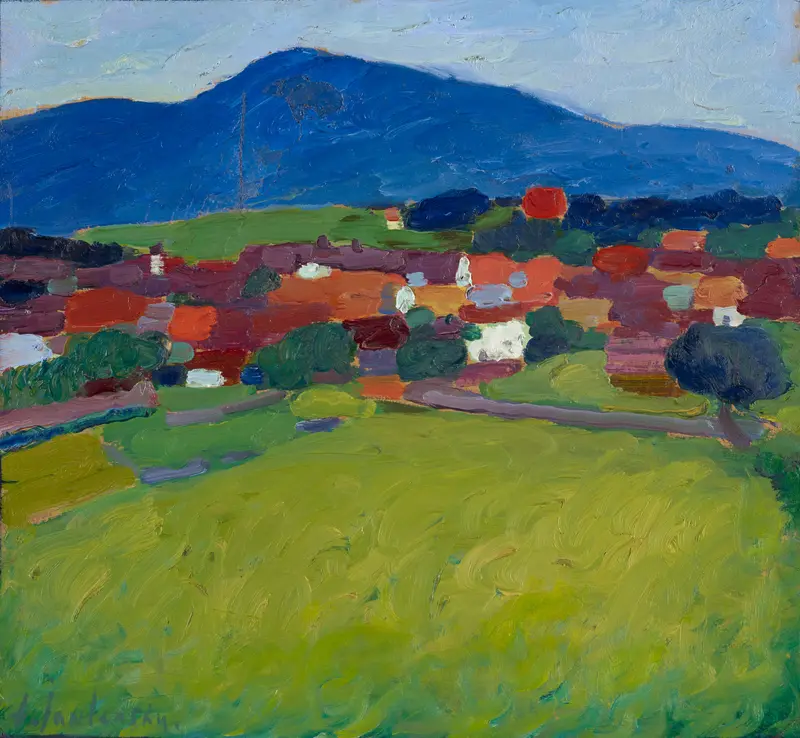
The Village Of Murnau
Alexej von Jawlensky
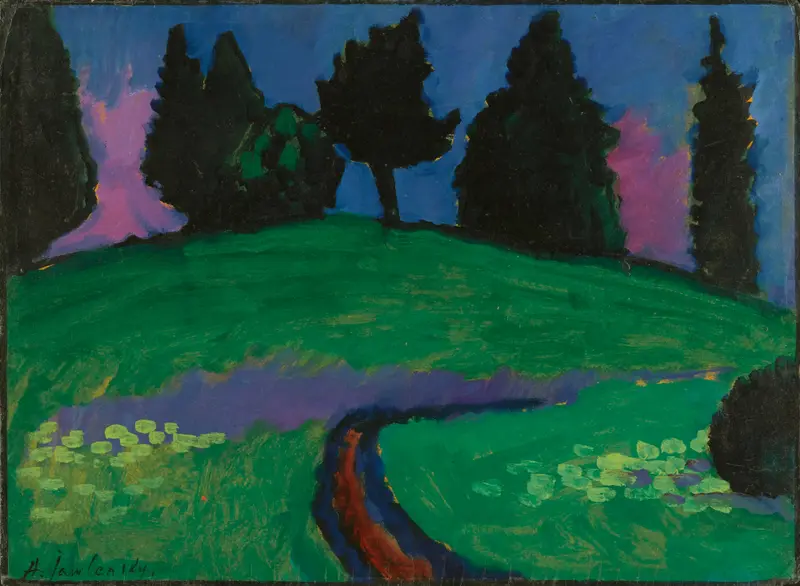
Dunkle Bäume über Grünem Hang (Dark Trees Over Green Slope)
Alexej von Jawlensky
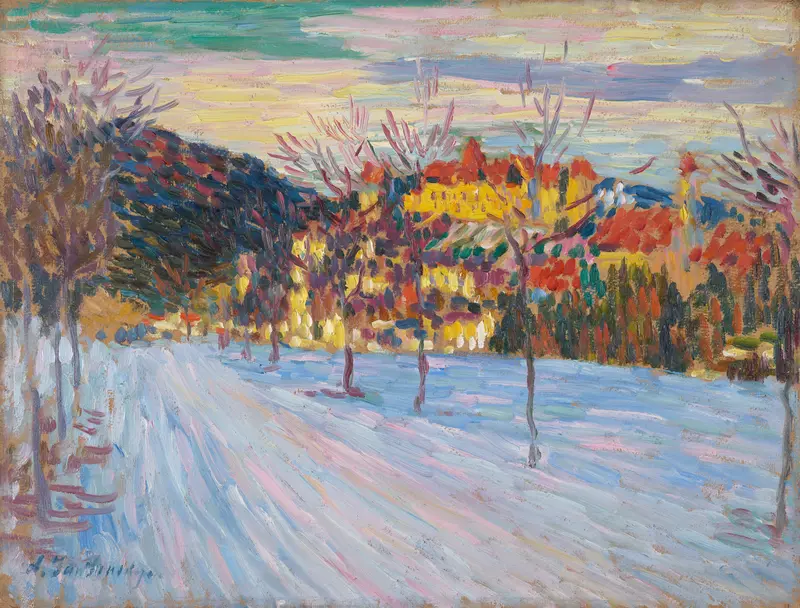
Füssen
Alexej von Jawlensky
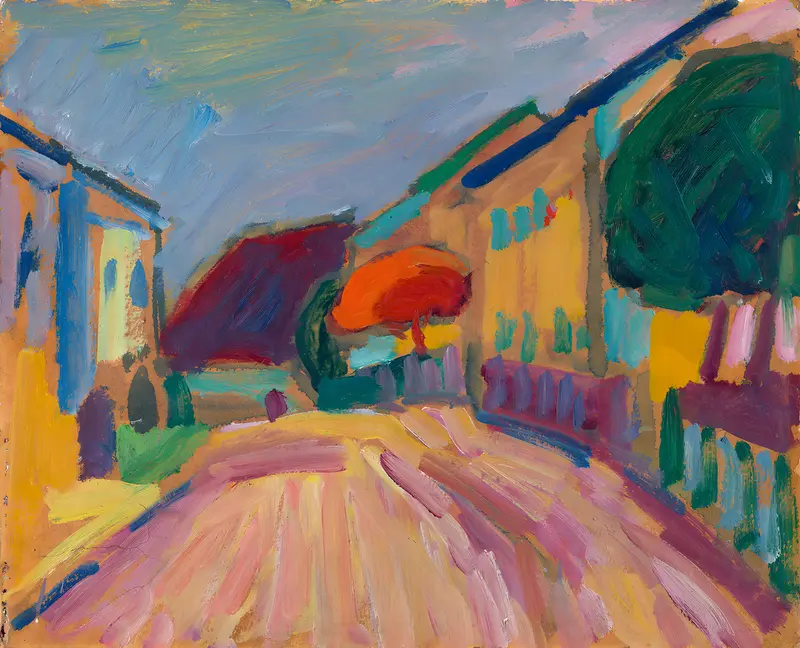
Sketch from Murnau
Alexej von Jawlensky
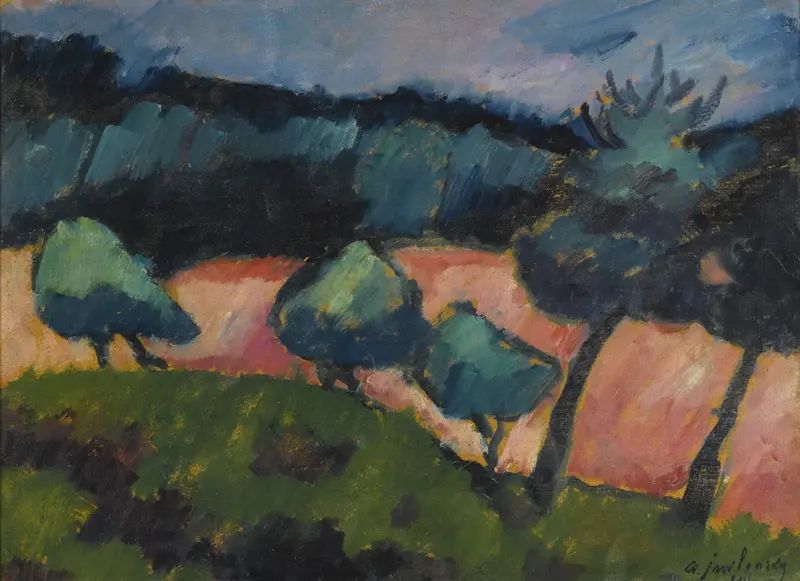
Bäume und Dünen in Prerow (Trees and dunes in Prerow)
Alexej von Jawlensky
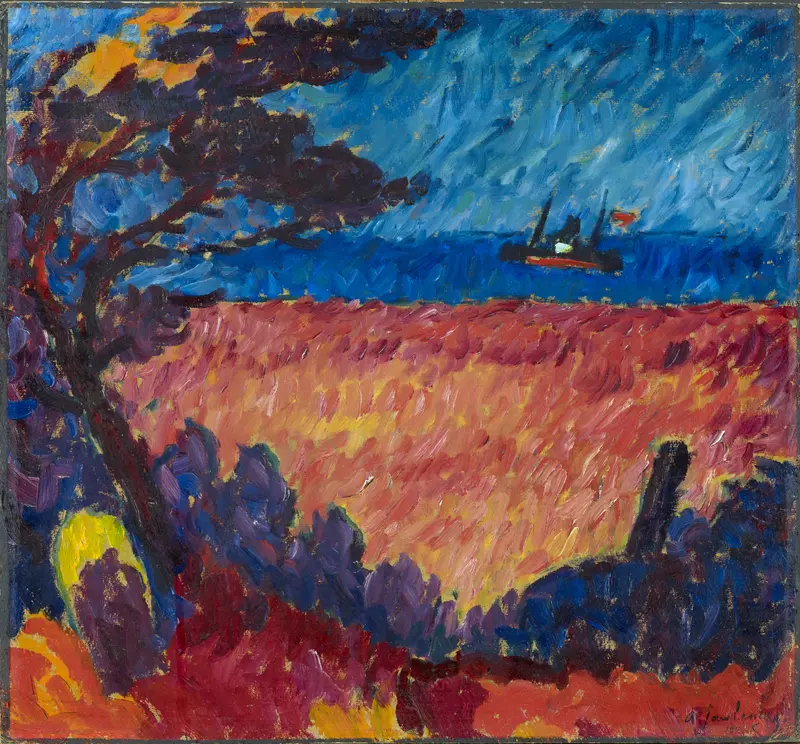
At The Baltic Sea
Alexej von Jawlensky
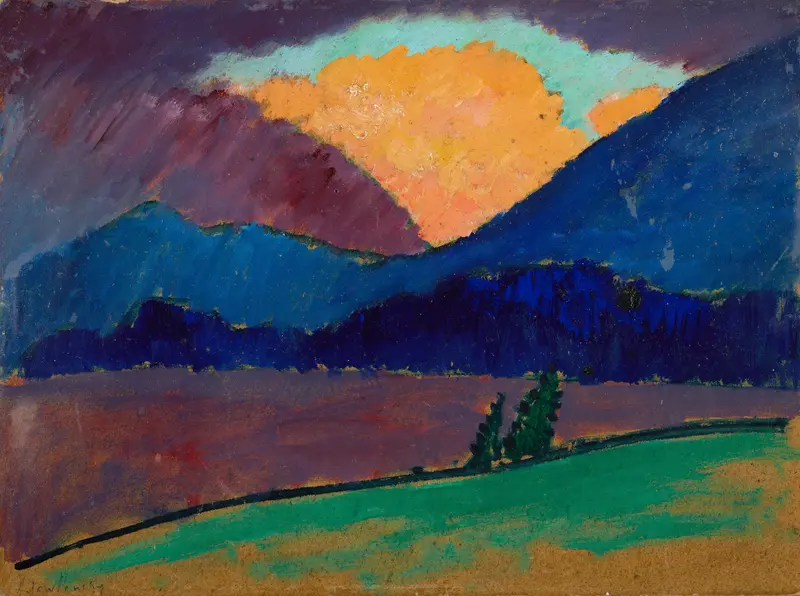
Summer evening in Murnau
Alexej von Jawlensky
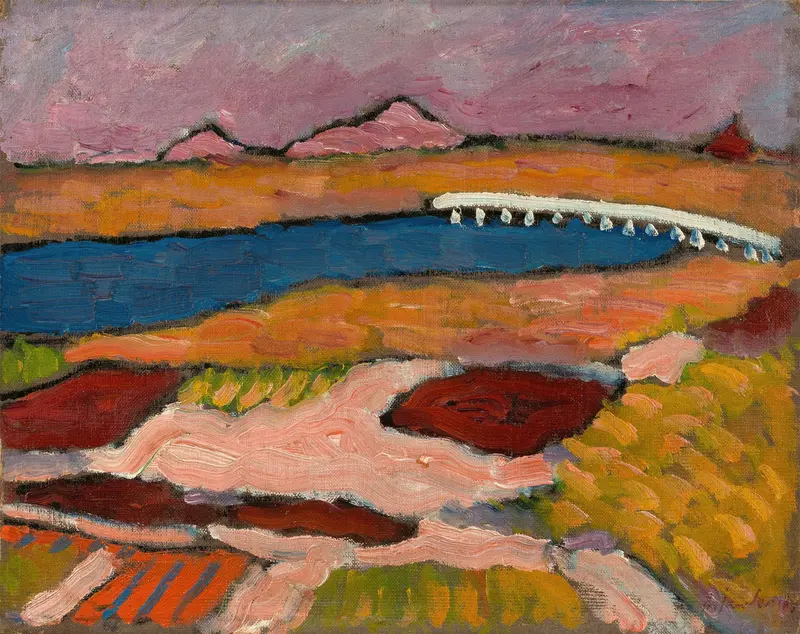
Prerow (Darß), Pommern
Alexej von Jawlensky
Landschaft mit Bäumen
Alexej von Jawlensky





