Skating Pleasures — History & Facts
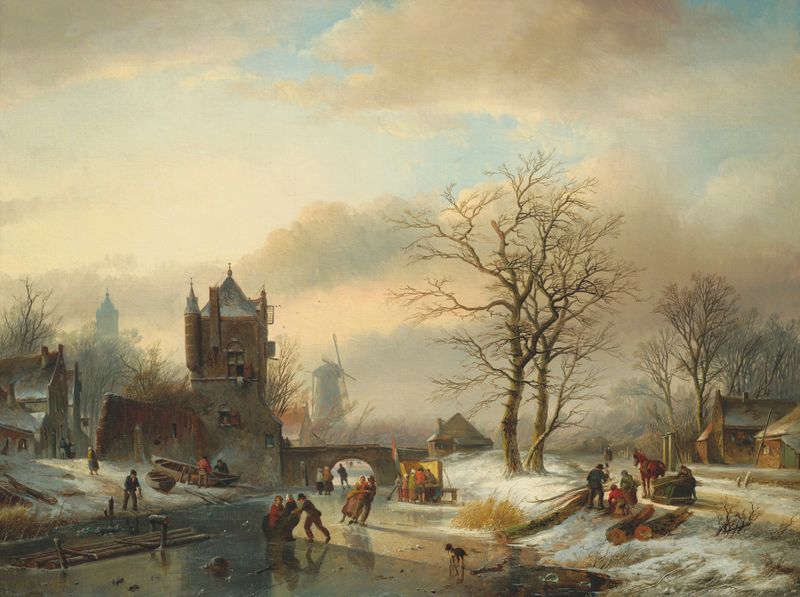
In the world of art, few moments capture the spirit of revolution like the fleeting joy of skating on ice. It evokes the thrill of freedom against the backdrop of a controlled society, where every glide defies convention. Look to the center of the canvas, where a group of skaters pirouette and race across the frozen expanse. Notice how the light reflects off icy surfaces, creating a sense of movement that almost vibrates with energy.
The palette is alive with cool blues and whites, contrasted by the warm hues of the skaters’ clothing, drawing your eye to their joyful expressions and dynamic postures. The composition invites you to feel the exhilaration of the scene, as if you could step right into the moment. Beneath the surface, this work embodies the spirit of liberation amid constraints. The skaters symbolize individual freedom, gliding effortlessly, flirting with the boundaries of nature and societal norms.
Each stroke of paint captures a fleeting joy, while the underlying ice represents both potential and peril, reminding us that great pleasures often reside in the heart of risk. Created in an unknown time, the artist was likely influenced by the shifting tides of the art world, which was moving towards more expressive and dynamic forms. As styles evolved, the emergence of romanticism and realism played a significant role in shaping perspectives on everyday life. This painting reflects not just a moment in time but also a broader cultural movement that celebrated personal freedom and expression against the constraints of tradition.