
Snails and Tawashi Scrubber — History & Facts
When Katsushika Hokusai created Snails and Tawashi Scrubber in 1799, he was already known for his playful experiments with everyday subjects—a bold move in an era when Japanese art often focused on grand landscapes or elegant courtesans. This work stands out for its focus on the humble tawashi, a traditional palm-fiber scrubbing brush, paired with the slow-moving snails. The combination is so unusual that it has sparked lively debate among scholars: was Hokusai making a visual pun, or perhaps referencing a lost folk tale? No definitive explanation has emerged, leaving the painting as much a riddle as a still life. The scene captures a moment of quiet tension: snails inch their way toward the bristling scrubber, their delicate antennae extended as if in wary curiosity.
The tawashi, rendered with careful attention to its rough texture, looms large beside the fragile shells, suggesting a meeting of soft and harsh, vulnerability and utility. Hokusai’s composition draws the eye in a gentle spiral, echoing the snails’ shells and inviting viewers to contemplate the slow passage of time. Unlike the more formal still lifes of Dutch Golden Age painters, which often overflow with abundance, Hokusai’s arrangement is spare, almost meditative, inviting viewers to find beauty in the mundane. Little is known about the early history of Snails and Tawashi Scrubber, and its medium remains uncertain—some suggest ink and color on paper, in keeping with Hokusai’s other works from the period.
It likely circulated as an individual sheet rather than part of a larger series, reflecting Hokusai’s restless curiosity and willingness to experiment. Today, the painting is admired as an example of his unique approach to ordinary life, bridging the worlds of Edo-period popular culture and high art. Its survival, despite the fragility of its materials, is a testament to the enduring appeal of Hokusai’s vision.
More Artworks by Katsushika Hokusai

The Great Wave off Kanagawa
Katsushika Hokusai
Fine Wind, Clear Morning (Red Fuji)
Katsushika Hokusai
South Wind, Clear Dawn
Katsushika Hokusai
Rainstorm Beneath the Summit
Katsushika Hokusai
Clear Weather with a Southerly Wind
Katsushika Hokusai
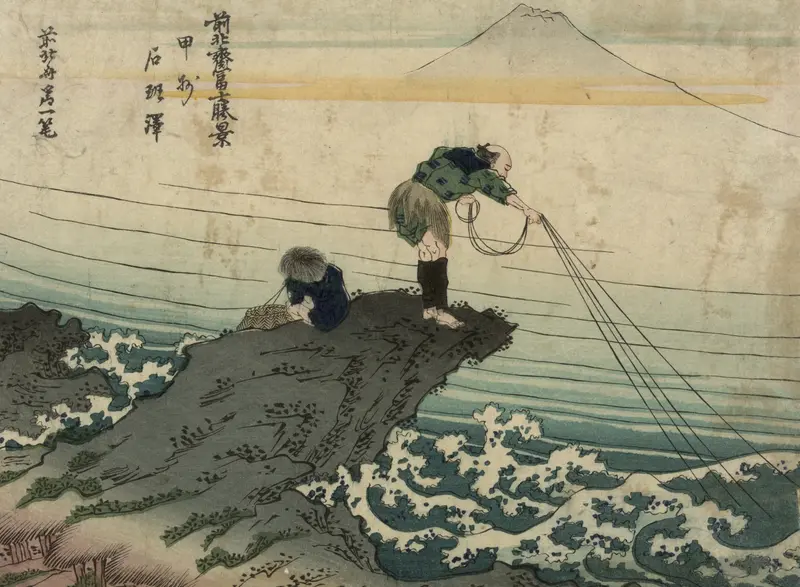
Kōshū kajikazawa
Katsushika Hokusai
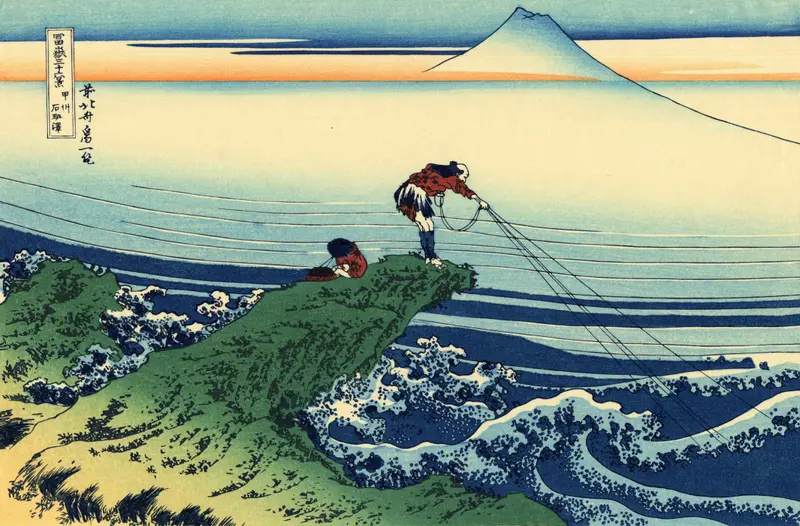
Kōshū kajikazawa 2
Katsushika Hokusai
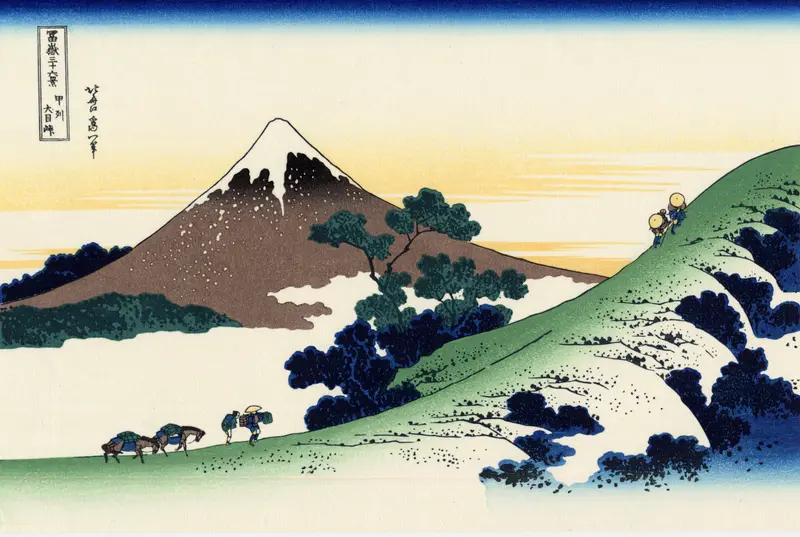
Inume Pass in Kai Province (Kôshû inume-tôge)
Katsushika Hokusai

Yoro Falls in Mino Province (Mino no Yoro no taki), from the series "A Tour of Waterfalls in Various Provinces (Shokoku taki meguri)"
Katsushika Hokusai
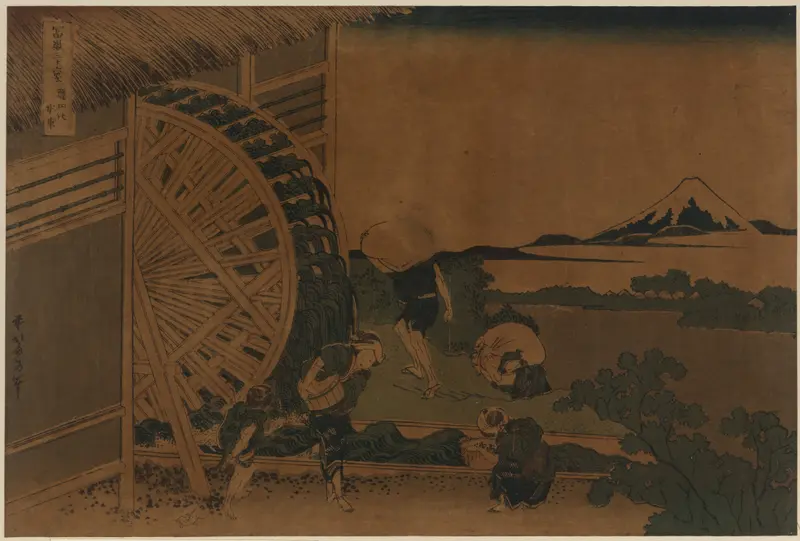
Onden no suisha
Katsushika Hokusai





