
Snow at Louveciennes — History & Facts
Can beauty exist without sorrow? In Snow at Louveciennes, the answer whispers through the delicate brushstrokes and muted hues of a winter's embrace. Look to the left where the village emerges beneath a gentle blanket of snow. The soft, dappled light filters through the branches, casting a serene glow on the rooftops and illuminating the tranquil scene. The composition is characterized by a harmonious balance of white and gray, where the cool colors evoke a sense of stillness.
Notice how the figures, bundled in their winter attire, navigate the path—each gesture a quiet testament to resilience amidst the cold. Beneath the serene surface, tensions simmer. The play of light and shadow captures the fleeting moment of winter beauty, hinting at the transience of joy in life. The snowflakes, momentarily glistening, symbolize both purity and the inevitable decay of nature.
The juxtaposition of warmth in the figures’ presence against the stark chill of the environment reflects a deeper emotional narrative—the struggle between human warmth and the harshness of reality. Created around 1870 while living in Louveciennes, the artist found himself amidst a shifting art world, embracing the burgeoning Impressionist movement. This period marked a departure from traditional techniques, emphasizing light and everyday life. Pissarro’s choice to depict a quiet winter scene reflects both personal contemplation and a broader exploration of beauty shaped by the touch of nature's hand.
More Artworks by Camille Pissarro
Browse all →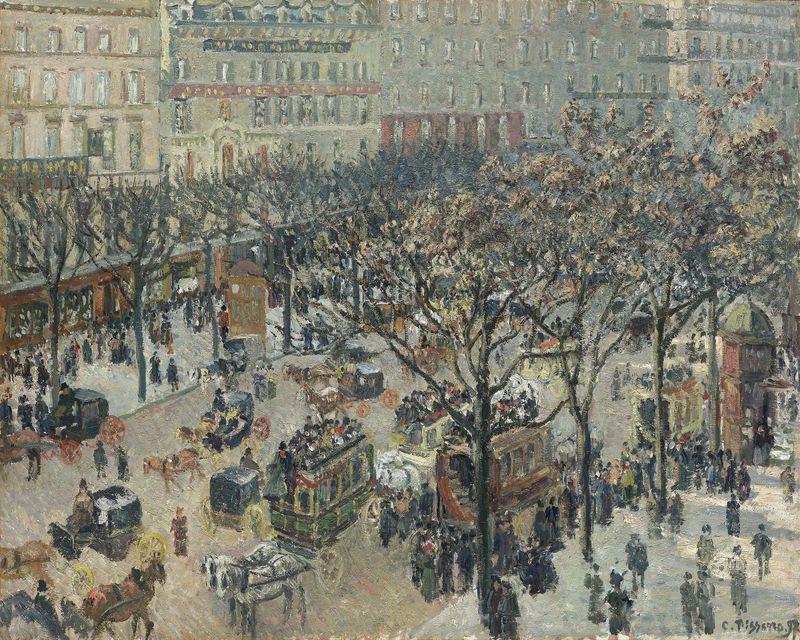
Boulevard des Italiens,Morning_Sunlight
Camille Pissarro
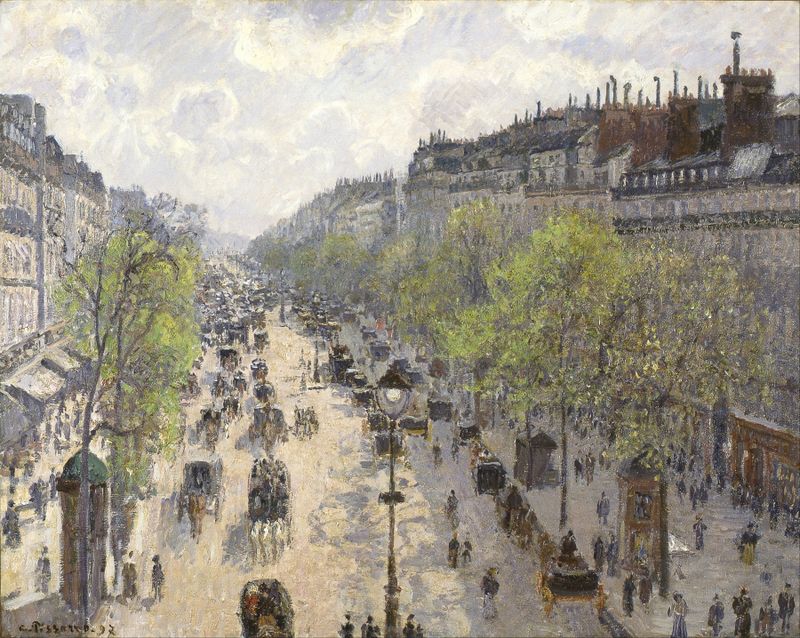
Boulevard Montmartre, Spring
Camille Pissarro
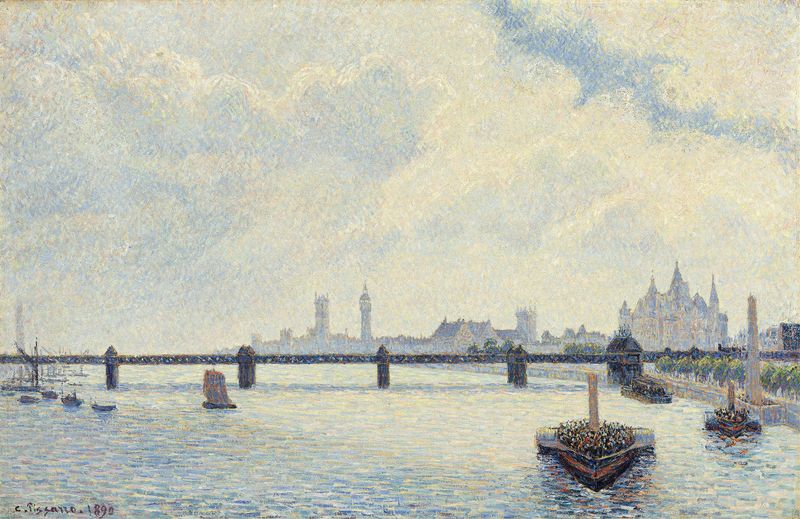
Charing Cross Bridge,London
Camille Pissarro
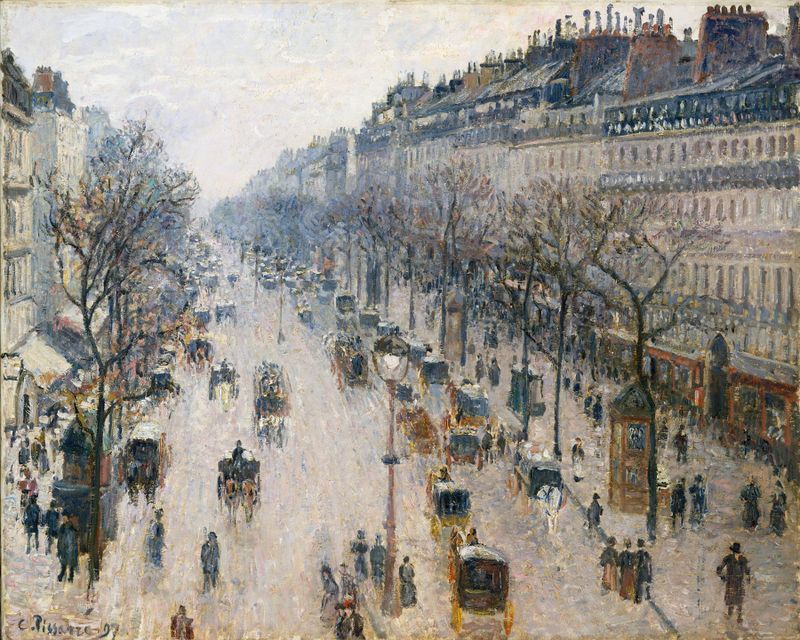
The Boulevard Montmartre on a Winter Morning
Camille Pissarro
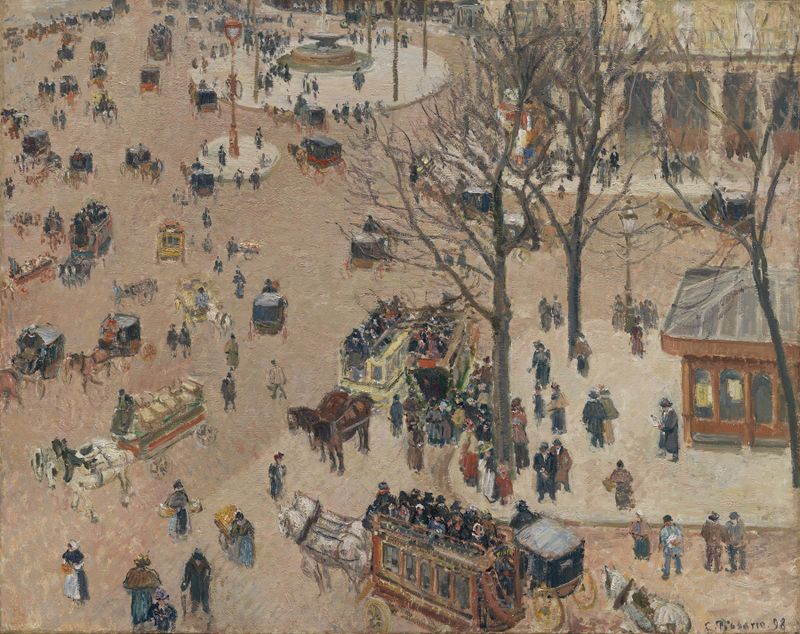
La Place du Théâtre Français
Camille Pissarro

Rue Saint-Lazare, Paris
Camille Pissarro
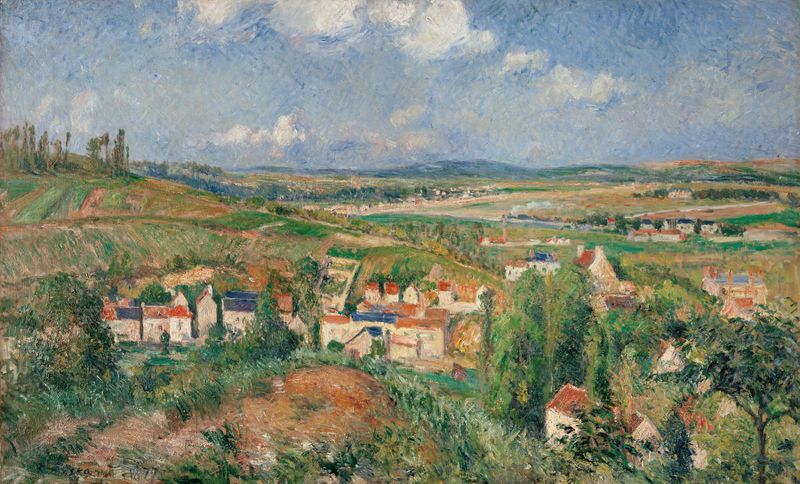
L’hermitage En Été, Pontoise
Camille Pissarro

Place du Theatre Francais,Fog Effect
Camille Pissarro
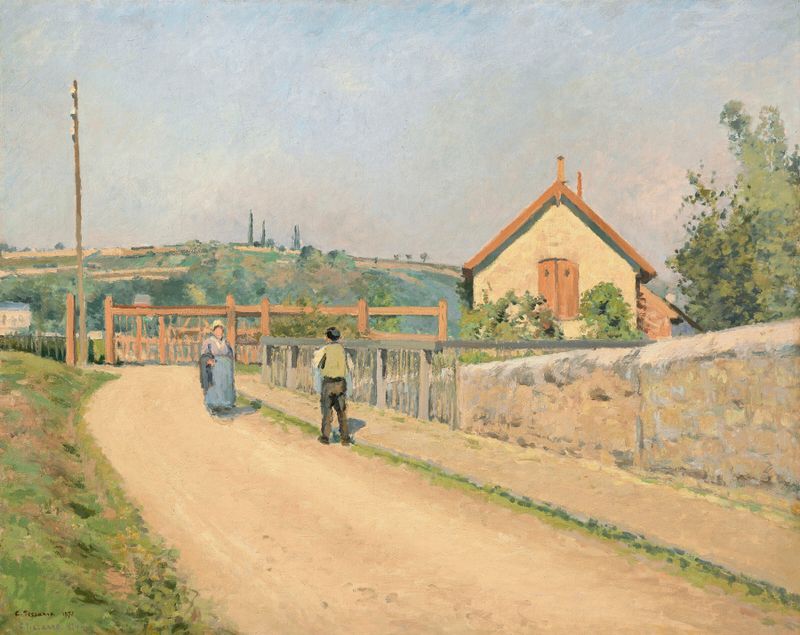
La barrière du chemin de fer, aux Pâtis près Pontoise
Camille Pissarro
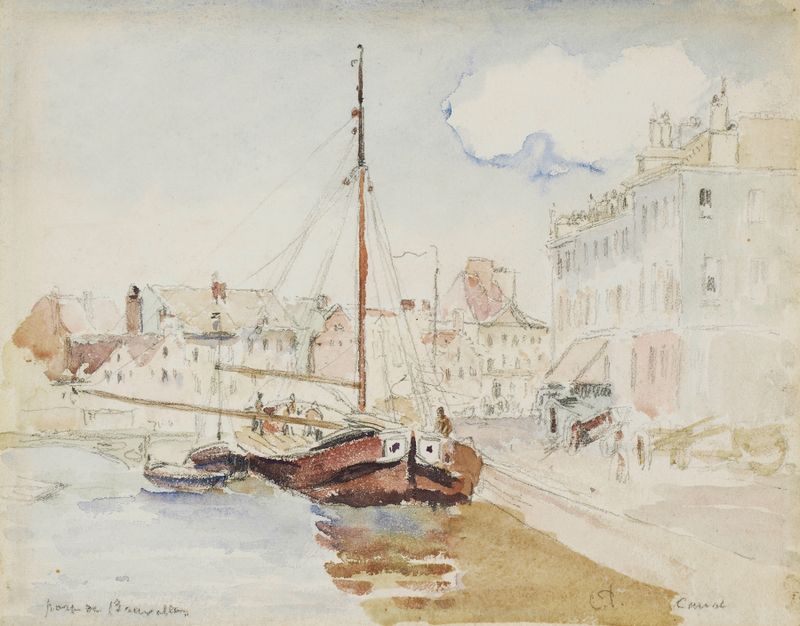
Port de Bruxelles
Camille Pissarro





