
Sower and the Devil — History & Facts
What stops the viewer here is not just the presence of two figures, but the tension that crackles between them. One strides forward, clothed and purposeful, a sower with a handful of seed; the other, a hulking, naked form, shadowing his every move. The sower’s hat casts his face in shadow, his body bent with labor, while the figure behind him—muscular, exaggerated, almost mythic—leans in, as if to whisper or threaten.
The ground beneath their feet is a field of ochre and gold, but the air between them feels charged, as if the act of sowing is watched, weighed, and perhaps contested. Painted around 1923, Sower and the Devil draws from a tradition of allegory and rural symbolism that marked the early twentieth century. The sower’s gesture is familiar from centuries of European art—a symbol of hope, toil, and renewal—but here, the devil is not a distant menace but a physical, looming presence. The palette is pared down to earth and flesh, the brushwork rough and urgent, as if the figures themselves are being hewn from the soil.
The devil’s body is rendered with a sculptural force, his stride mirroring the sower’s, binding them in a dance of temptation and resistance. In this moment, the painting asks: is the devil a pursuer, a shadow, or the inevitable companion to every act of creation? Little is recorded about the journey of this particular work, which survives as a reproduction from an art book, dated to the turbulent years after the First World War. This was a period when artists across Europe grappled with themes of fate, morality, and the burdens of rural life, often for audiences caught between tradition and modern upheaval.
Albin Egger Lienz was known for his monumental, pared-down figures and his focus on the elemental struggles of humanity—qualities that pulse through this image. The story of the sower and his shadow is left unfinished, inviting the viewer to decide whether the field will bear fruit, or whether the devil’s presence will claim the harvest.
More Artworks by Albin Egger Lienz
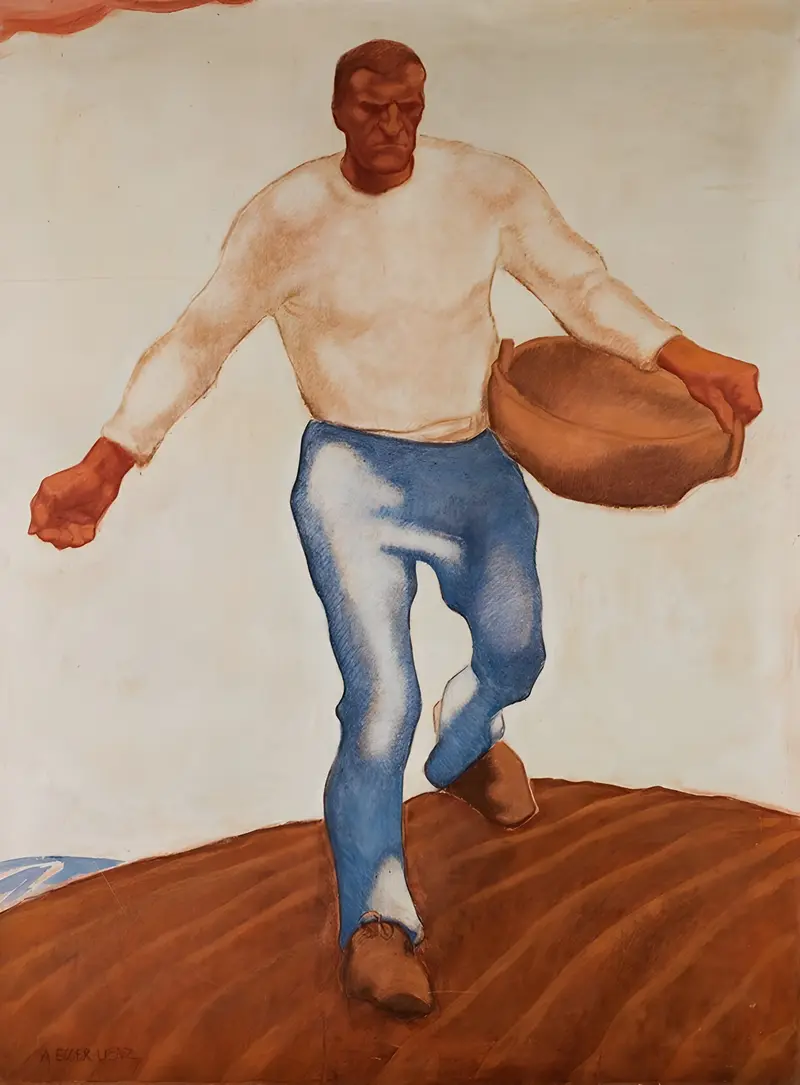
Der Sämann (The Sower)
Albin Egger Lienz
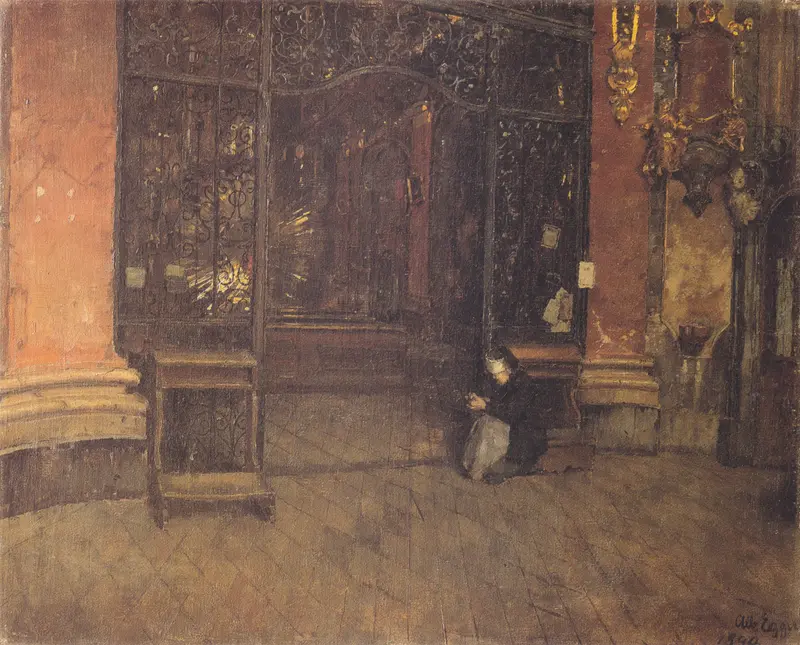
Inneres Der Johanneskirche In München
Albin Egger Lienz
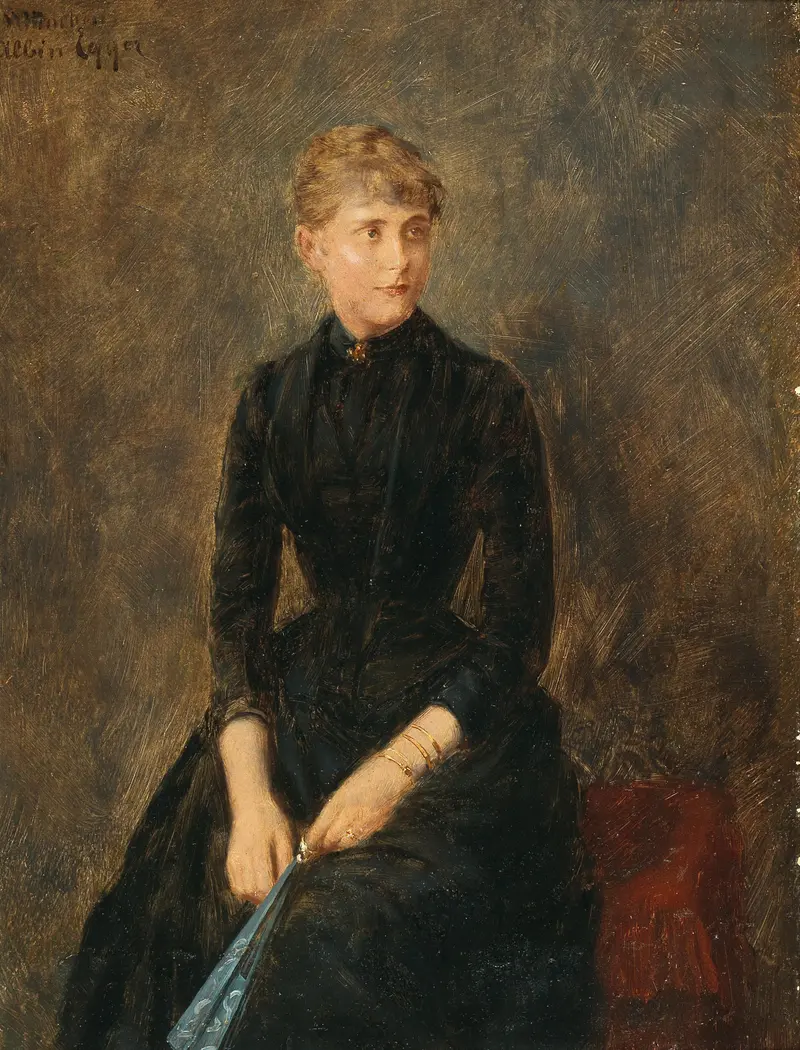
Portrait of the singer Hedwig Helbig
Albin Egger Lienz
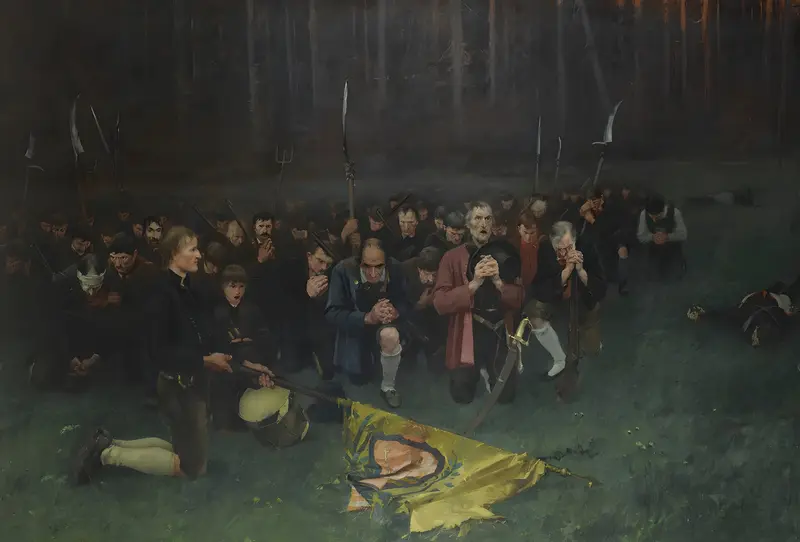
Prayer after the battle of Bergisel
Albin Egger Lienz
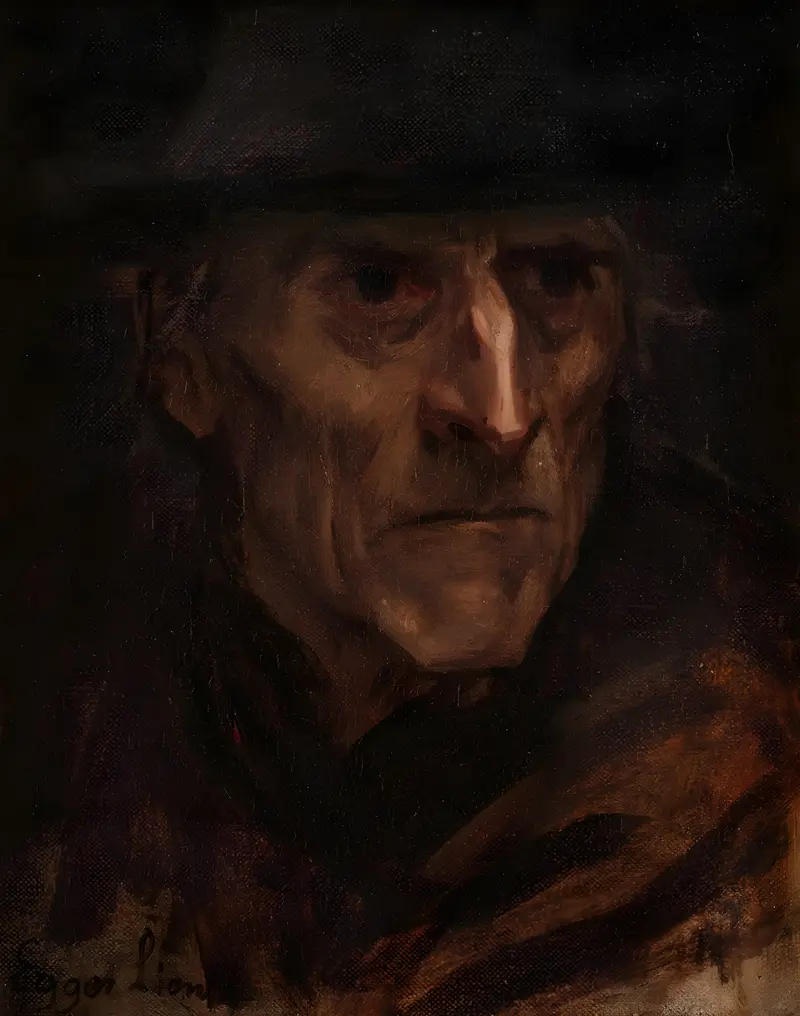
Study for the ‘Sensenmann’ in the ‘Das Kreuz’
Albin Egger Lienz
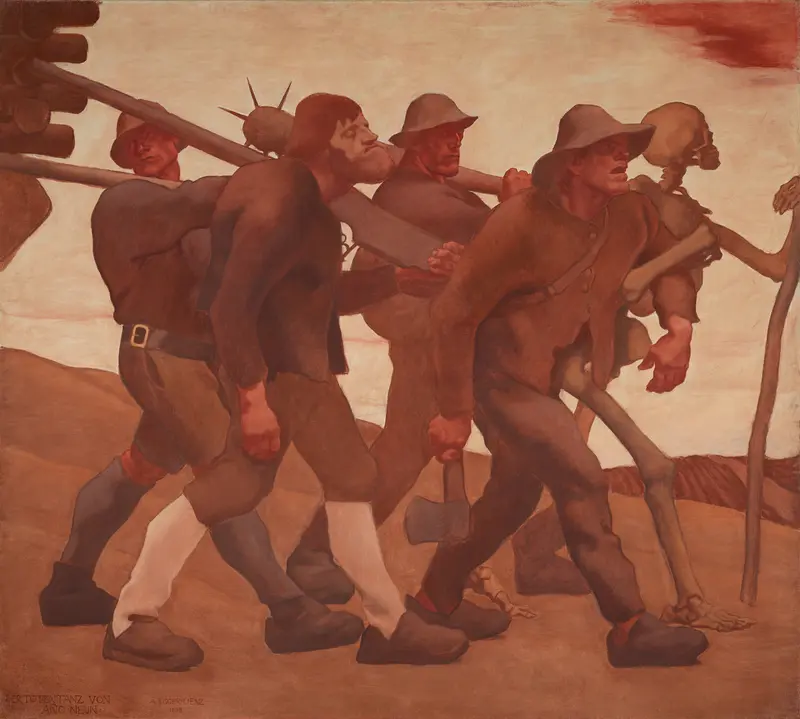
Der Totentanz Von Anno Neun
Albin Egger Lienz
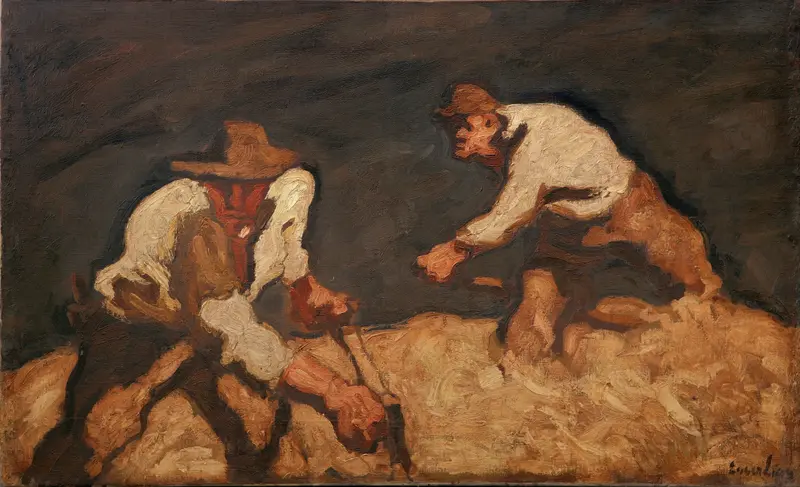
Reapers in a GatheringStorm
Albin Egger Lienz
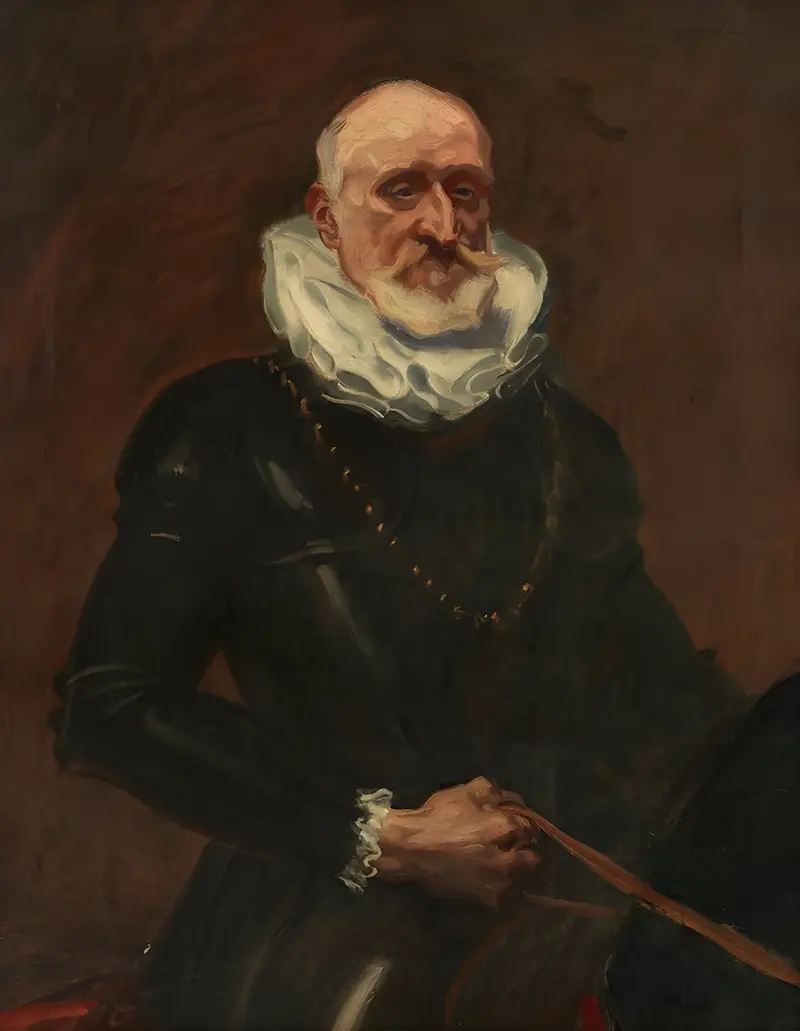
Carl Costenoble (Bildhauer und Stadtrat von Wien)
Albin Egger Lienz
Am Kalvarienberg In Bozen
Albin Egger Lienz
Kalvarienberg bei Bozen
Albin Egger Lienz





