
St. Augustine — History & Facts
The delicate interplay of color and form invites us to question the nature of reality itself, beckoning us into a world where illusion reigns supreme. Focus on the swirling blues and greens that create a celestial atmosphere, drawing you toward the luminous figure at the center. Notice how light dances across the surface, illuminating the contours of St. Augustine’s robe, lending it both weight and ethereality.
The dynamic brushstrokes, alive with movement, suggest an unseen energy, while the soft yet commanding gaze of the saint anchors the viewer’s attention, urging contemplation. As you delve deeper, consider the layers of meaning that emerge. The contrasting elements of darkness and light reflect the internal struggle between doubt and faith, while the organic shapes surrounding St. Augustine may symbolize the chaos of the human experience.
This tension between the divine and the earthly captivates the viewer, making us question where the boundaries of illusion truly lie. During the creation of this work, the artist was immersed in a growing interest in spiritual themes and modernism. The period, marked by a shift towards abstraction and the exploration of inner truths, significantly influenced St. Augustine.
Butler’s unique perspective, combining his scientific background with his artistic vision, allowed him to craft a piece that resonates with both historical reverence and contemporary significance.
More Artworks by Howard Russell Butler
Browse all →
Clearing after September Gale–Maine Coast
Howard Russell Butler
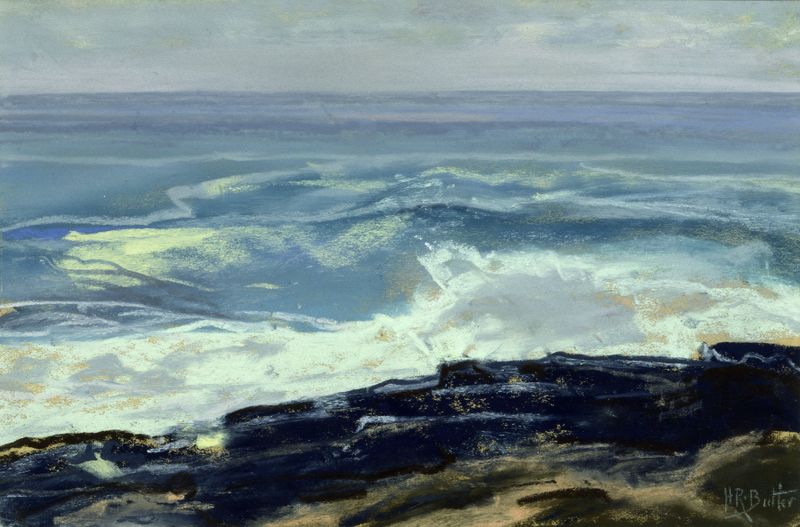
Maine Coast (#31)
Howard Russell Butler
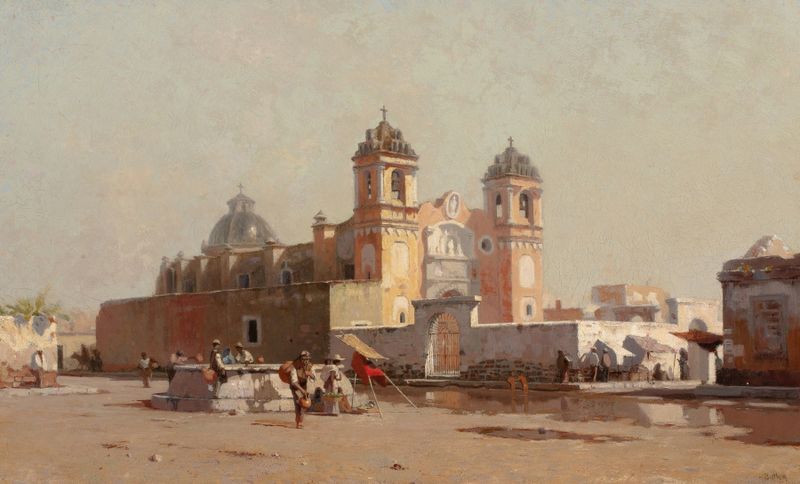
Church of Santa Anna in Mexico
Howard Russell Butler
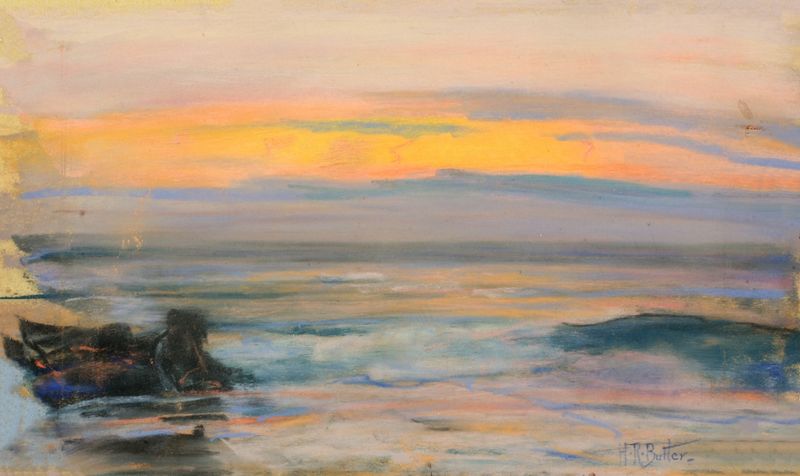
Maine Coast (#34)
Howard Russell Butler

Long Island Coast
Howard Russell Butler

Landscape
Howard Russell Butler
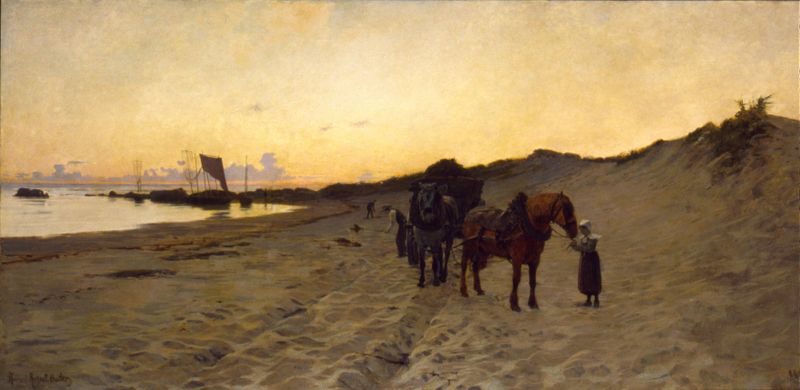
The Seaweed Gatherers
Howard Russell Butler
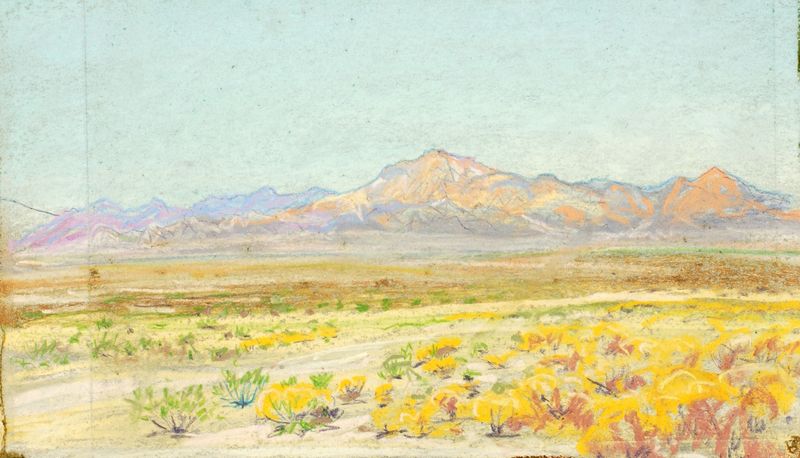
Desert Landscape
Howard Russell Butler

Untitled IV
Howard Russell Butler
Untitled
Howard Russell Butler
More Religious Art
Browse all →
The Return of the Prodigal Son
Rembrandt van Rijn

The Garden of Earthly Delights
El Bosco

Count Orgaz’ funeral
El Greco

The Hundred Guilder Print: the central piece with Christ preaching, the plate arched
Rembrandt van Rijn

The Descent from the Cross
Rogier van der Weyden

The return of the prodigal son
Rembrandt van Rijn