St Martin-in-the-Fields — History & Facts
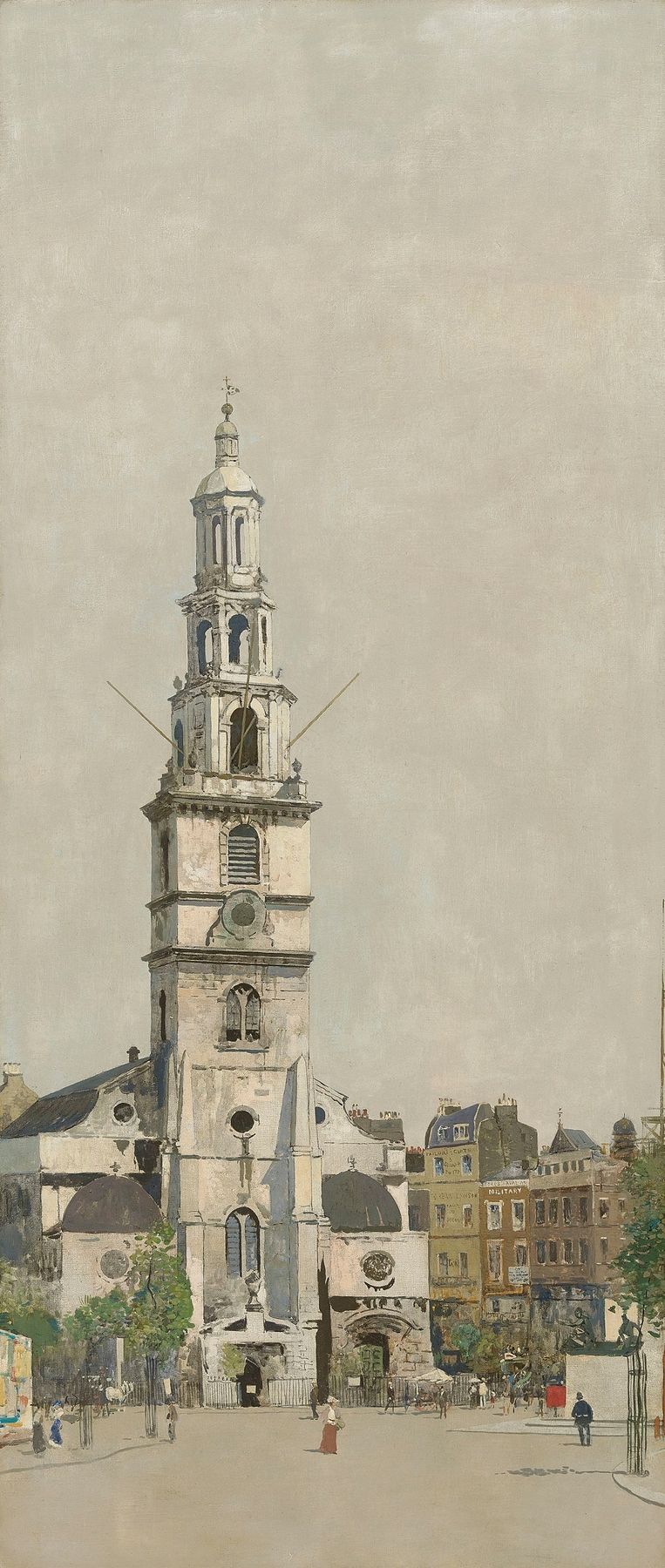
Each stroke, each hue, whispers stories of stillness and motion that pulse beneath the surface. Begin your exploration at the vibrant foreground, where figures of bustling parishioners converge, their animated postures radiating a sense of community and purpose. Look closely at the sweeping gestures of the people; their bodies seem almost to dance within the confines of the canvas. Notice how the warm light spills through the solemn architecture of the church, casting elongated shadows that add a layer of depth and urgency, enhancing the rhythm of daily life intersecting with the sacred. Yet, tension lies in the contrasts.
The serenity of St. Martin-in-the-Fields looms large, its imposing structure a backdrop to the lively congregation. Observe the juxtaposition of the vibrant color palette against the muted tones of the church, signifying a dialogue between the earthly and the spiritual.
The distant figures, slightly blurred, hint at the passage of time, suggesting that while life is in perpetual motion, the sanctuary remains steadfast, an anchor amidst the ebb and flow of existence. Kerr-Lawson painted this piece during a time when the world was grappling with the rapid changes of the early 20th century, marking the transition from Victorian ideals to modernity. Located in London, he captured the essence of St. Martin-in-the-Fields at a moment when art was beginning to embrace new movements and perspectives.
The artwork reflects not only his personal journey but also the broader societal shifts that were influencing artistic expression during that period.