
St. Paul’s and Blackfriars Bridge from Southwark — History & Facts
Can beauty exist without sorrow? The intricate landscape of early 19th-century London holds a mirror to both the serenity and madness of the human experience. Focus your gaze on the gentle curve of the Thames, a silver ribbon weaving through the heart of the city. The viewer's eye is drawn first to the majestic dome of St. Paul’s Cathedral, its grandeur captured in soft hues of blue and gray, contrasting sharply with the brisk vibrancy of the surrounding structures.
Notice how the light dances upon the water, creating a shimmering path that connects the heavens above with the bustling life below. The artist's delicate brushwork and careful composition not only highlight the beauty of the scene but also evoke the underlying tension of urban life in this period. Beneath the calm surface lies a world of contrasts. The resilient towers of Blackfriars Bridge stand firm against the backdrop of swirling clouds, suggesting an unyielding spirit amidst the chaos of the growing metropolis.
This juxtaposition invites contemplation of the madness that often accompanies progress—an exploration of how beauty can emerge from tumultuous beginnings. The muted color palette enhances the sense of nostalgia and evokes an emotional depth, reminding us that even the most idyllic views carry whispers of sorrow. In the early 1800s, while crafting this piece, the artist was immersed in a rapidly evolving London, an era marked by industrialization and social change. Daniell, known for his landscapes, was capturing a city in flux, reflecting his own artistic journey as he sought to balance romantic ideals with the realities of modern life.
This period was a defining moment, not just for him, but for the entire realm of landscape painting, as artists began to grapple with their responses to an ever-changing world.
More Artworks by William Daniell
Browse all →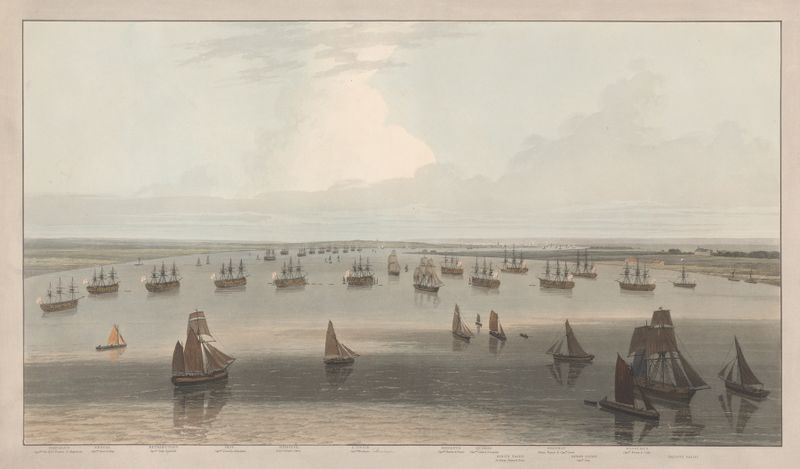
A View of the Frigates Stationed in the Hope under the Command of the Elder Brethen of the Trinity House, Thames Estuary
William Daniell

Main Entrance of the Jami Mosque, Jaunpur
William Daniell

London Bridge
William Daniell

London from Greenwich Park
William Daniell
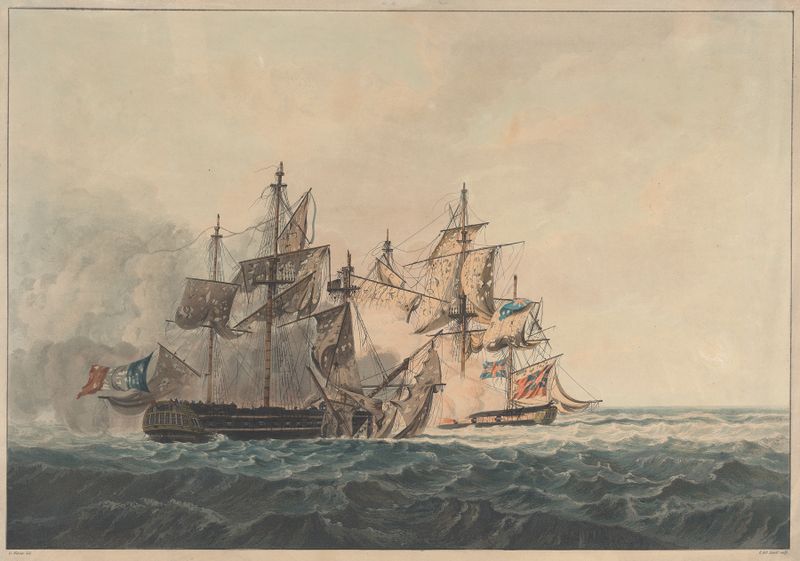
The Action between his Majesty’s Sloop ‘Bonne Citoyenne’ and the French Frigate ‘La Furieuse’
William Daniell
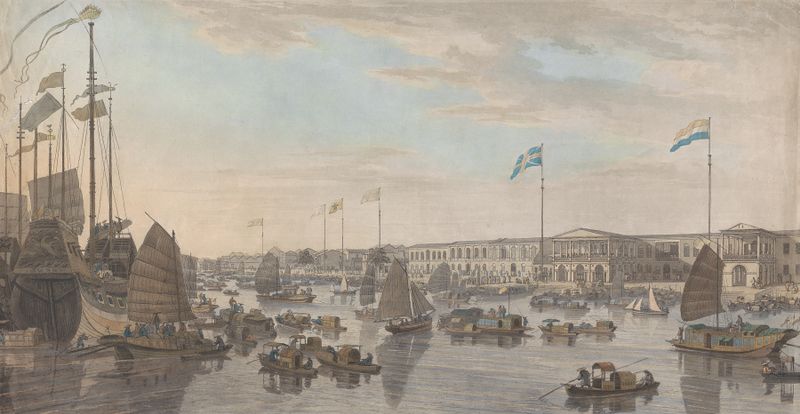
The European Factories at Canton in China
William Daniell

View of London Bridge and St. Paul’s Cathedral
William Daniell
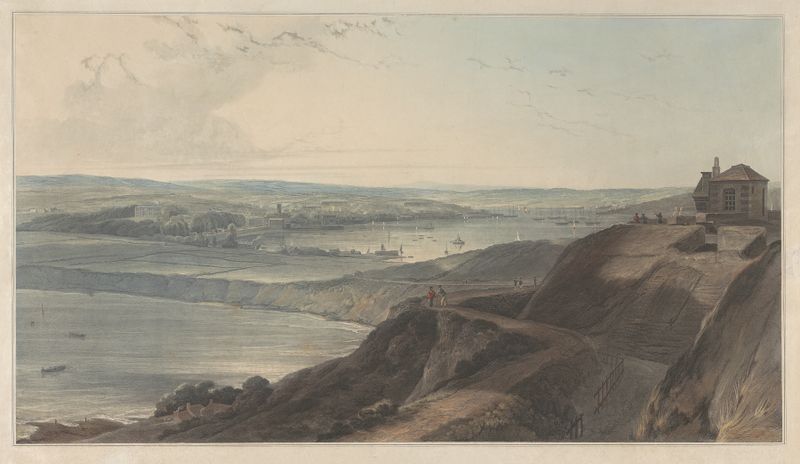
View of the Town and Part of the Harbour of Falmouth from Pendennis Castel, Cornwall
William Daniell

Madras, or Fort St. George, in the Bay of Bengal — A Squall Passing Off
William Daniell

The European Factories, Canton
William Daniell





