
A View of the Frigates Stationed in the Hope under the Command of the Elder Brethen of the Trinity House, Thames Estuary — History & Facts
What if beauty was never meant to be finished? In the serene expanse of the Thames Estuary, an endless dance of vessels sways on the water, a testament to human ambition and the sublime chaos of nature. Look to the center where the frigates rest, their crisp white sails contrasting against a backdrop of soft blues and grays. The meticulous detail of the ships, with every sail articulated, draws the eye, while the gentle ripples of the water reflect the vibrancy of the sky. Notice how the light filters through the clouds, casting an ethereal glow over the scene, evoking both tranquility and a hint of madness in the chaos of maritime life.
The composition is balanced, yet alive, each element pulsing with energy. Beyond the visible, the painting speaks to a deeper conflict between the orderly presence of the ships and the wild, untamed nature surrounding them. The juxtaposition of man-made structures against the fluid, unpredictable waters hints at a fragile harmony, inviting thoughts on the limits of control. There is an unsettling tension beneath the beauty; as the tranquility of the scene unfolds, one senses an underlying madness in the pursuit of dominance over nature—a reflection on the precarious balance of existence itself. In 1804, William Daniell was navigating the complex world of British maritime art, influenced by the Romantic movement stirring in Europe.
He created this work during a period of rapid industrial change and naval exploration, capturing a moment in time when the power of the sea both inspired awe and dictated the fate of nations. The artist's meticulous attention to detail reveals not just the physical beauty of the scene but also a reflection on humanity's ongoing struggle against the vastness of nature.
More Artworks by William Daniell
Browse all →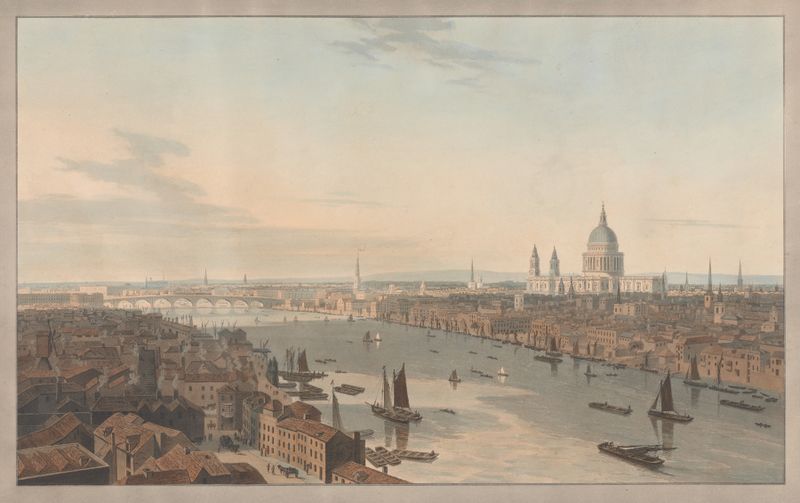
St. Paul’s and Blackfriars Bridge from Southwark
William Daniell

Main Entrance of the Jami Mosque, Jaunpur
William Daniell

London Bridge
William Daniell

London from Greenwich Park
William Daniell
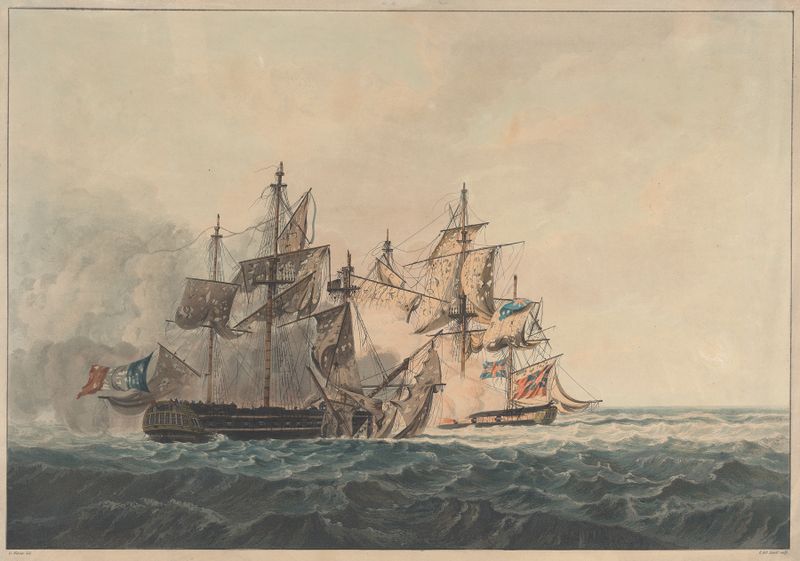
The Action between his Majesty’s Sloop ‘Bonne Citoyenne’ and the French Frigate ‘La Furieuse’
William Daniell
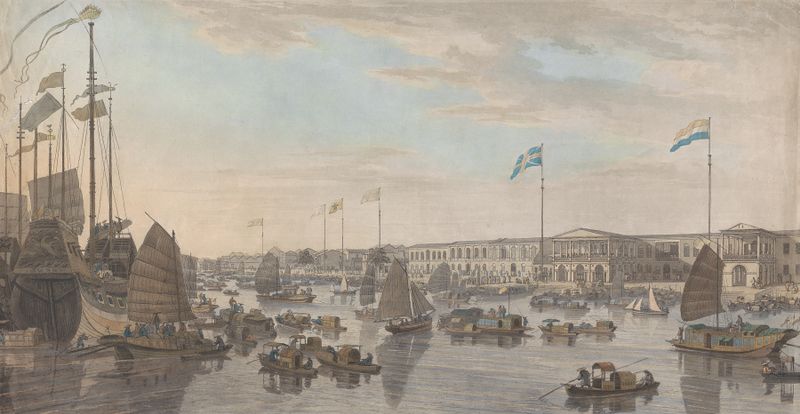
The European Factories at Canton in China
William Daniell

View of London Bridge and St. Paul’s Cathedral
William Daniell
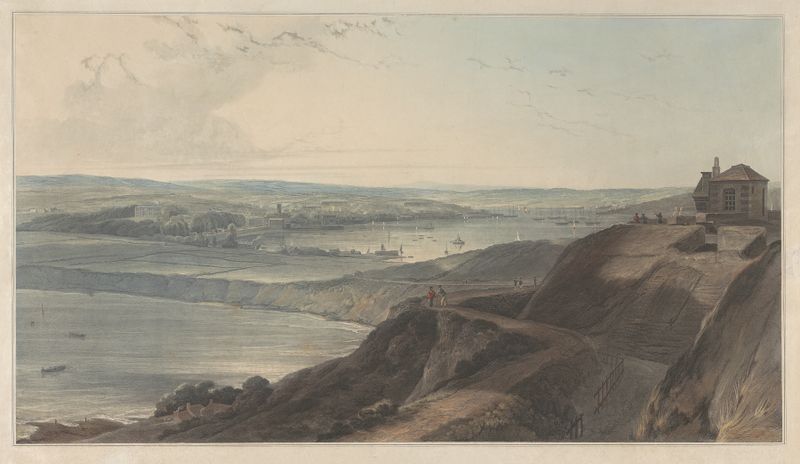
View of the Town and Part of the Harbour of Falmouth from Pendennis Castel, Cornwall
William Daniell

Madras, or Fort St. George, in the Bay of Bengal — A Squall Passing Off
William Daniell

The European Factories, Canton
William Daniell





