
Steamer in Flames — History & Facts
In the heart of chaos, emptiness lingers like a forgotten whisper, enveloping the viewer in a disquieting embrace. Look to the center of the canvas, where the fiery glow of the burning steamer commands attention. The vibrant reds and oranges clash violently with the surrounding dark waters, creating a vivid contrast that pulls the eye deeper into the tumult. Notice how the billowing smoke curls upwards, almost alive, against the stark backdrop of the evening sky, capturing the fleeting moments of despair and destruction.
The jagged brushstrokes reveal Larson's urgent technique, evoking both movement and chaos as we witness the tragic scene unfold. Yet, amid the fervor of flames, there is a profound stillness in the water—a haunting stillness that suggests the depths of loss and isolation. The absence of human figures magnifies the emptiness, allowing the viewer to confront the void left by the disaster. This striking dichotomy between the fiery inferno and the placid water serves as a powerful reminder of nature's unpredictability and the fragility of human endeavor against it. Created in the mid-1800s, the artist was navigating a turbulent personal and artistic landscape.
Larson, a prominent figure in Swedish Romanticism, painted Steamer in Flames during a period marked by rapid industrialization and the growing pains of modernity. This work reflects the anxieties of its time, as the romantic idealism of the past collided with the harsh realities of progress, inviting us to ponder the costs of ambition and technological advancement.
More Artworks by Marcus Larson
Browse all →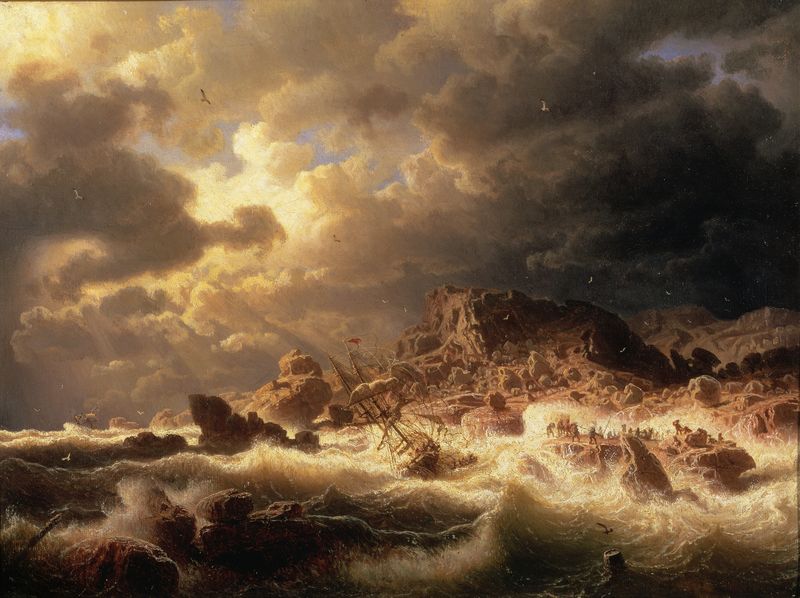
Gale on the Bohuslän Coast
Marcus Larson

Waterfall in Småland
Marcus Larson
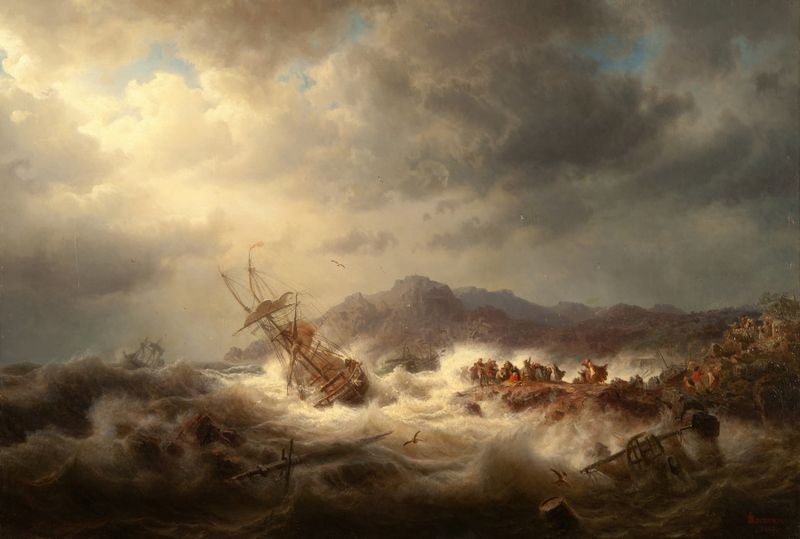
Shipwreck
Marcus Larson
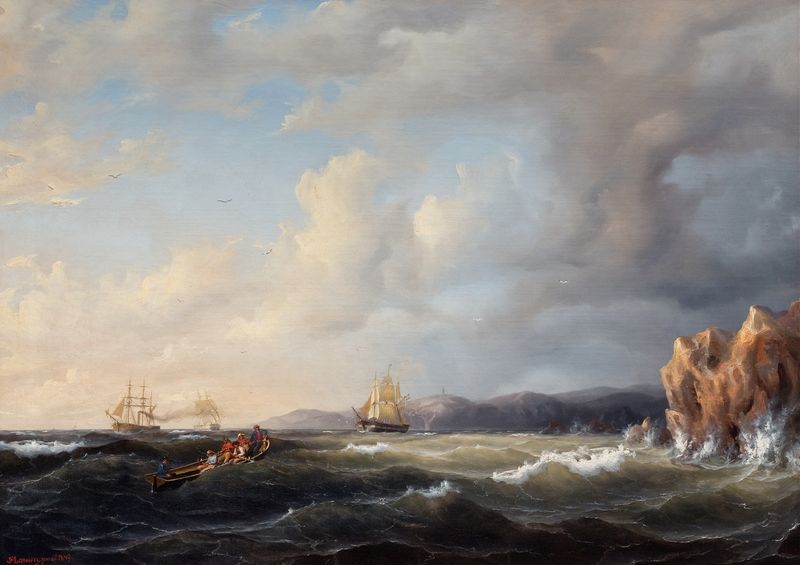
Bark Beating to Windward at Kullaberg
Marcus Larson
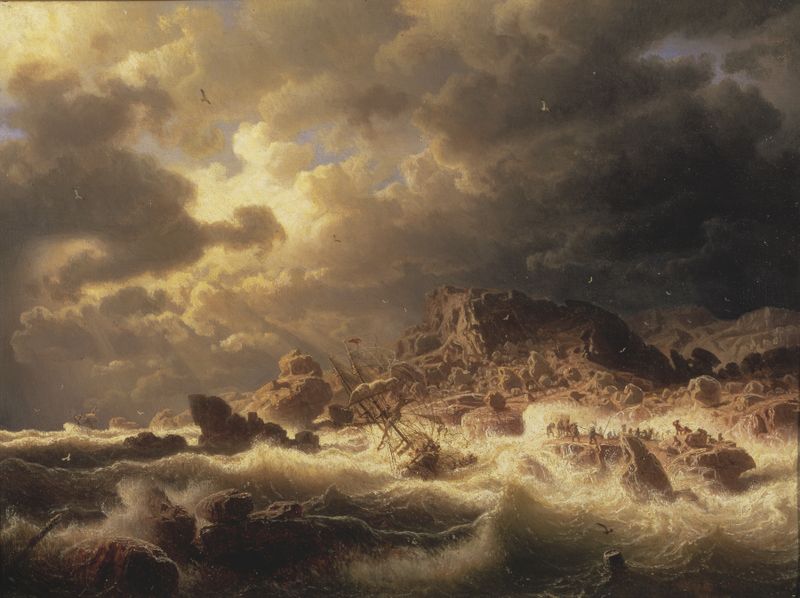
Gale on the Bohuslän Coast
Marcus Larson
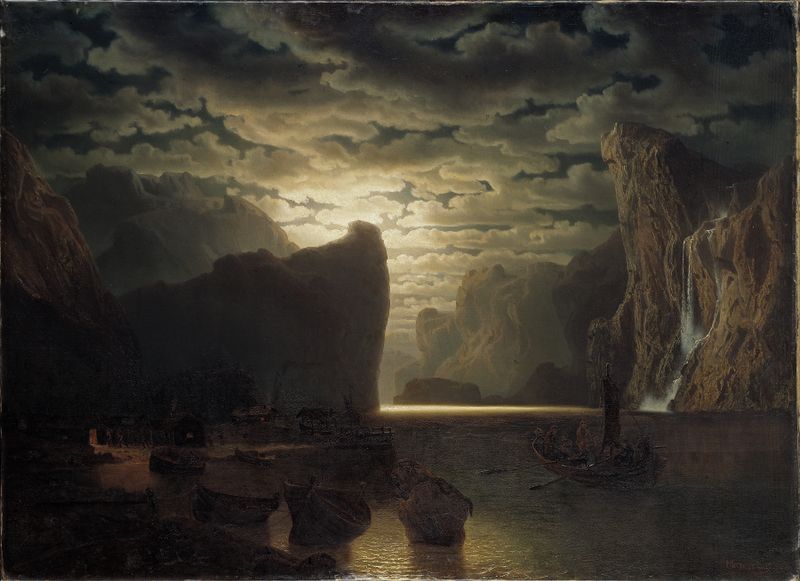
Norwegian Fjord in Moonlight. Motif from the Sogne-Fjord
Marcus Larson

Norwegian Fjord in Moonlight
Marcus Larson

Rocky Landscape with Waterfall
Marcus Larson
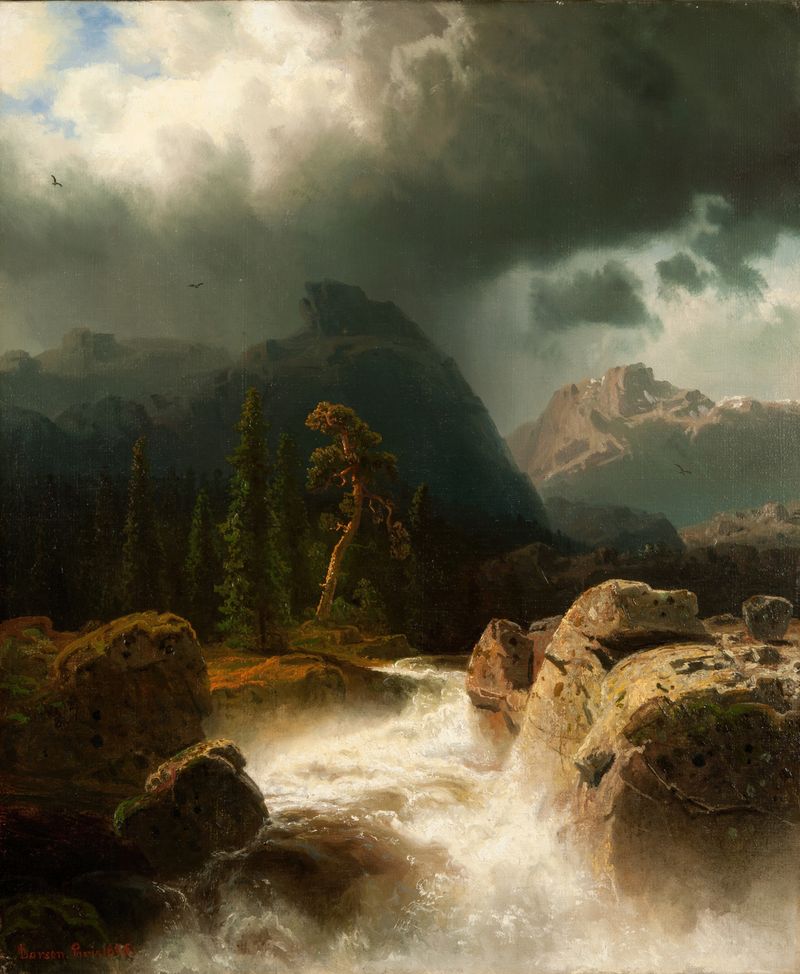
Waterfall
Marcus Larson

Burning Steamer
Marcus Larson





