Stierböcks Kaffeehaus (Café Stierböck) bei der Ferdinandsbrücke (2., Praterstraße 6; demoliert 1903) — History & Facts
In the realm of memory, nostalgia dances between vibrant colors and fleeting moments. How does one capture the essence of an era lost to time? Look to the center of the composition, where the café’s entrance invites patrons with its arched doorway, beckoning them into a world of conversation and warmth. Notice the play of light filtering through the windows, illuminating weary faces and the swirl of smoke.
The palette—a juxtaposition of rich ochres and deep blues—evokes a sense of both vibrancy and melancholy, a visual echo of laughter mingling with whispered secrets in the air. Yet, beyond the surface, this work captures the transience of joy. The swirling figures converse animatedly, yet their expressions hint at deeper stories, perhaps longing for what has been and what is to come. The crumbling architecture visible in the background symbolizes change and impermanence, a crucial contrast against the lively gatherings, highlighting the tension between the past's cherished moments and the inevitable march of time. Created in 1903, this piece emerged from the hand of Moritz Ledeli during a time when the bustling cafe culture of Europe was both vibrant and evolving.
As cities modernized and traditional establishments faced demolition, Ledeli encapsulated a fleeting moment in a rapidly changing Vienna. This café, once a hub of life, would soon dissolve into memory, marking the end of an era that the artist sought to immortalize on canvas.
More Artworks by Moritz Ledeli
Browse all →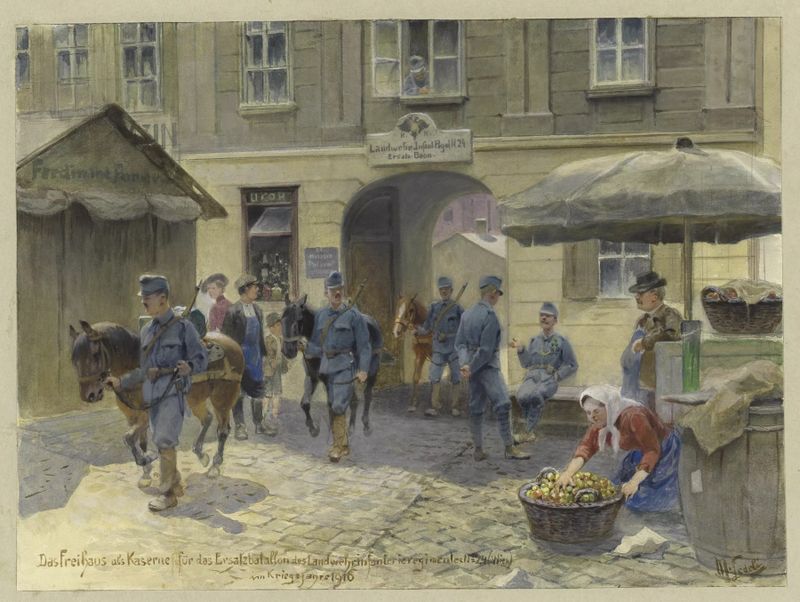
Das Freihaus als Kaserne für das Ersatzbatallon(!) des Landwehrinfanterieregimentes No 24 (Wien) im Kriegsjahre 1916
Moritz Ledeli
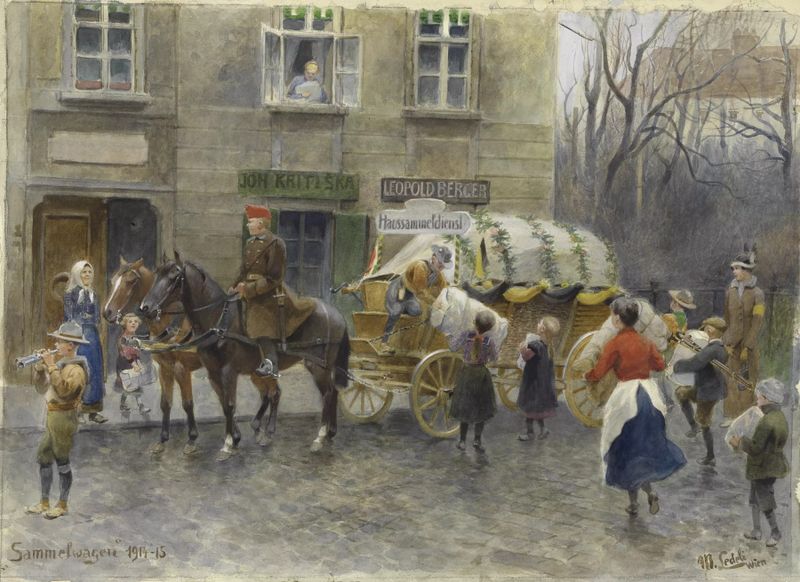
Sammelwagen, 1914-15
Moritz Ledeli

Kohlezufuhr mit Pferden aus den Hofstallungen im Winter 1916-17 in Wien (vor dem Stadtgartenamt)
Moritz Ledeli
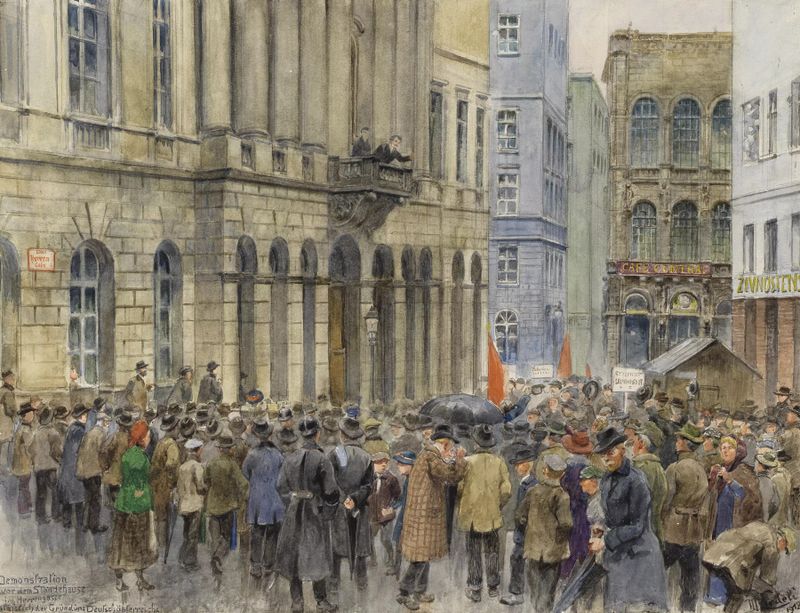
Demonstration vor dem Ständehause in der Herrengasse anläßlich der Gründung Deutschösterreichs
Moritz Ledeli

Ersatz für den Eingerückten, (Weltkrieg 1914-16)
Moritz Ledeli
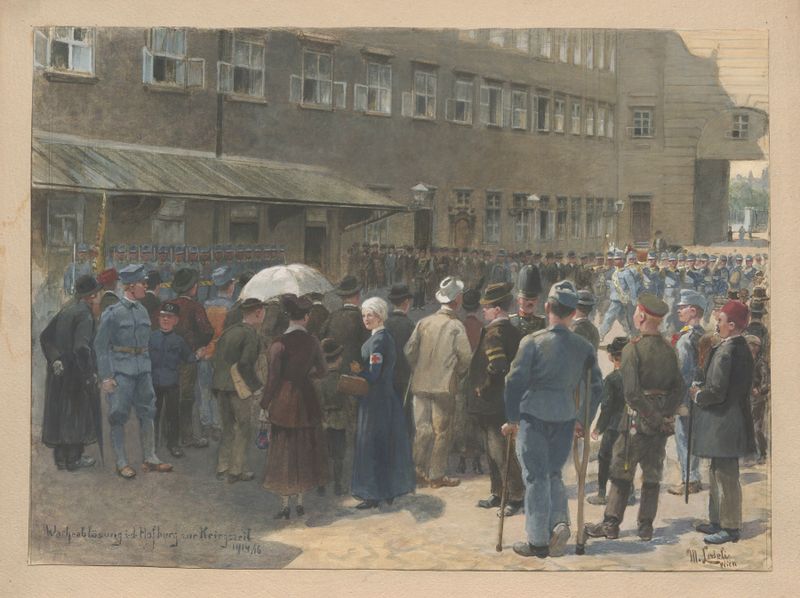
Wachablösung i. d. Hofburg zur Kriegszeit 1914-16
Moritz Ledeli

Hochwasser beim Sperrschiff in Nußdorf 1897
Moritz Ledeli

Überschwemmung bei der Franz Josefs-Brücke
Moritz Ledeli

Patriotische Metallsammlung, Wien, Mai 1915
Moritz Ledeli
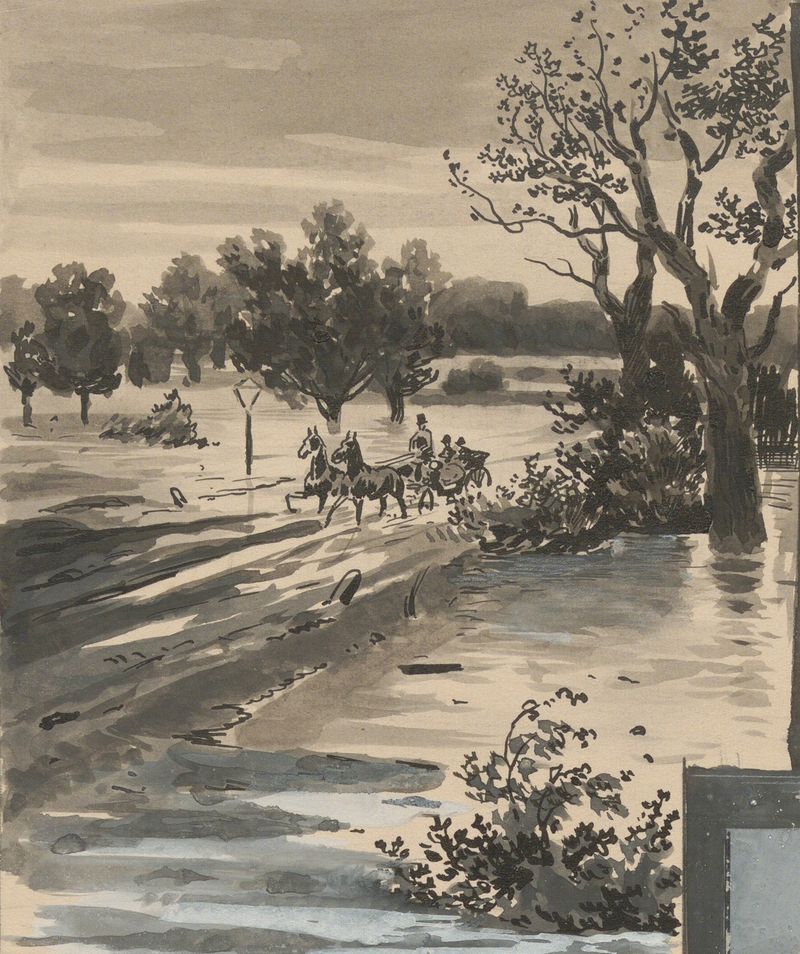
Überschwemmung im Prater
Moritz Ledeli